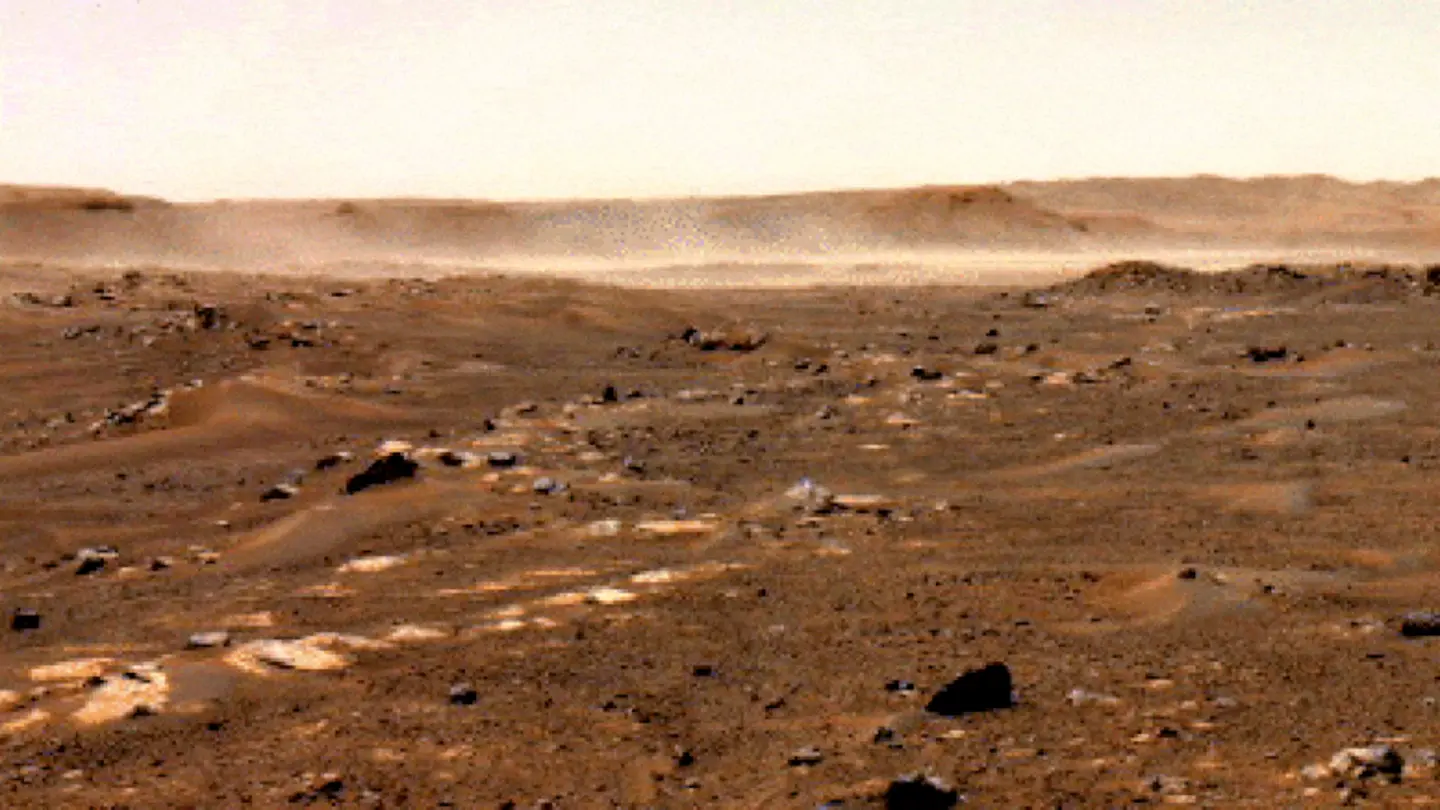
A new study published on the ESS Open Archive investigates the threshold velocity required for wind-blown sand on the Martian surface, taking into account the planet’s significantly lower atmospheric pressure. Understanding this threshold is crucial for modeling Martian aeolian processes, predicting dust storm behavior, and interpreting surface features shaped by wind erosion and deposition.
Researchers focused on replicating Martian atmospheric conditions in laboratory settings to accurately measure the minimum wind speed needed to initiate sand movement. They emphasized the importance of considering the reduced air density and gravitational forces on Mars, factors that significantly influence the entrainment and transport of granular materials. Previous models often relied on terrestrial data, which may not accurately represent the Martian environment.
Experimental Setup and Methodology
The study involved constructing a specialized wind tunnel capable of simulating the low-pressure environment of Mars. Various sizes of sand grains, similar to those found on Mars, were subjected to controlled wind speeds. High-speed cameras and laser-based measurement techniques were employed to precisely determine the threshold velocity at which sand particles began to move. The researchers meticulously controlled temperature and humidity to ensure accurate results.
The experimental setup also accounted for the effect of surface roughness on the threshold velocity. Different substrates were used to mimic the diverse terrains found on Mars, including smooth bedrock, loose dust, and areas covered with larger rocks. The influence of electrostatic forces, which may play a role in particle adhesion on Mars, was also considered.
Key Findings and Implications
The results of the study revealed that the threshold velocity for sand movement on Mars is significantly lower than predicted by terrestrial models when not adjusted for Mars’ conditions. The reduced atmospheric pressure allows even relatively gentle winds to initiate sand transport, contributing to the widespread dust storms observed on the planet. The researchers found that the threshold velocity varied depending on grain size and surface roughness, highlighting the complexity of Martian aeolian processes.
These findings have important implications for future Mars missions. Accurate predictions of dust storm behavior are essential for protecting sensitive equipment and ensuring the safety of astronauts. The study also provides valuable insights into the formation of Martian surface features, such as dunes, ripples, and yardangs. By understanding the dynamics of wind-blown sand, scientists can better reconstruct the geological history of Mars and gain a deeper understanding of its past climate.
Furthermore, the research underscores the importance of conducting experiments under realistic Martian conditions. Simply extrapolating terrestrial data can lead to inaccurate models and flawed interpretations. The study provides a valuable dataset for validating and improving existing aeolian transport models, ultimately enhancing our ability to explore and understand the Red Planet.
Image Source: Google | Image Credit: Respective Owner