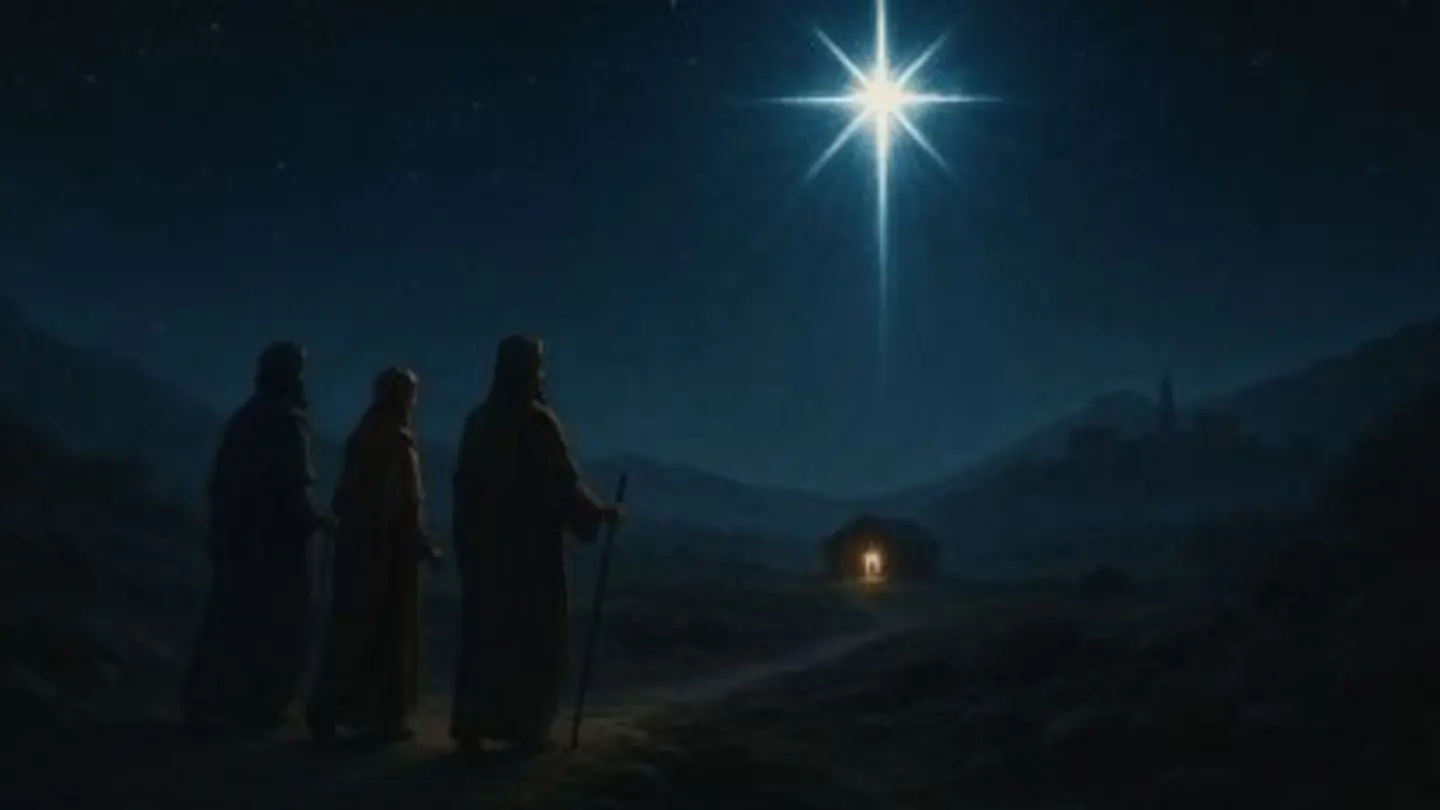
The age-old mystery surrounding the Star of Bethlehem, a celestial phenomenon described in the Gospel of Matthew as guiding the Three Wise Men to the birthplace of Jesus, has intrigued astronomers and theologians for centuries. Recent analysis by NASA scientists has reignited debates about the nature of this enigmatic light in the sky.
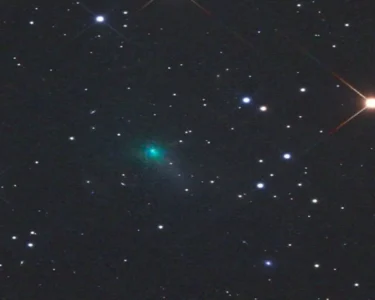
According to Dr. Michael Kelley, an astrophysicist at NASA’s Goddard Space Flight Center, there is compelling evidence that the Star of Bethlehem could have been a comet. Historical records and astronomical data suggest that several comets passed near Earth during the time period surrounding the birth of Jesus, approximately 2 BCE to 6 BCE.
Kelley’s research focuses on the comet 66P/Christensen, which was visible around 5 BCE. This comet exhibited unusual orbital characteristics and brightness that could align with biblical descriptions. “Comets were often seen as omens in ancient times,” Kelley explained. “Their sudden appearance and disappearance, combined with their luminous tails, would have been interpreted as divine signs by observers in that era.”
The study also considers planetary conjunctions, another leading theory. Some scholars propose that a rare alignment of Jupiter and Saturn might have created a bright, stationary object in the night sky. However, such conjunctions typically last only a few days, making them less likely to guide travelers over long distances as described in scripture.
NASA’s analysis employed modern computational models to simulate ancient skies. These simulations revealed that while comets and planetary alignments both occurred during that period, comets exhibited more dramatic visual signatures consistent with the narrative. “The sudden appearance of a bright comet moving across the sky would have been far more noticeable and memorable than a gradual planetary alignment,” Kelley noted.
The findings have implications beyond religious studies. Understanding historical celestial events helps refine astronomical models and improves predictions of future comet trajectories. Moreover, it bridges the gap between science and mythology, demonstrating how ancient cultures interpreted natural phenomena through theological frameworks.
Skeptics argue that definitive answers remain elusive due to limited historical documentation. Yet, NASA’s interdisciplinary approach provides new tools for examining ancient texts through a scientific lens. As telescope technology advances, researchers hope to gather more data on ancient comets and their potential role in shaping human history.
This investigation underscores the enduring intersection of astronomy and human belief systems, revealing how celestial events continue to influence cultural narratives across millennia.
Image Source: Google | Image Credit: Respective Owner