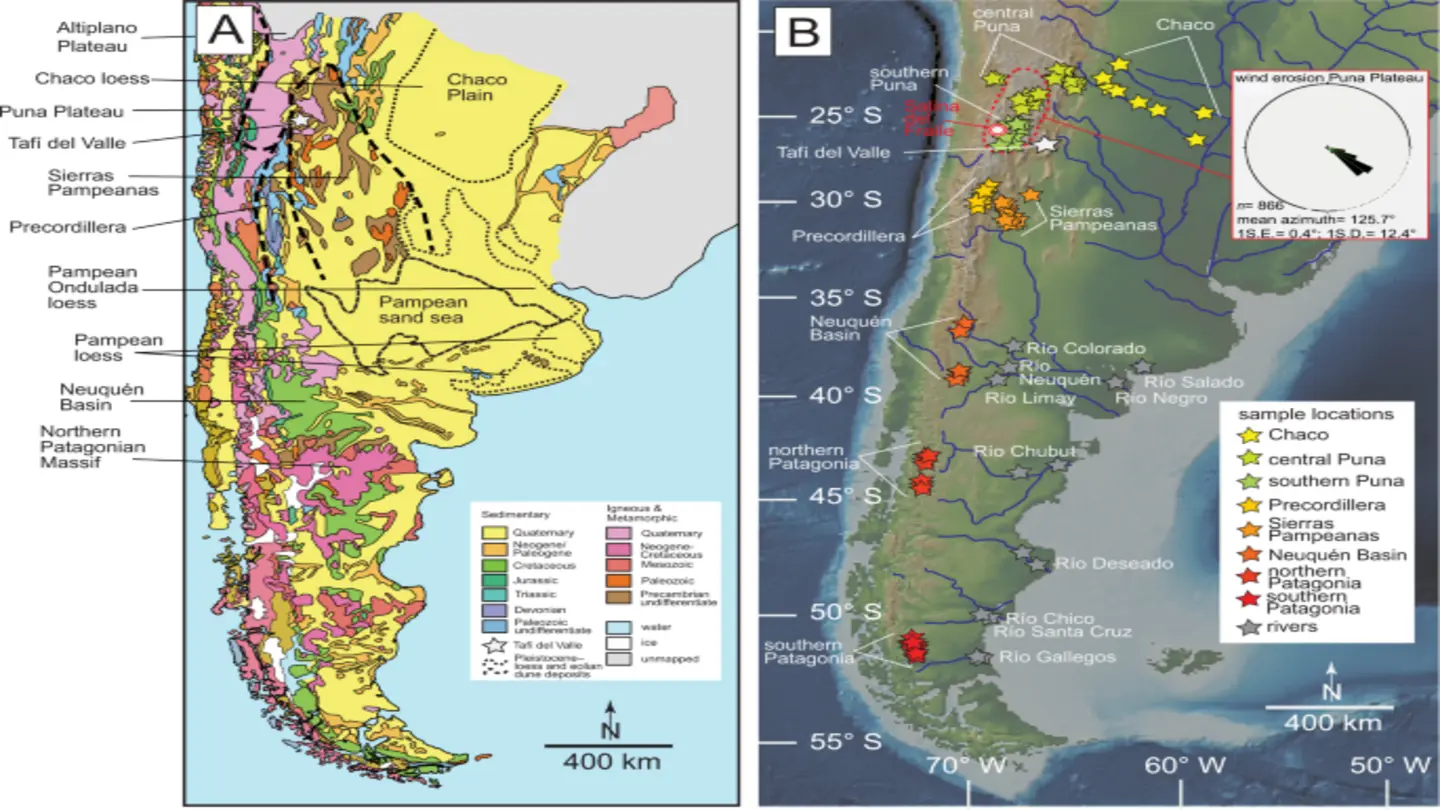
A groundbreaking study published in the ESS Open Archive has illuminated the crucial role of dust inputs from southern South America into the South Atlantic and Southern Oceans. Researchers have meticulously analyzed trace element solubility and deposition fluxes to uncover how these atmospheric contributions influence marine ecosystems and global climate patterns.
The investigation focused on the transport and deposition of mineral dust originating from the arid regions of southern South America. This dust, rich in essential micronutrients such as iron and zinc, serves as a vital nutrient source for phytoplankton communities in the nutrient-poor ocean waters. The study employed advanced spectroscopic techniques and oceanographic sampling to quantify the solubility of these trace elements upon entering seawater, revealing previously unknown deposition mechanisms.
Findings indicate that South American dust contributes significantly to the biogeochemical cycles of the South Atlantic and Southern Oceans. The soluble fractions of elements like iron enhance primary productivity, supporting marine food webs and affecting carbon sequestration processes. Researchers calculated deposition fluxes across various ocean basins, demonstrating regional variations influenced by atmospheric circulation patterns and oceanic currents.
The implications extend beyond local marine ecosystems. Enhanced plankton growth driven by dust-derived nutrients increases carbon dioxide absorption from the atmosphere, potentially mitigating climate change effects. However, the study also highlights uncertainties in current climate models, which often underestimate these dust-driven biogeochemical pathways. The authors argue for integrating these findings into future predictive frameworks to improve accuracy.
Lead researcher Dr. Maria Chen emphasized the importance of this work: “Understanding how terrestrial dust influences ocean chemistry is essential for predicting future environmental changes. Our data shows that South American dust plays a disproportionately large role in nutrient delivery to vast oceanic regions.” The research underscores the interconnectedness of land, atmosphere, and ocean systems in Earth’s dynamic climate machinery.
Image Source: Google | Image Credit: Respective Owner