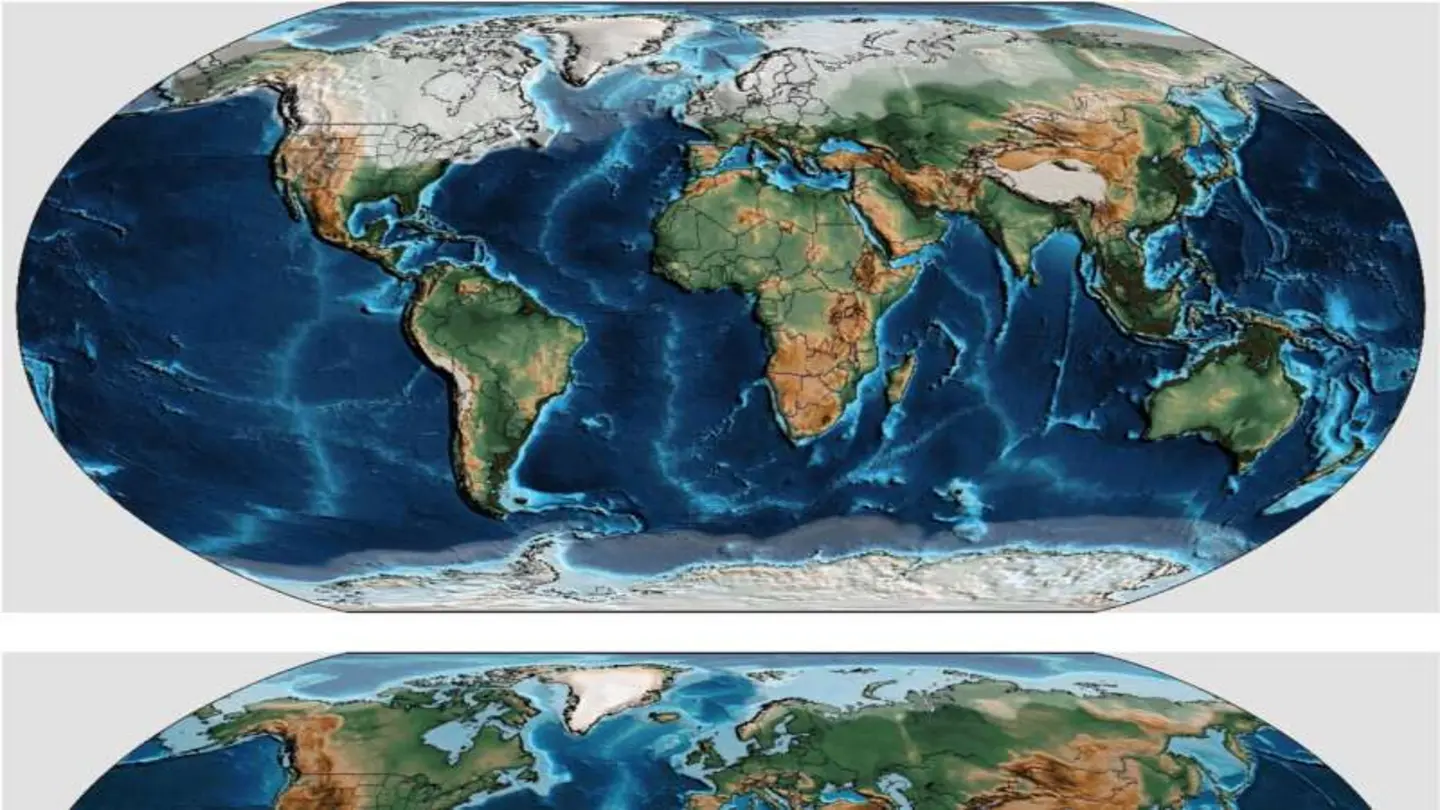
The Last Glacial Maximum (LGM), occurring approximately 26,500 to 19,000 years ago, represents the most recent period of extensive ice sheet expansion and maximum global cooling in Earth’s history. For decades, scientists have relied on various paleoclimate proxies to reconstruct past temperatures, but these reconstructions have often produced conflicting estimates of the degree of cooling. Traditional methods, while invaluable, have faced limitations in reconciling disparate datasets from different regions and proxy types. This has created a persistent challenge in accurately quantifying the magnitude of global cooling during this critical period of Earth’s climate history.
Recent advancements in paleoclimatology have introduced innovative approaches that may help resolve these discrepancies. By leveraging proxy-constrained emergent relationships, researchers are developing more sophisticated methods to interpret the complex signals preserved in natural archives such as ice cores, marine sediments, and terrestrial records. These emergent relationships allow scientists to extract more reliable temperature information from multiple proxy sources while accounting for the inherent uncertainties and biases in each recording system. The approach represents a significant methodological evolution from earlier reconstruction techniques that treated proxies more independently.
The development of proxy-constrained methods has particular importance for understanding the Earth’s climate sensitivity and the mechanisms driving glacial cycles. During the LGM, atmospheric CO₂ concentrations were approximately 180 ppm, compared to pre-industrial levels of 280 ppm and current levels exceeding 420 ppm. Understanding how this CO₂ reduction translated into global cooling provides critical insights into the Earth’s carbon-climate feedback systems. Improved reconstruction methods may also help validate climate model simulations of past climates, which is essential for building confidence in projections of future climate change.
Emergent constraint approaches work by identifying statistical relationships between observable climate variables and model parameters across ensemble simulations. When applied to paleoclimate proxies, these methods can help distinguish robust temperature signals from regional variations or proxy-specific biases. The technique may prove particularly valuable for reconciling temperature estimates from different latitudes, as tropical cooling estimates have been especially contentious in LGM reconstructions. Some previous studies suggested minimal tropical cooling, while others indicated more substantial temperature reductions in these regions.
The implications of more accurate LGM temperature reconstructions extend beyond academic interest. Understanding the spatial pattern of cooling helps illuminate the role of various feedback mechanisms, including ice-albedo feedback, ocean circulation changes, and atmospheric dynamics. These insights are crucial for improving the parameterizations used in current climate models. Moreover, by better constraining the relationship between greenhouse gas concentrations and global temperature during past climate states, scientists can provide more robust estimates of climate sensitivity to ongoing anthropogenic emissions.
While the specific methodology of proxy-constrained emergent relationships represents a technical advance in paleoclimate reconstruction, its broader significance lies in the potential to resolve long-standing debates about the Earth’s climate history. As the scientific community continues to refine these approaches, the resulting improvements in our understanding of past climate change will undoubtedly enhance our ability to anticipate and respond to future climate challenges. The integration of multiple proxy types through these advanced statistical frameworks marks an important step toward more comprehensive paleoclimate reconstructions.