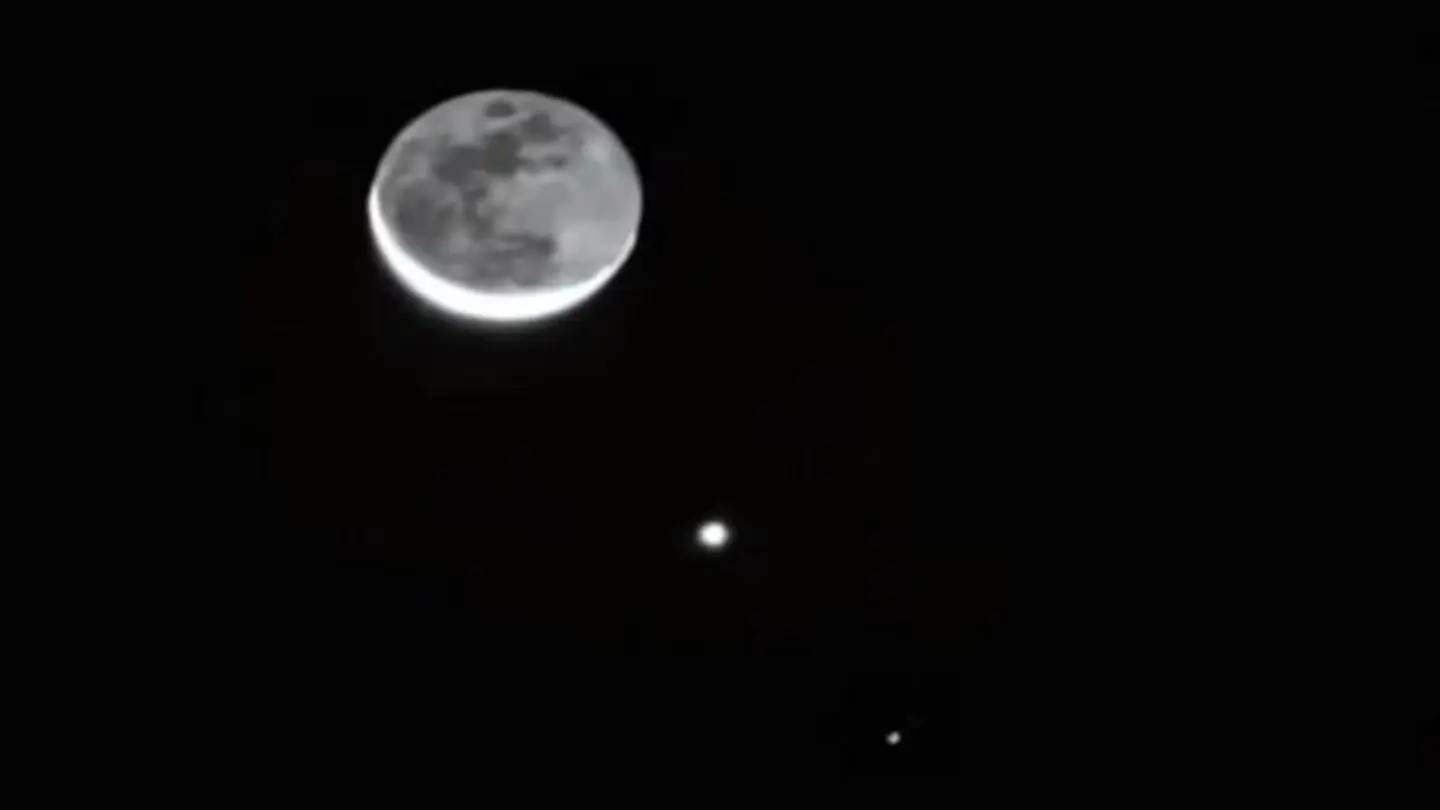
October’s full moon, often referred to as the hunter’s moon, graced the night sky with its radiant presence, offering breathtaking views for stargazers around the world. This celestial event, also classified as a supermoon, occurs when the moon is at or near its closest point to Earth in its orbit, making it appear significantly larger and brighter than a typical full moon. The hunter’s moon traditionally signifies a time for preparing for the winter months ahead, with its name derived from the increased hunting activity during this period as animals fatten up for the colder season.
Photographers across the globe captured stunning images of the supermoon, showcasing its ethereal glow against various landscapes and cityscapes. From silhouetted trees against the moon’s backdrop to its reflection shimmering on tranquil waters, the images evoke a sense of wonder and awe at the beauty of the natural world. The supermoon provided a unique opportunity for both amateur and professional photographers to capture the celestial spectacle, resulting in a diverse collection of captivating visuals.
Observing the Supermoon
The best time to observe the supermoon is typically shortly after moonrise or just before moonset, when the moon appears closer to the horizon. During these times, an optical illusion can make the moon seem even larger than it actually is. Clear skies are essential for optimal viewing, allowing for unobstructed views of the moon’s surface features. While binoculars can enhance the viewing experience, the supermoon is easily visible with the naked eye.
The occurrence of a supermoon is not an uncommon event, with several happening throughout the year. However, each supermoon offers a unique opportunity to appreciate the beauty and wonder of the cosmos. The interplay of light and shadow on the lunar surface, combined with the moon’s proximity to Earth, creates a visually stunning spectacle that captivates observers of all ages.
Scientific Significance
Beyond its aesthetic appeal, the supermoon also holds scientific significance. Its increased gravitational pull can cause slightly higher tides than usual, known as spring tides. Scientists study these tidal variations to gain a better understanding of the Earth-moon system and the forces that govern our planet’s oceans. The supermoon also provides an opportunity to test astronomical instruments and refine our understanding of lunar dynamics. Observing and analyzing the supermoon contributes to our broader knowledge of space and the celestial bodies that surround us. The stunning visuals serve as a reminder of the vastness and beauty of the universe, encouraging continued exploration and discovery.
Image Source: Google | Image Credit: Respective Owner