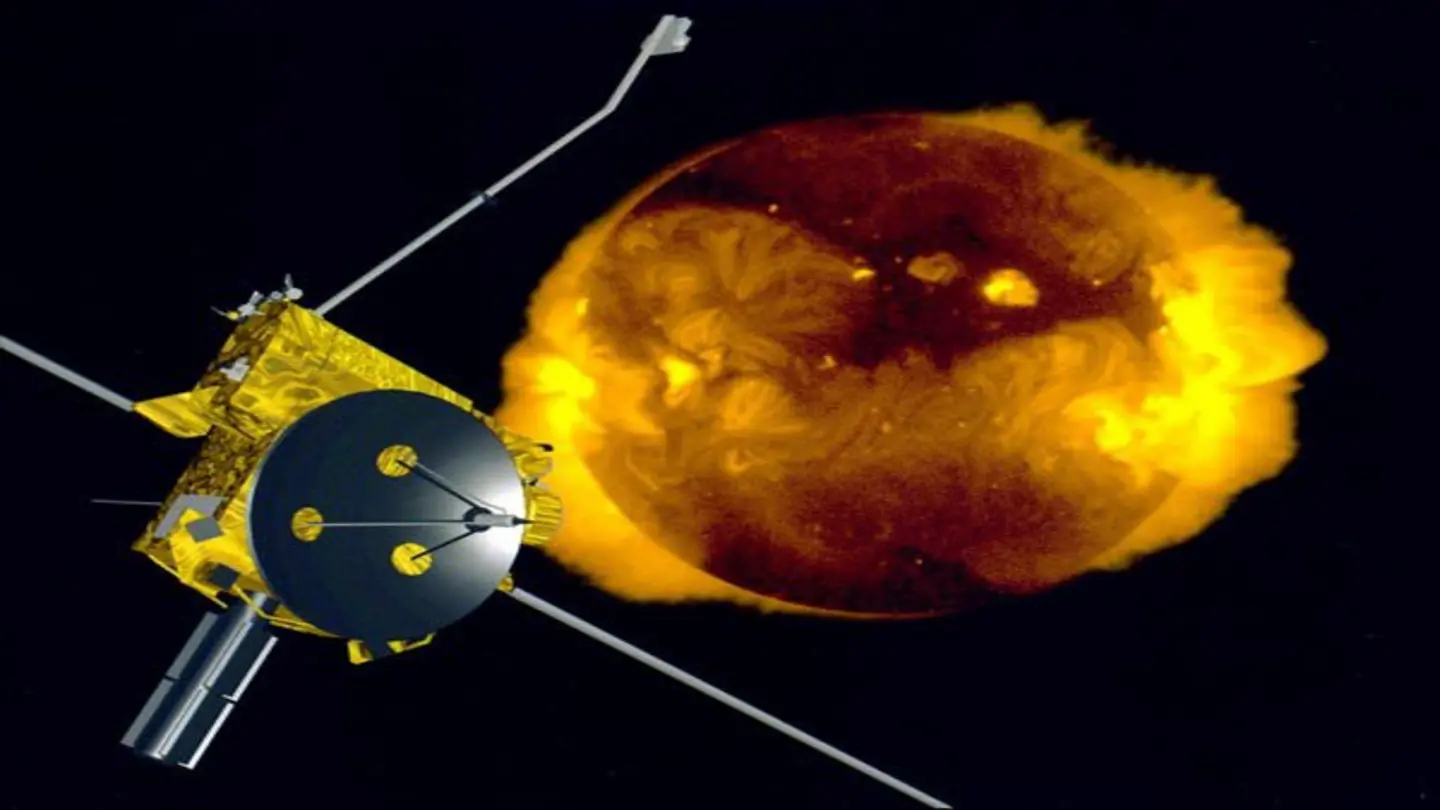
NASA is embarking on a groundbreaking mission to study the Sun’s polar regions, areas that remain largely unexplored despite decades of solar observation. The Polar Geospace (POGO) mission, slated for launch in 2028, aims to understand how the Sun’s poles generate the solar wind and contribute to the space weather that impacts Earth.
Currently, our understanding of the Sun’s polar regions is limited. The Sun’s equator is much more accessible to observation, leading to a significant knowledge gap regarding the processes occurring at the poles. These polar regions are believed to play a crucial role in the solar cycle, the Sun’s roughly 11-year period of activity. Understanding these areas is vital for predicting space weather events, which can disrupt satellites, communication systems, and even power grids on Earth.
Unveiling the ‘Hidden Heart’
The mission will employ a constellation of spacecraft to provide a comprehensive view of the Sun’s polar regions. Unlike previous missions that primarily focused on the Sun’s equator, POGO will directly observe the processes occurring at the poles. This will involve studying the magnetic field structure, the acceleration of solar wind particles, and the dynamics of the polar atmosphere.
“The Sun’s poles are really the engine room for the solar cycle,” explains Dr. Nicky Fox, principal investigator for POGO at Johns Hopkins Applied Physics Laboratory. “We don’t understand how the magnetic field is generated there, or how it’s released into the solar system. POGO will give us the first direct look at this ‘hidden heart’ of the Sun.”
The mission will utilize advanced instrumentation, including magnetometers, plasma analyzers, and imagers, to gather data on the Sun’s polar environment. This data will be combined with observations from other solar missions, such as the Parker Solar Probe and Solar Orbiter, to create a more complete picture of the Sun’s activity.
One of the key objectives of POGO is to understand how the Sun’s polar magnetic field influences the solar wind. The solar wind is a stream of charged particles that constantly flows from the Sun, and it interacts with Earth’s magnetic field, causing geomagnetic storms. These storms can disrupt satellite operations, damage power grids, and even pose a risk to astronauts.
By studying the Sun’s polar regions, POGO will help scientists improve their ability to predict space weather events and mitigate their impact on Earth. The mission is expected to provide valuable insights into the fundamental processes that drive the Sun’s activity and shape the space environment around our planet. The data collected will be crucial for developing more accurate space weather models and protecting our technological infrastructure.
The POGO mission represents a significant step forward in our understanding of the Sun and its influence on Earth. By venturing into the unexplored polar regions, NASA aims to unlock the secrets of our star and safeguard our planet from the potentially harmful effects of space weather.
Image Source: Google | Image Credit: Respective Owner