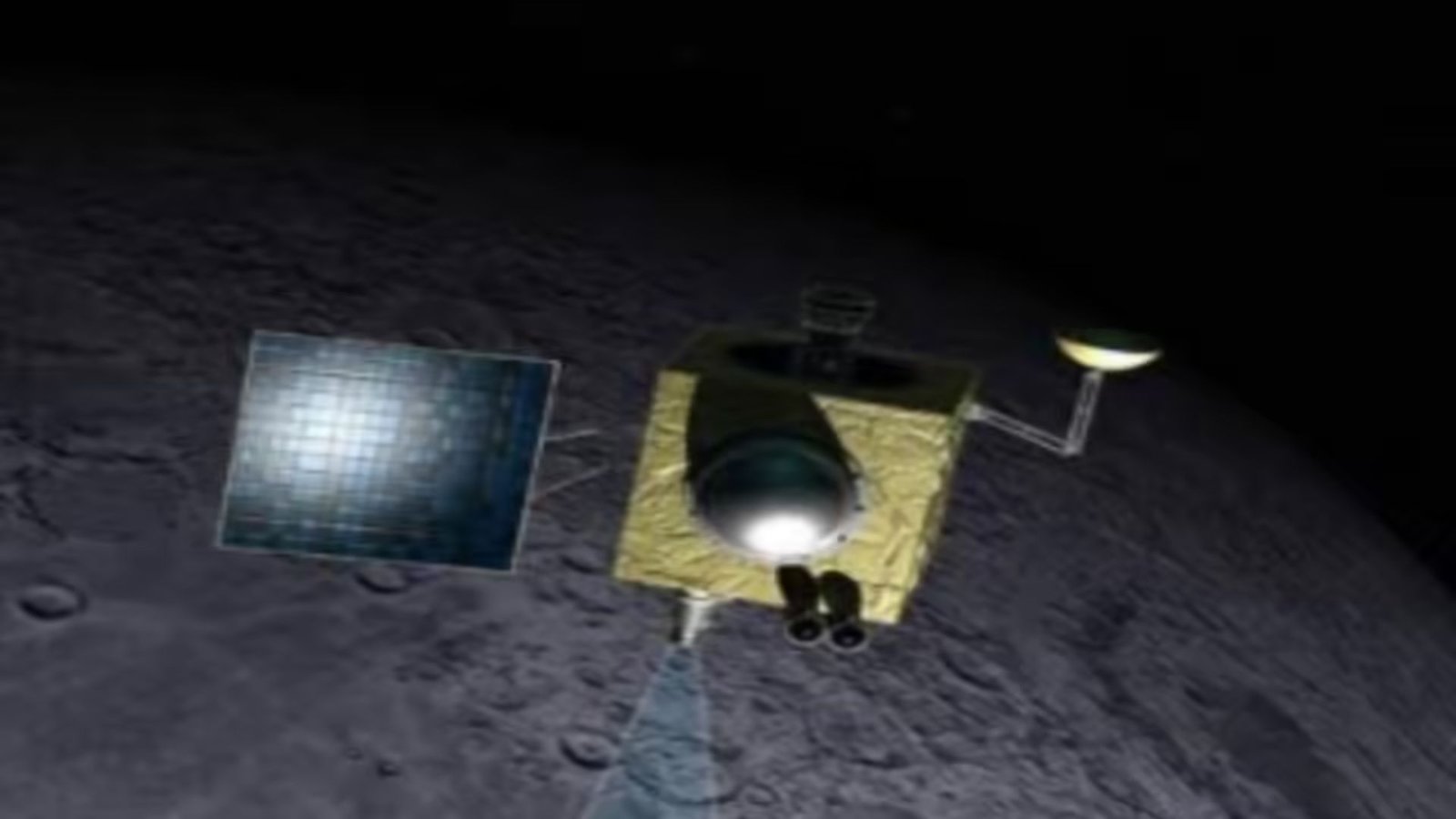
New research indicates the Moon is rusting, a surprising phenomenon given the Moon’s lack of atmosphere and abundant liquid water, both typically necessary for rust formation. Scientists believe Earth may be playing a significant role in this unexpected oxidation process. Data from India’s Chandrayaan-1 mission, which first identified the presence of hematite (iron oxide or rust) near the lunar poles, has been instrumental in these findings. The presence of hematite, a form of iron oxide, on the Moon has puzzled researchers because iron readily reacts with oxygen and water to form rust.
The Earth Connection
Researchers propose that oxygen from Earth’s upper atmosphere could be traveling to the Moon, contributing to the rusting process. The Moon spends about three days each month passing through Earth’s magnetotail, a region of the magnetosphere that extends far beyond the Earth. During this time, the lunar surface is exposed to oxygen ions from Earth. These oxygen ions could be interacting with the lunar surface to create the observed hematite. Furthermore, solar wind, consisting of hydrogen, bombards the Moon and is known to hinder oxidation; therefore, a source of oxygen is crucial to explain rust formation.
Water’s Role on the Moon
Although the Moon lacks a substantial atmosphere, trace amounts of water have been detected, particularly in permanently shadowed craters near the poles. This water, in its frozen state, could be reacting with iron to facilitate the creation of rust. The Chandrayaan-1 mission was pivotal in detecting water molecules on the lunar surface. Scientists are still investigating the precise mechanism, but they hypothesize that the water molecules, even in small quantities, could be acting as a catalyst in the oxidation process, especially when combined with oxygen from Earth. The proximity of hematite to lunar water detections further strengthens this hypothesis.
Ongoing Research and Future Missions
This discovery has spurred further research into the Moon’s composition and the processes occurring on its surface. Future lunar missions will aim to gather more data to fully understand the rusting mechanism and the extent of hematite deposits. Understanding the Moon’s environment is crucial for future lunar exploration and potential resource utilization. The implications of this rusting phenomenon could also influence our understanding of other airless bodies in the solar system. Investigating the Moon’s rust provides valuable insights into the chemical processes happening in extreme environments. The findings from Chandrayaan-1 continue to shape our understanding of the lunar surface, highlighting the importance of international space collaborations. The study of lunar hematite may reveal more about the interactions between Earth and the Moon over billions of years.
Image Source: Google | Image Credit: Respective Owner