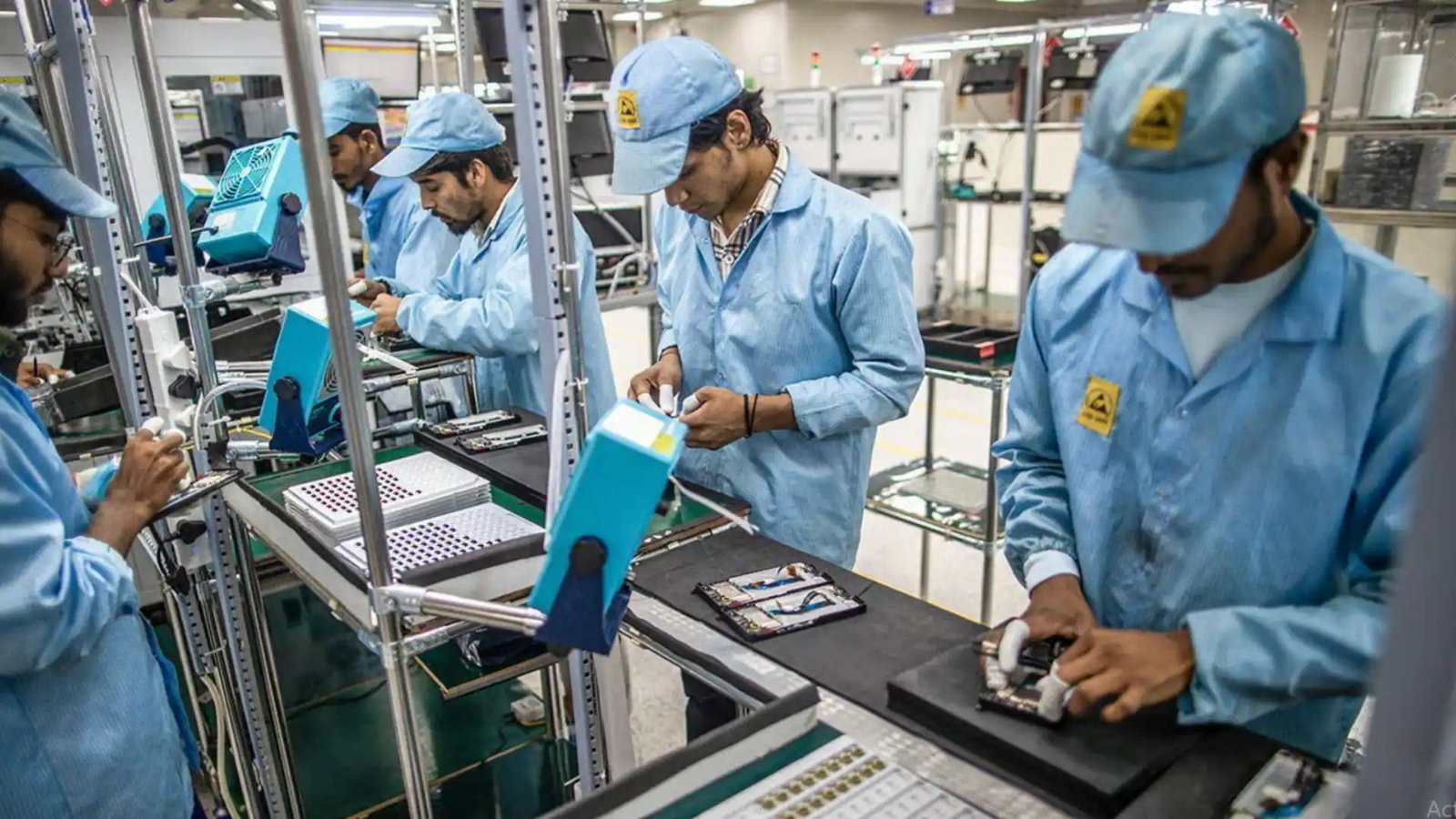
New Delhi – India’s Production Linked Incentive (PLI) scheme is significantly boosting domestic electronics manufacturing, resulting in the creation of 1.33 million jobs, according to recent data. The initiative, designed to attract investment and enhance production capabilities, has particularly impacted the smartphone industry, transforming India into a global manufacturing hub.
The PLI scheme, launched in 2020, offers financial incentives to companies based on incremental sales of locally manufactured goods. This has encouraged both domestic and international players to establish or expand their production facilities within India. The scheme’s success is evident in the substantial increase in smartphone production, with companies like Apple, Samsung, and Foxconn ramping up their operations.
Smartphone Manufacturing Surge
The smartphone segment has been the primary beneficiary of the PLI scheme. Data reveals a considerable rise in the value of smartphones manufactured in India, with a significant portion now being exported to international markets. This growth not only strengthens India’s economic position but also reduces its reliance on imports. The scheme has incentivized companies to move beyond assembly operations and invest in component manufacturing and research & development within the country.
Beyond smartphones, the PLI scheme extends to other electronics components, including chargers, adapters, and wired earphones. This broader focus aims to create a more comprehensive and self-reliant electronics ecosystem. The government is actively working to attract investments in the manufacturing of key electronic components, which are currently heavily imported.
The 1.33 million jobs created are a mix of direct and indirect employment opportunities. Direct jobs are within the manufacturing units themselves, while indirect jobs are generated across the supply chain, including logistics, packaging, and retail. The scheme has also spurred the growth of ancillary industries, providing further employment prospects.
Industry experts highlight that the PLI scheme has improved India’s competitiveness in the global electronics market. The combination of incentives, skilled labor, and a large domestic market makes India an attractive destination for electronics manufacturers. However, challenges remain, including the need for further infrastructure development and streamlining of regulatory processes.
The government is committed to building on the success of the PLI scheme and is considering expanding it to other sectors. Future iterations of the scheme may focus on promoting the manufacturing of advanced electronics, such as semiconductors and displays. The long-term goal is to establish India as a leading global electronics manufacturing destination, fostering innovation and economic growth.
The Economic Times report indicates that the PLI scheme is on track to achieve its targets, with continued investment and job creation expected in the coming years. This positive trend is a testament to the effectiveness of the government’s industrial policy and its commitment to promoting domestic manufacturing. The scheme’s impact extends beyond economic benefits, contributing to India’s self-reliance and technological advancement.
Image Source: Google | Image Credit: Respective Owner