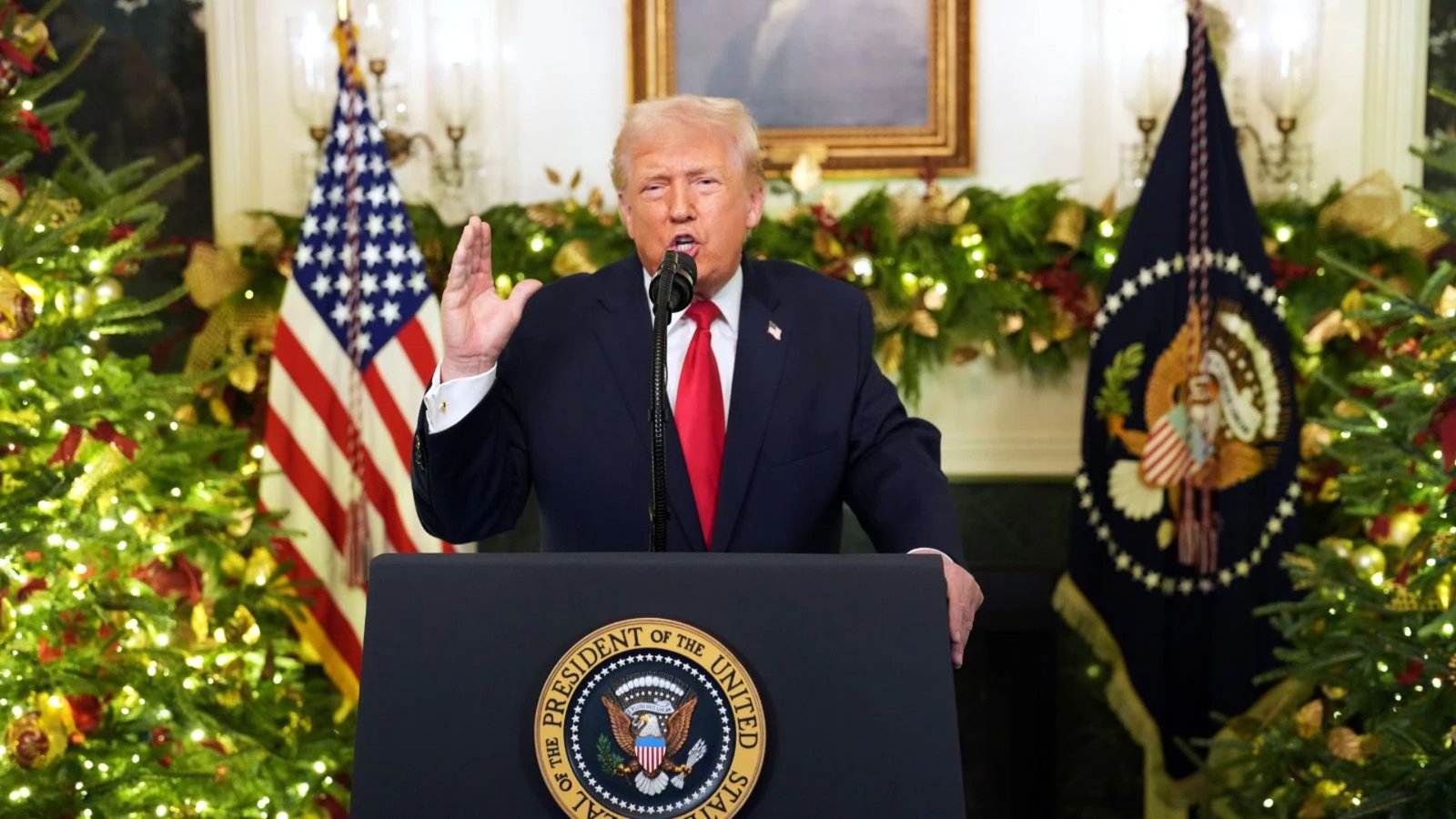
Former President Donald Trump has escalated his rhetoric toward Venezuela, demanding that the country compensate the United States for seized American oil assets. This demand follows his recent call for a potential “blockade” against the South American nation, signaling a more confrontational approach to Caracas should he return to office.
The controversy centers on assets owned by U.S. oil companies, including ExxonMobil and ConocoPhillips, which were nationalized by Venezuela under the late President Hugo Chávez and his successor, Nicolás Maduro. These seizures have been the subject of lengthy legal battles and international arbitration awards, with American firms seeking billions of dollars in compensation.
Trump’s latest statements reflect a broader strategy to intensify pressure on the Maduro regime, which has faced crippling U.S. sanctions for years. During his presidency, Trump implemented aggressive measures including oil embargoes and asset freezes targeting Venezuelan state-owned entities.
The call for a blockade, while not officially U.S. policy, represents a significant escalation that could further destabilize regional relations and global energy markets. Analysts note that such actions could have far-reaching implications for oil prices and international trade routes.
Venezuela’s oil industry, once a powerhouse, has suffered from decades of mismanagement, corruption, and underinvestment, exacerbated by U.S. sanctions. Despite possessing the world’s largest proven oil reserves, production has plummeted to historic lows under Maduro’s administration.
The Biden administration has maintained some sanctions while pursuing a more nuanced diplomatic approach, including temporary sanctions relief in exchange for democratic commitments from Caracas. However, progress has been limited, and recent Venezuelan actions have drawn renewed criticism from Washington.
Trump’s demands for compensation align with ongoing legal proceedings at the International Centre for Settlement of Investment Disputes (ICSID) and other arbitral bodies. American companies have secured substantial awards, but enforcement remains challenging given Venezuela’s economic predicament.
Regional implications of Trump’s stance are significant. Latin American nations, already wary of U.S. interventionism, may view these threats as destabilizing. Brazil, Colombia, and other neighbors have expressed concerns about escalating tensions affecting regional stability and migration patterns.
The international community remains divided on Venezuela policy, with some countries continuing to recognize opposition leader Juan Guaidó as legitimate president, while others maintain relations with Maduro’s government. Russia, China, and Iran have provided economic and political support to Caracas.
As the 2024 U.S. election approaches, Venezuela policy has emerged as a point of sharp contrast between candidates. Trump’s hardline position contrasts with Biden’s more measured approach, setting the stage for potential policy shifts depending on November’s outcome.
Oil market analysts warn that any blockade or severe escalation could disrupt global supply chains, particularly affecting heavy crude markets where Venezuela traditionally played a significant role. U.S. refiners optimized for heavy crude could face supply challenges.
The situation remains fluid as diplomatic efforts continue behind the scenes, but Trump’s uncompromising stance signals potential stormy seas ahead for U.S.-Venezuela relations regardless of electoral outcomes.