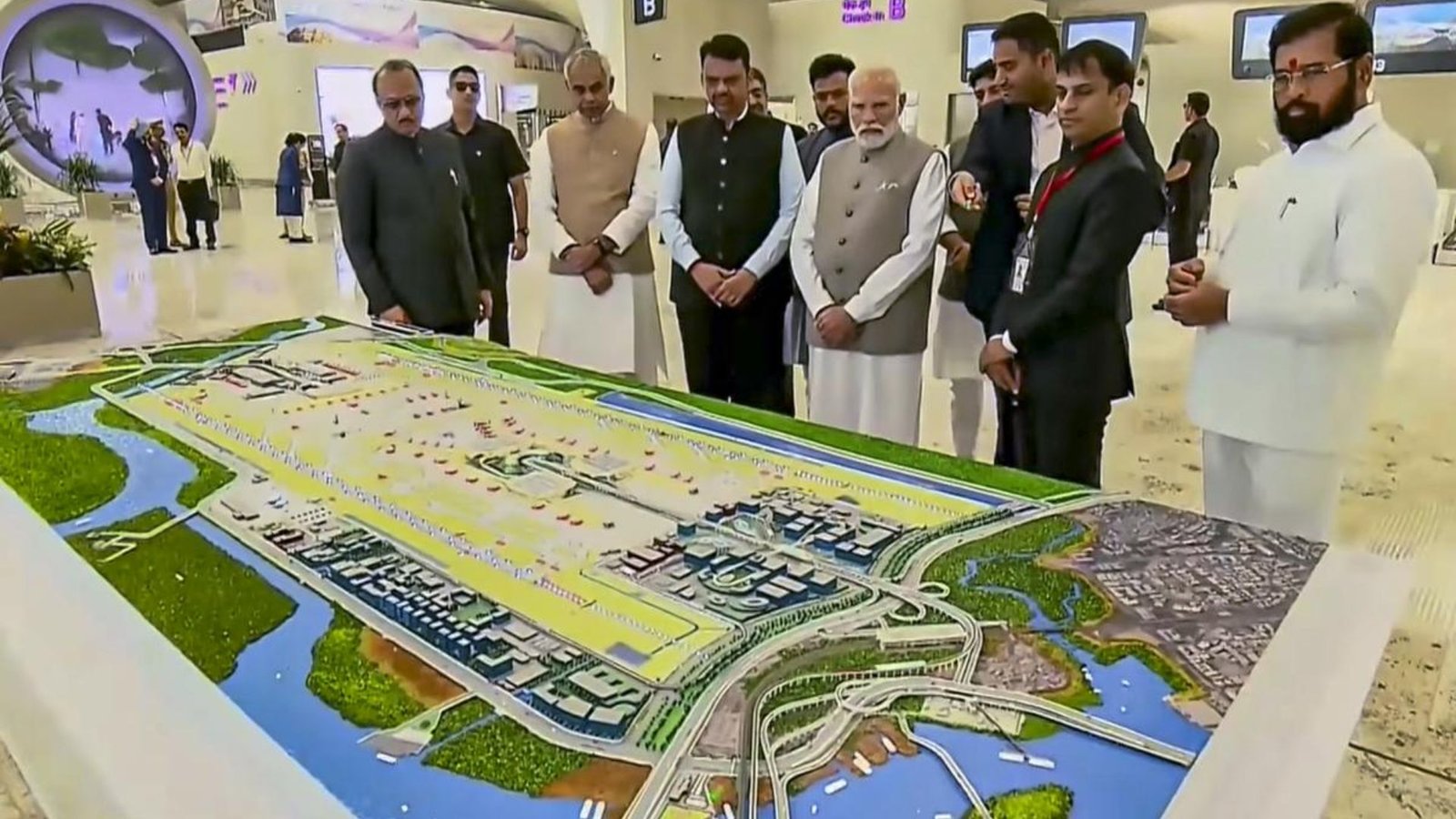
Indian Prime Minister Narendra Modi has inaugurated the Navi Mumbai International Airport, marking a significant upgrade to the infrastructure of India’s financial capital. The new airport, a long-awaited addition to Mumbai’s aviation landscape, is expected to ease congestion at the existing Chhatrapati Shivaji Maharaj International Airport and cater to the growing air traffic demand in the region. The project signifies a substantial investment in India’s transportation sector and underscores the government’s commitment to enhancing connectivity.
The airport, officially named after D. B. Patil, a prominent leader who championed the cause of farmers and local communities, represents a collaborative effort between the Adani Group and the City and Industrial Development Corporation (CIDCO). Modi, addressing a large gathering during the inauguration ceremony, highlighted the strategic importance of the Navi Mumbai International Airport in bolstering economic activity and creating employment opportunities. He emphasized that the airport will not only facilitate travel but also serve as a catalyst for trade and investment in the Mumbai Metropolitan Region (MMR).
Project Details and Capacity
The first phase of the Navi Mumbai International Airport boasts a capacity to handle approximately 20 million passengers annually. Future phases are planned to progressively increase this capacity, ultimately reaching an estimated 90 million passengers per year. The airport’s design incorporates state-of-the-art technology and sustainable practices, aiming to minimize its environmental footprint. Features include energy-efficient buildings, rainwater harvesting systems, and extensive green spaces. The airport’s connectivity is also a key consideration, with planned integration with existing road and rail networks.
Impact on Mumbai and the Region
The opening of the Navi Mumbai International Airport is projected to have a far-reaching impact on the Mumbai Metropolitan Region. Beyond relieving pressure on the existing airport, it is expected to drive economic growth in Navi Mumbai and surrounding areas. Increased air connectivity will attract businesses, boost tourism, and facilitate the movement of goods and people. The airport’s development is also expected to spur infrastructure improvements in the region, including the construction of new roads, railways, and public transportation systems.
Furthermore, the airport’s presence will create numerous direct and indirect employment opportunities in sectors such as aviation, hospitality, logistics, and retail. Local communities are expected to benefit from these economic opportunities and from the overall development of the region. The Navi Mumbai International Airport represents a key milestone in India’s infrastructure development journey and reinforces the country’s position as a major economic power in the global arena. The project shows India’s dedication to upgrading its infrastructure and stimulating economic expansion. It is expected to contribute considerably to the region’s prosperity and connectivity.
Image Source: Google | Image Credit: Respective Owner