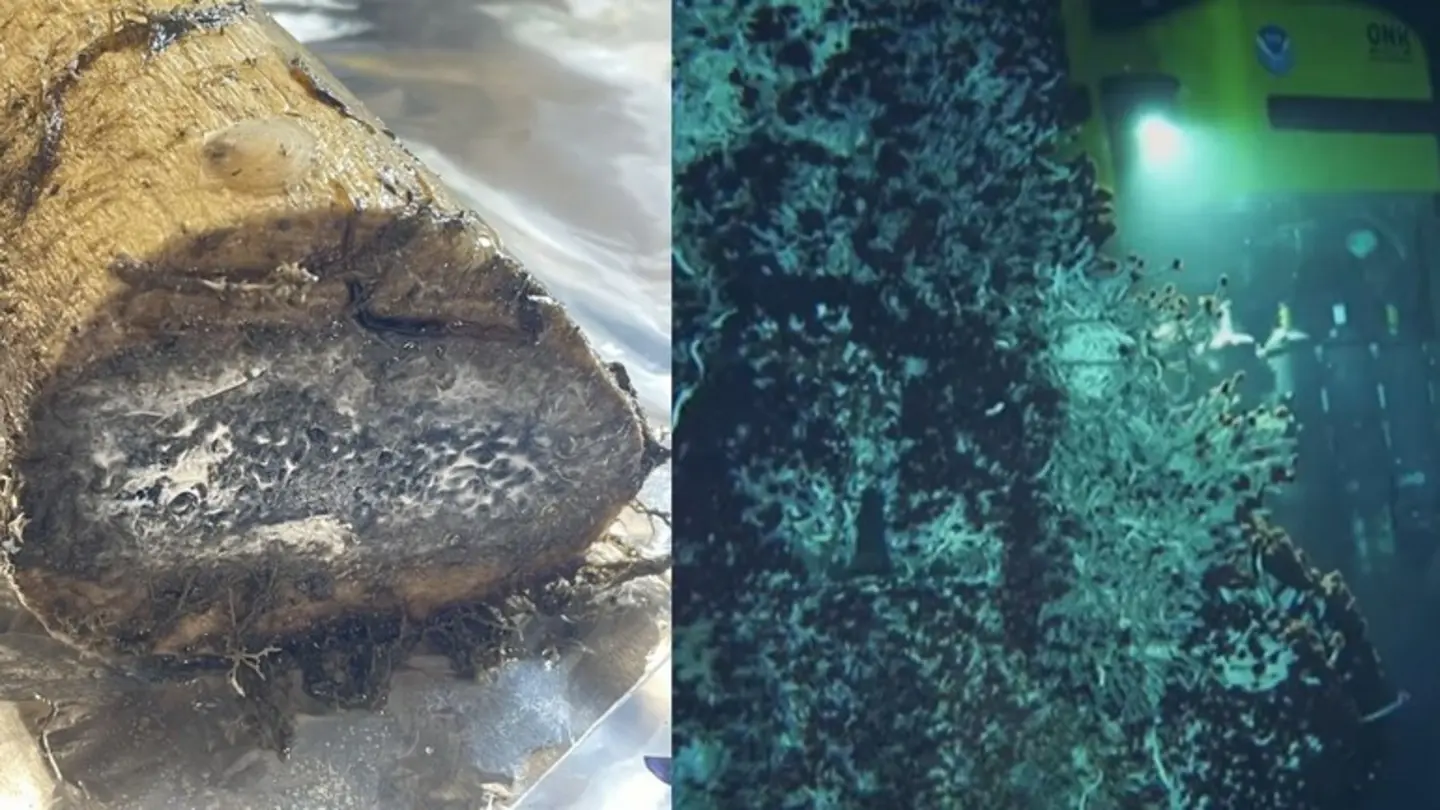
Deep-sea ecosystems are notoriously stable, making recent observations of a dramatic decline in “zombie worms” – scientifically known as Osedax – particularly puzzling. These unique creatures, famed for their ability to dissolve whale bones on the ocean floor, have seemingly disappeared from several research sites in the Pacific Ocean, prompting scientists to investigate the cause of this mysterious vanishing act.
Osedax worms don’t possess mouths or guts. Instead, they rely on symbiotic bacteria to break down the organic matter within whale skeletons, providing them with sustenance. They are typically found clustered around whale falls – the carcasses of whales that sink to the deep ocean floor – creating localized hotspots of biodiversity. Their disappearance raises concerns about the health and stability of these deep-sea communities.
Researchers initially discovered the decline during routine monitoring of whale falls off the coast of California. Subsequent investigations at other sites revealed similar patterns. The most compelling hypothesis centers around decreasing oxygen levels in the deep ocean, a phenomenon known as ocean deoxygenation. This is largely attributed to climate change and increased nutrient runoff from land, leading to algal blooms and subsequent oxygen depletion as the algae decompose.
Oxygen Depletion and Deep-Sea Life
While the deep sea was once considered immune to the effects of climate change, it is now increasingly vulnerable. Warmer surface waters hold less oxygen, and changes in ocean currents can disrupt the delivery of oxygen to the depths. The zombie worms, being specialized to thrive in the low-oxygen environment surrounding whale falls, are thought to be particularly sensitive to further reductions.
“These worms are already living in a pretty extreme environment,” explains Dr. Shana Goffredi, a marine biologist at Occidental College and a leading researcher on Osedax worms. “They’ve adapted to utilize the chemicals released during bone decomposition, and oxygen levels are already low. A further decrease could simply make it impossible for them to survive.”
The disappearance isn’t a complete extinction, but a localized decline. Researchers are still finding Osedax worms at some whale fall sites, suggesting that the impact of deoxygenation is not uniform. However, the trend is alarming, and the potential consequences for the broader deep-sea ecosystem are significant. Whale falls provide a crucial habitat for a variety of organisms, and the loss of Osedax worms could disrupt the entire food web.
Further research is underway to precisely measure oxygen levels at the affected sites and to determine the extent of the decline. Scientists are also investigating whether other factors, such as changes in the availability of whale falls or the presence of pollutants, may be contributing to the problem. The vanishing of the zombie worms serves as a stark reminder of the far-reaching impacts of climate change and the urgent need to address this global crisis. Understanding the resilience and vulnerability of deep-sea life is crucial for effective conservation efforts.
The study highlights the importance of long-term monitoring programs in the deep sea, as these are essential for detecting subtle changes and understanding the complex interactions within these ecosystems. Without continued observation, the full extent of the damage caused by ocean deoxygenation may remain hidden until it is too late.
Image Source: Google | Image Credit: Respective Owner