After being lost to the world for 375 years, Zealandia, often referred to as Earth’s eighth continent, has been rediscovered beneath the Pacific Ocean. This submerged landmass, largely hidden from view, represents a significant geological find, reshaping our understanding of the planet’s continental structure.
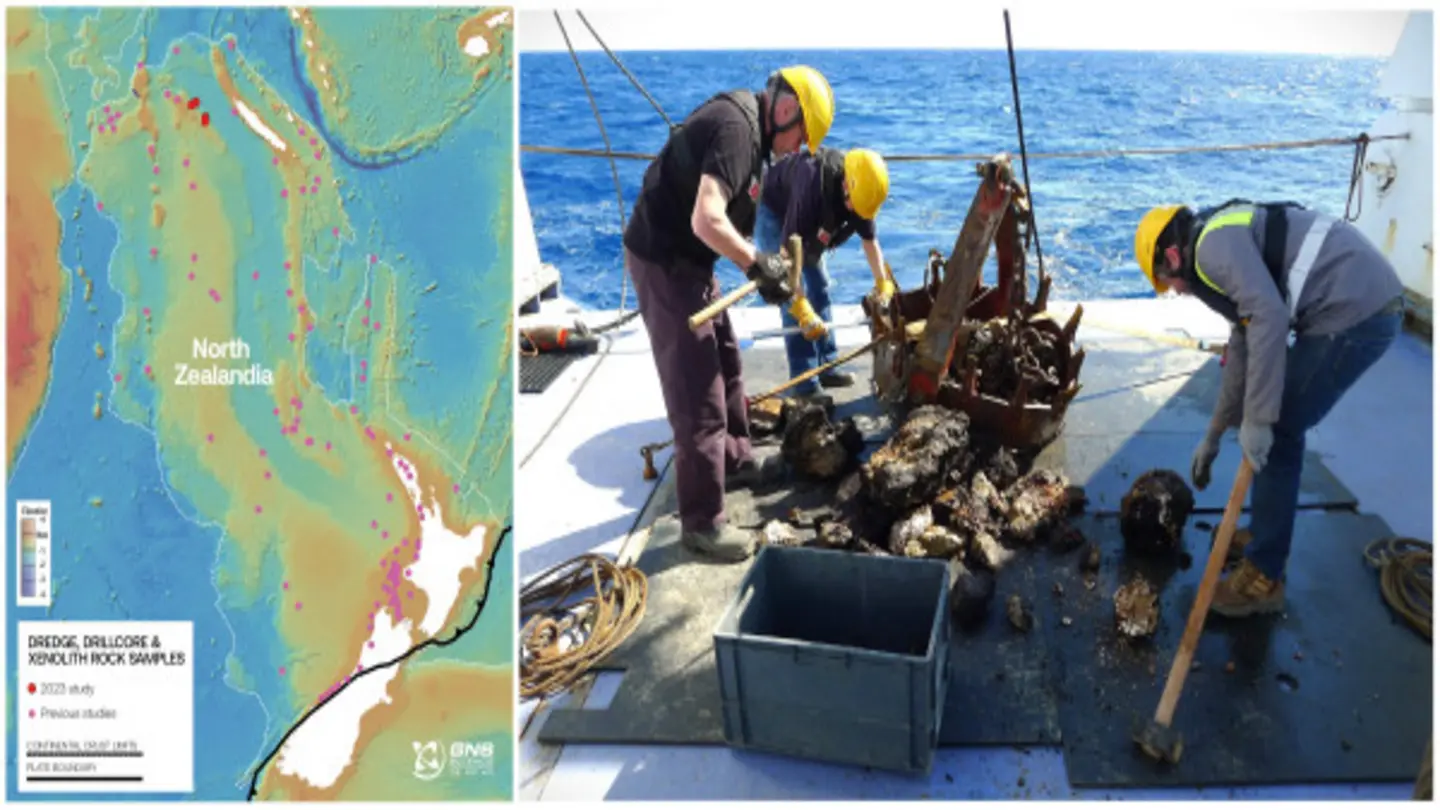
Zealandia’s existence had long been theorized, but definitive proof remained elusive until recently. Stretching across 4.9 million square kilometers, it is approximately six times the size of Madagascar. However, only about six percent of it is above sea level, comprising New Zealand and New Caledonia. The remaining 94 percent is submerged beneath the Pacific, making its exploration a challenging endeavor.
Geological Significance
The geological composition of Zealandia is predominantly continental crust, which distinguishes it from the surrounding oceanic crust. This difference was crucial in confirming its continental status. Scientific studies, including seismic surveys and sample analysis, have revealed that Zealandia shares similar rock formations and geological history with other continents, further solidifying its classification.
The formation of Zealandia dates back to the breakup of Gondwana, a supercontinent that existed millions of years ago. As Gondwana fragmented, Zealandia separated and gradually sank beneath the ocean. The precise reasons for its submergence are still under investigation, but tectonic activity and changes in sea levels are believed to have played significant roles.
The rediscovery of Zealandia offers valuable insights into plate tectonics, continental drift, and the evolution of Earth’s surface. By studying its submerged landforms and geological features, scientists hope to unlock secrets about the planet’s past and predict future geological events.
Exploring Zealandia presents numerous logistical challenges. The deep ocean environment requires specialized equipment and techniques. Scientists have utilized research vessels equipped with advanced sonar and underwater robots to map the submerged continent and collect samples. These efforts have provided detailed images of Zealandia’s underwater terrain, revealing mountains, valleys, and other geological features.
The ongoing research on Zealandia has implications beyond geology. It also sheds light on marine ecosystems and biodiversity. The submerged continent may harbor unique species and habitats that have adapted to the deep-sea environment. Understanding these ecosystems is crucial for conservation efforts and sustainable management of marine resources.
The rediscovery of Zealandia marks a milestone in Earth science. As technology advances, further exploration and research will undoubtedly uncover more secrets about this hidden continent, enriching our knowledge of the planet we inhabit and offering clues about its dynamic history. Its rediscovery emphasizes the importance of continued exploration and scientific inquiry in unraveling the mysteries of our world.
Image Source: Google | Image Credit: Respective Owner