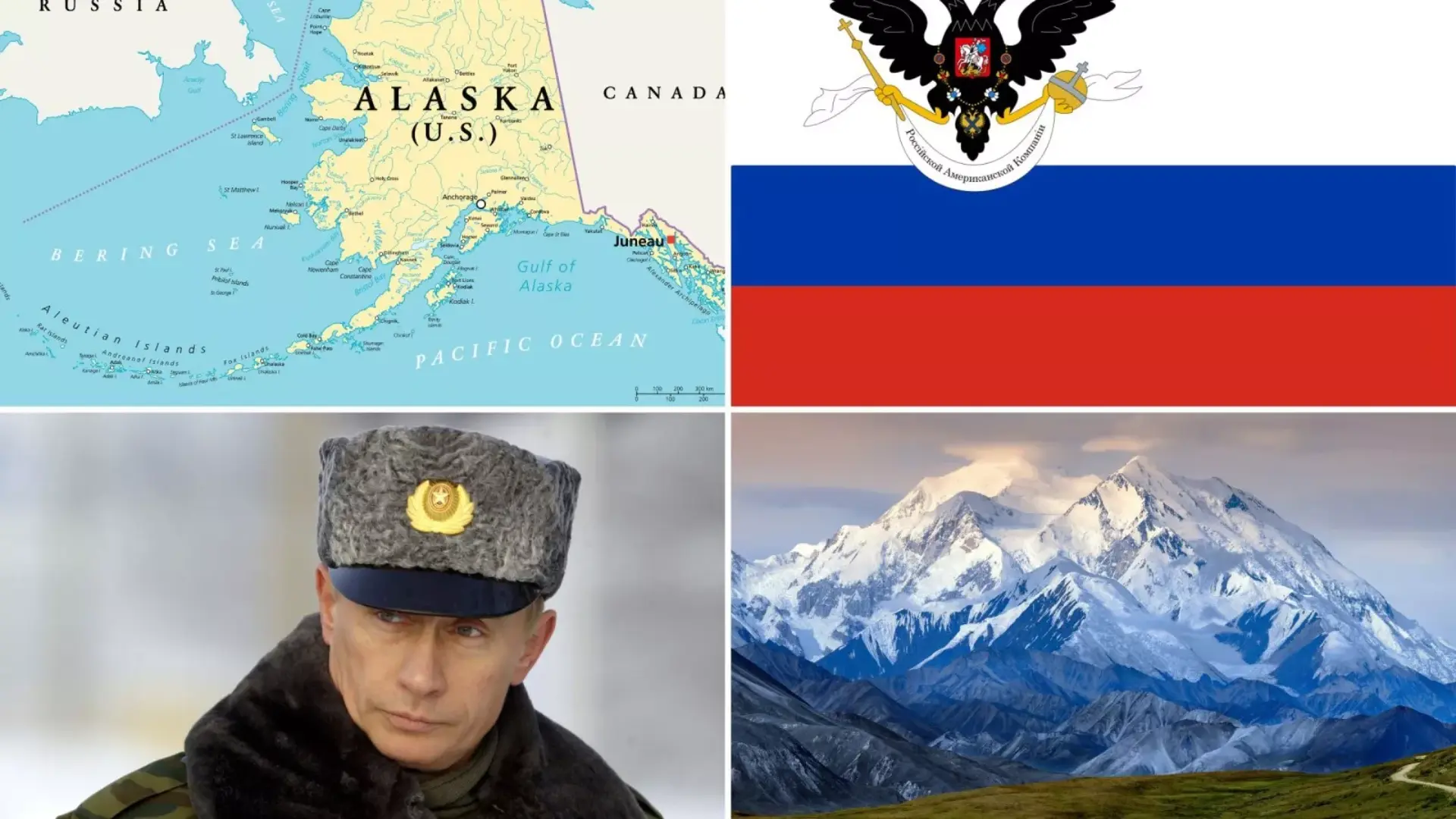
As US President Donald Trump and Russian President Vladimir Putin prepare to meet in Anchorage, Alaska, on Friday to discuss ending the war in Ukraine, the choice of venue recalls a major historical event — the sale of Alaska by Russia to the United States in 1867.
The upcoming summit will take place at Joint Base Elmendorf-Richardson, Alaska’s largest military installation and a key hub for Arctic defence. Yet, less than two centuries ago, the territory was part of the Russian Empire, separated from Russia by just 90km across the Bering Strait.
Russia’s Early Presence in Alaska
Russia’s interest in Alaska dates back to 1725, when Tsar Peter the Great sent explorer Vitus Bering to survey the region. Rich in natural resources — particularly sea otter pelts — Alaska became home to Russian settlements like Sitka, established after the conquest of the native Tlingit people in 1804.
However, maintaining the territory proved difficult. Harsh climates, long distances from St Petersburg, and competition from American traders limited Russia’s ability to sustain a strong presence.
The Crimean War and Changing Priorities
The Crimean War (1853–1856) drained Russia financially, costing the equivalent of 160 million pounds sterling. By the mid-1800s, overhunting had reduced Alaska’s profitability, and its proximity to British-controlled Canada made it vulnerable in any future conflict.
By the early 1860s, Tsar Alexander II decided it would be wiser to sell Alaska than risk losing it to Britain. The United States, fresh from its own westward expansion, became the obvious buyer.
The 1867 Alaska Purchase
On March 30, 1867, US Secretary of State William Seward negotiated the purchase of Alaska for $7.2 million — less than two cents an acre. The deal added nearly 1.5 million square kilometres to US territory, but critics mocked the acquisition as “Seward’s Folly,” believing it to be a frozen wasteland.
That perception changed in 1896 with the Klondike Gold Rush, which revealed Alaska’s vast mineral wealth. Over the following decades, its strategic value and resource potential became increasingly clear.
Alaska’s Economic Transformation
In the 20th century, Alaska’s economy diversified into fishing, mining, and later oil production. The discovery of major oil reserves at Prudhoe Bay in 1968 transformed state finances, funding public services and creating the Alaska Permanent Fund, which pays annual dividends to residents.
Today, Alaska thrives on a mix of oil revenues, commercial fishing, and tourism, while retaining its strategic role in US Arctic defence. Far from being a “folly,” the purchase is now seen as one of the most valuable land deals in US history.
As Trump and Putin meet in Anchorage, the setting serves as a reminder of a time when Alaska itself was a subject of negotiation between the two nations — though this time, Ukraine’s President Volodymyr Zelenskyy will be hoping that territorial concessions are not part of the discussion.
Image Source: Google | Image Credit: Respective Owner