A new study published in ESS Open Archive explores the intricate relationship between whitecapping-related wave energy dissipation and ambient sound in the open ocean. The research delves into the mechanisms by which breaking waves, specifically whitecaps, contribute to the underwater soundscape and how this acoustic energy is related to the dissipation of wave energy.
Understanding Whitecapping and Wave Energy
Whitecapping, the formation of white foam on breaking waves, is a significant process in ocean dynamics. It represents a crucial pathway for energy transfer from the atmosphere to the ocean, influencing ocean mixing and air-sea gas exchange. The energy dissipated during whitecapping is not only important for ocean physics but also plays a vital role in generating underwater sound. This sound, often referred to as ambient noise, is a critical component of the marine environment, affecting marine life communication, navigation, and foraging.
The study meticulously examines the correlation between the energy dissipated by whitecaps and the corresponding sound levels generated. Researchers used a combination of observational data and numerical models to analyze the spatial and temporal variations in both whitecapping activity and ambient sound. They focused on identifying the key factors that influence this relationship, such as wind speed, wave height, and water temperature.
Methodology and Findings
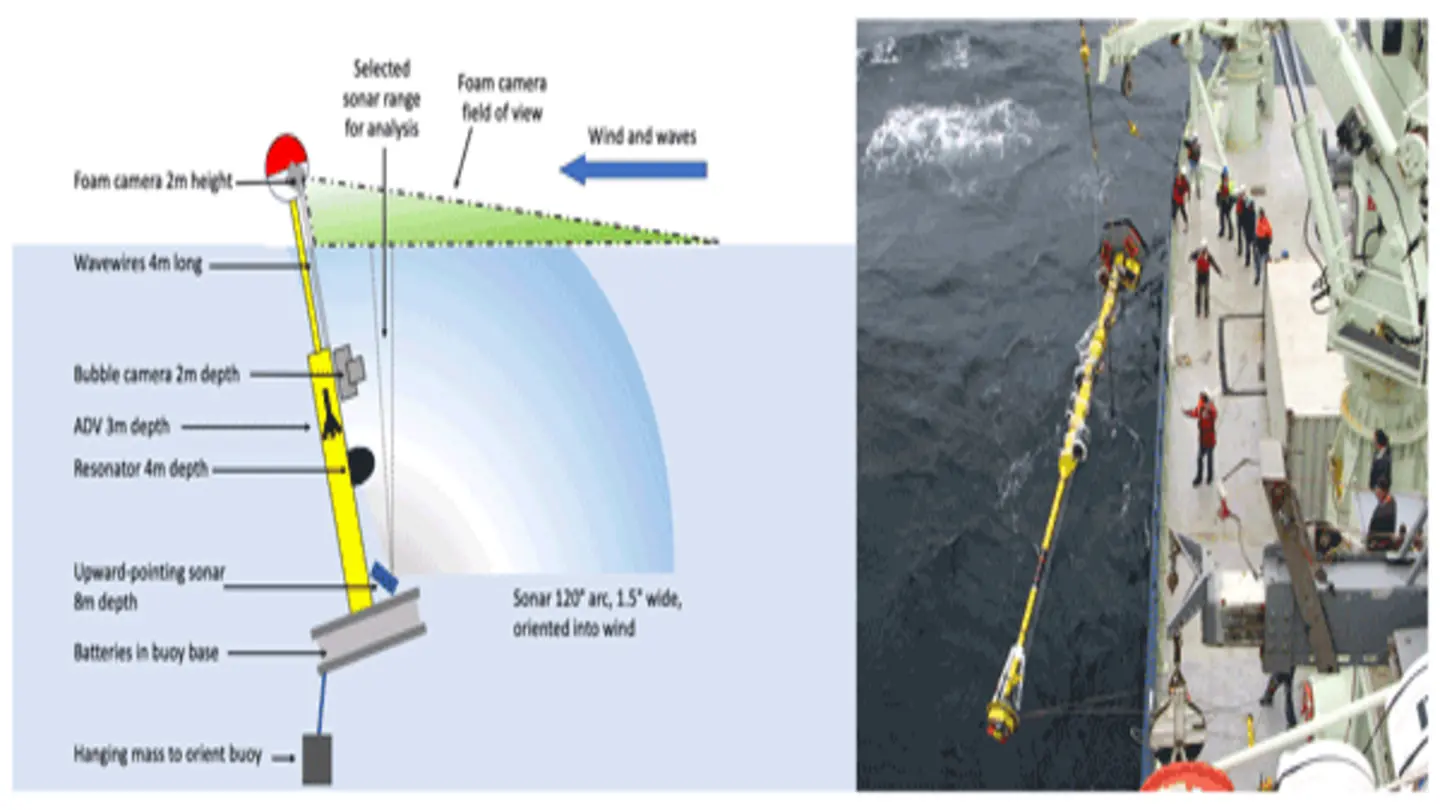
The research team employed advanced acoustic sensors to measure underwater sound levels across different oceanic regions. Simultaneously, they used remote sensing techniques, including satellite imagery and wave buoys, to monitor whitecapping activity and wave characteristics. By integrating these datasets, the researchers were able to establish a robust link between whitecap energy dissipation and the resulting ambient sound. The findings indicated a strong positive correlation, with higher levels of whitecapping leading to increased underwater sound levels.
Moreover, the study revealed that the frequency spectrum of the sound generated by whitecaps is influenced by the size and intensity of the breaking waves. Larger, more energetic whitecaps tend to produce lower-frequency sounds, while smaller whitecaps generate higher-frequency sounds. This frequency-dependent relationship has implications for marine animals that rely on specific frequency ranges for communication.
Implications for Marine Environment
The study’s results have significant implications for understanding the ocean’s acoustic environment and its impact on marine life. Ambient noise from whitecapping can mask other sounds, potentially interfering with the ability of marine animals to communicate, detect predators, and find prey. Understanding the sources and characteristics of ambient noise is essential for developing effective strategies to mitigate its impact on marine ecosystems. Further research is needed to explore the long-term effects of changing wave patterns and whitecapping activity on marine animal behavior and population dynamics.
This research highlights the complex interactions between physical oceanography and marine acoustics, emphasizing the need for interdisciplinary approaches to studying the ocean environment. By unraveling the connections between whitecapping, wave energy dissipation, and ambient sound, scientists can gain a more comprehensive understanding of the ocean’s intricate processes and their impact on marine life.
Image Source: Google | Image Credit: Respective Owner