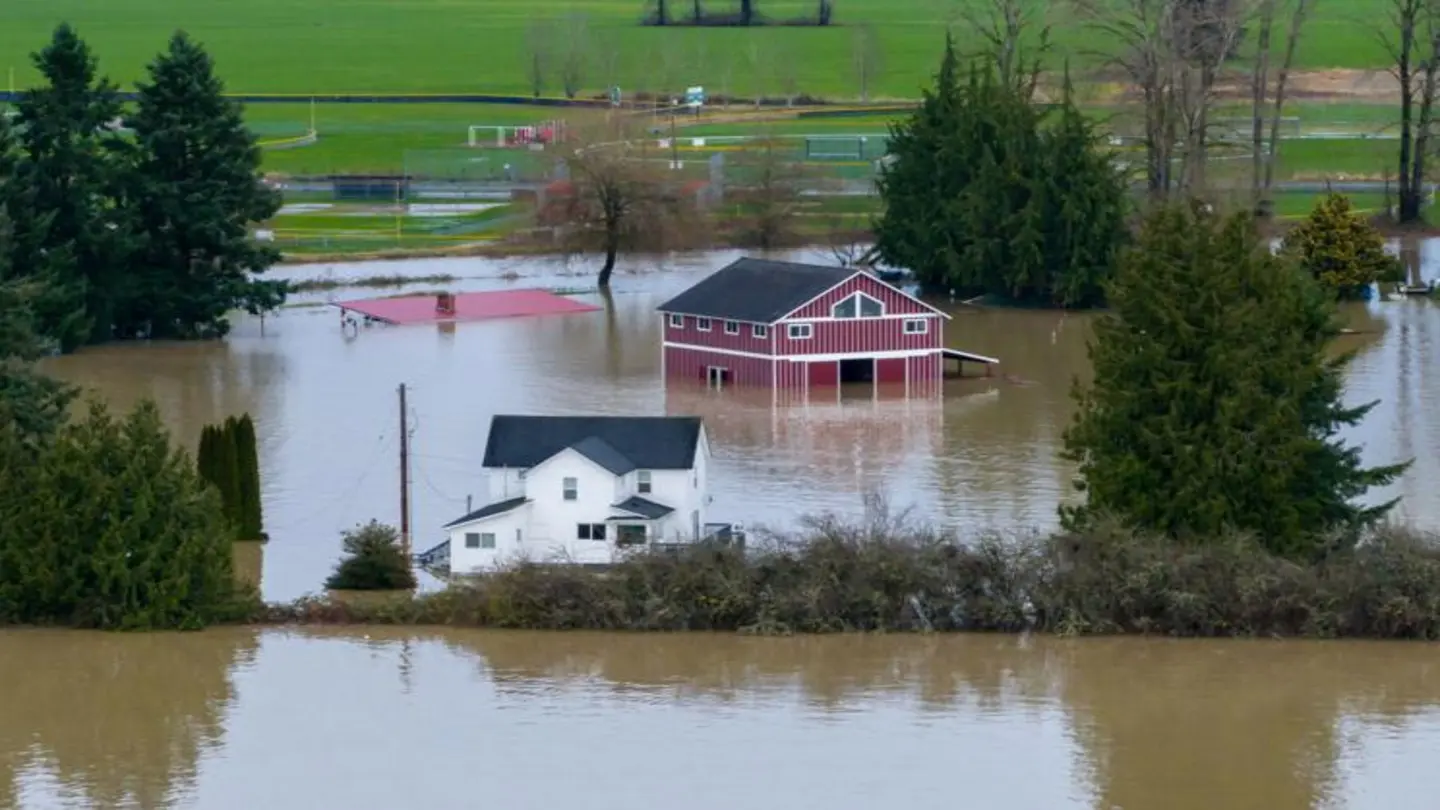
Washington state is battling catastrophic flooding described as historic, with rapid water surges sweeping away homes, crippling infrastructure, and leaving families isolated across vast regions of the Pacific Northwest.
The deluge, driven by an atmospheric river phenomenon, has dumped unprecedented rainfall over the Cascade Mountains and lowlands since late last week. Entire neighborhoods in cities such as Seattle, Tacoma, and smaller communities like Sumas andEvacuation centers have been overwhelmed as rivers burst their banks, subsuming roads, bridges, and residential areas. Rescue teams, including National Guard units, have scrambled to pluck stranded residents from rooftops and flooded vehicles, with dozens still missing as of Monday afternoon.
Local authorities have declared a state of emergency, estimating damage to public infrastructure alone could exceed $1 billion. Critical highways including Interstate 5 remain closed, severing connections between Seattle and Portland, Oregon. Rail and air travel have also been disrupted, with Seattle-Tacoma International Airport halting all flights temporarily on Sunday. Power outages affect over 200,000 households, and utility companies warn restorations could take weeks.
The flooding has exposed deepening vulnerabilities in the region’s disaster preparedness. Climate scientists note that such events are becoming more frequent and intense due to warming temperatures, which increase atmospheric moisture capacity. Washington’s Department of Ecology has logged record soil saturation levels, meaning even modest additional rain could trigger further landslides and flash floods.
Residents describe the chaos as surreal. In the hard-hit town of Sumas, homeowner Maria Gonzalez recounted how her home was “literally lifted off its foundation and carried downstream.” Communities are organizing volunteer bucket brigades to deliver supplies to cut-off families, while local schools serve as shelters for displaced people. The Federal Emergency Management Agency (FEMA) has dispatched teams to coordinate federal aid, but logistical challenges persist due to washed-out access routes.
Environmental damage is equally severe. Farmland in the Skagit Valley, a key agricultural hub, lies under several feet of water, drowning crops and livestock. scientists warn the deluge has altered rivercourses and contaminated drinking water sources with sediment and debris. Cleanup efforts face hurdles from contaminated mud and debris fields that could take months to clear.
As recovery begins, officials emphasize the need for long-term climate adaptation strategies. This includes revising zoning laws, investing in green infrastructure like permeable surfaces, and enhancing regional flood barriers. Washington Governor Jay Inslee has requested a major disaster declaration from President Joe Biden to unlock additional federal funding. The scale of destruction underscores the growing financial and human cost of climate-driven extreme weather events across the United States.
Image Source: Google | Image Credit: Respective Owner