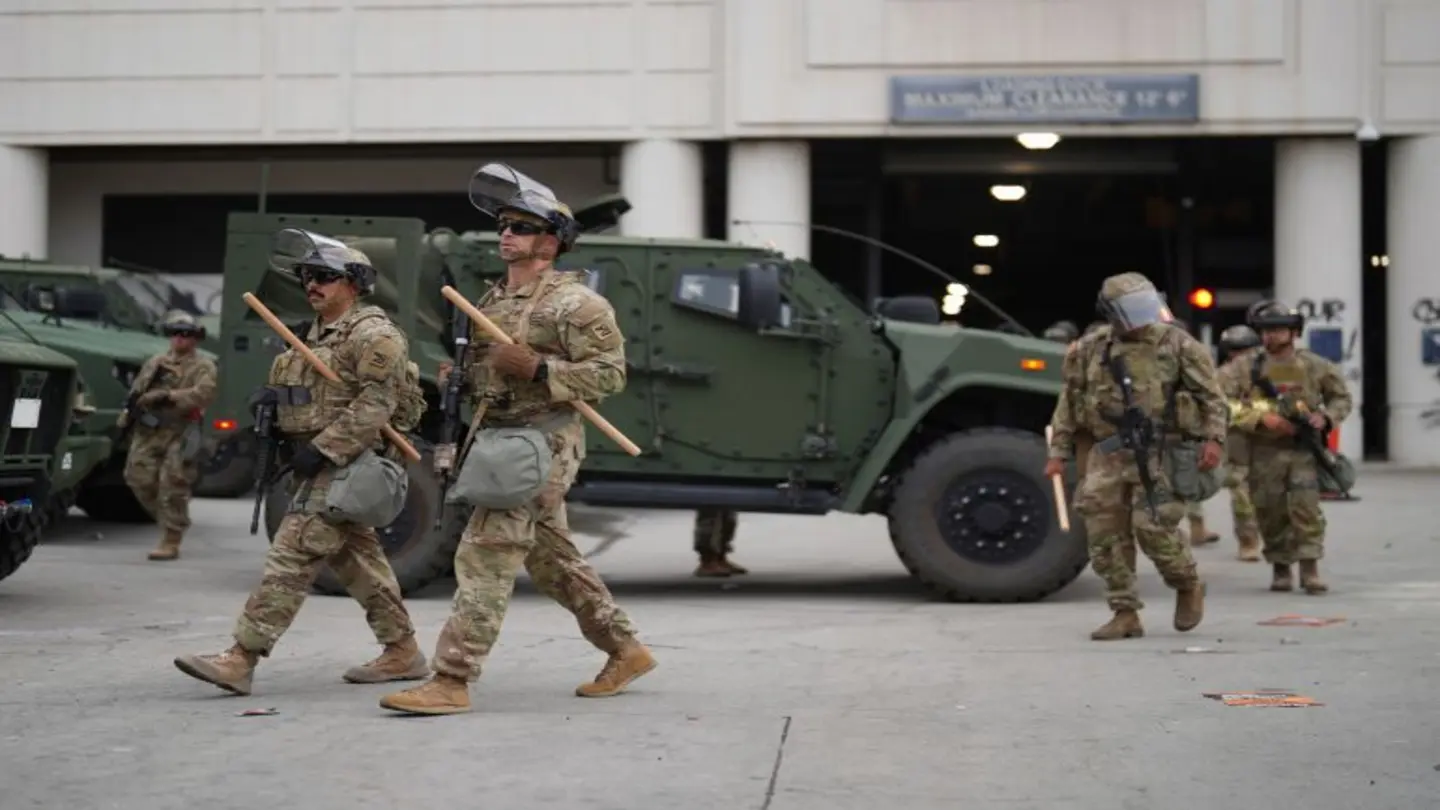
A U.S. federal judge has ordered an immediate end to the deployment of National Guard troops in Los Angeles, a move that directly counters a directive from former President Donald Trump during the 2020 protests following the death of George Floyd.
The ruling, issued by Judge Carter in the Central District of California, declares that the deployment lacked proper constitutional authority and violated civil liberties. The judge stated that Trump’s order to deploy federal troops without local law enforcement request was an overreach of executive power.
The decision stems from a lawsuit filed by civil rights groups and local officials who argued the deployment created an atmosphere of intimidation and suppressed First Amendment rights. Testimony highlighted instances of excessive force and arbitrary detentions by troops, leading to widespread public outcry.
Trump had authorized the deployment as part of a broader strategy to assert federal control over protests in major cities. However, the court found that under the Posse Comitatus Act, the President cannot use military forces for domestic law enforcement without explicit congressional approval or an insurrection scenario as defined by law.
Legal experts suggest this ruling sets a significant precedent for future presidential actions involving federalized military operations. It reinforces judicial oversight over executive orders that impact civilian populations, particularly during periods of social unrest.
Reactions have been polarized. The Department of Justice vowed to appeal, calling the decision an infringement on presidential discretion during national emergencies. Conversely, civil liberties organizations praised the ruling as a vital protection against militarization of police functions.
The case also raises broader questions about the balance between federal authority and states’ rights. California officials had previously opposed the deployment, arguing that local authorities were capable of managing public safety without federal intervention. The judge’s order aligns with this perspective, emphasizing that localized governance is preferable unless explicitly constitutional grounds exist for federal involvement.
Analysts note that the ruling could influence upcoming debates over emergency powers legislation, potentially shaping reforms to prevent similar conflicts in future administrations. The decision underscores growing judicial scrutiny of executive actions that intersect with civil rights and military-civilian relations.
As the appeal process unfolds, the immediate impact will be the withdrawal of remaining National Guard units from protest zones. Observers expect continued tension between federal and state authorities over disaster response frameworks, particularly during periods of heightened social activism.
Image Source: Google | Image Credit: Respective Owner