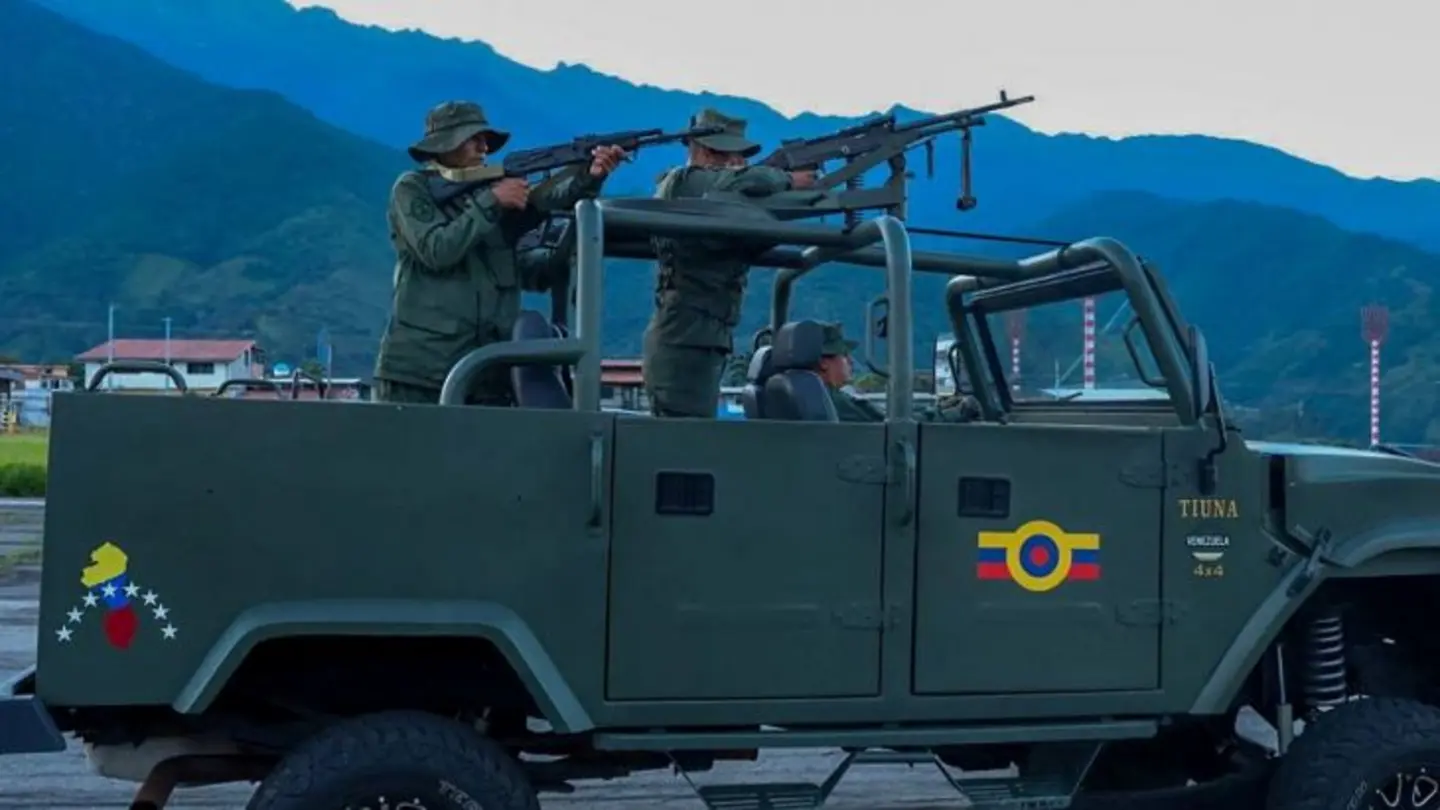
Former U.S. President Donald Trump has reportedly ordered the complete shutdown of Venezuelan airspace, escalating tensions amid ongoing anti-government sentiment in the South American nation. The order, described as closing Venezuelan airspace “in its entirety,” marks a significant escalation in U.S. policy toward Venezuela.
Background of Tensions
The relationship between the United States and Venezuela has been strained for years, particularly under the leadership of Nicolás Maduro. The U.S. has levied sanctions against Venezuelan officials and entities, citing concerns over human rights, corruption, and the legitimacy of the Maduro regime. These sanctions have significantly impacted Venezuela’s economy, which was already grappling with hyperinflation and shortages of essential goods.
Anti-government sentiment has been on the rise within Venezuela, fueled by economic hardship and political repression. Numerous protests and demonstrations have been met with crackdowns by security forces, further exacerbating the situation. The international community remains divided on how to address the Venezuelan crisis, with some nations supporting dialogue and negotiation while others back stronger measures against the Maduro government.
The airspace closure, if confirmed, would have far-reaching implications for Venezuela. It would severely restrict air travel and trade, potentially worsening the country’s economic woes. It could also impact humanitarian efforts, making it more difficult to deliver aid and assistance to those in need. Furthermore, the move could be interpreted as a provocative act, further heightening tensions and increasing the risk of conflict.
Potential Consequences
Experts suggest that the decision could significantly impact regional stability. Blocking airspace could hinder commercial flights and humanitarian aid, and might provoke retaliation. Some analysts view this as a move to apply maximum pressure on the Maduro regime, while others worry about unintended consequences and further destabilization of the region.
The timing of the reported order coincides with increased domestic unrest in Venezuela, indicating a potential link between the airspace closure and the internal political situation. The U.S. has historically supported opposition forces in Venezuela, and the airspace closure could be seen as a means of bolstering these groups.
The full ramifications of the airspace closure remain to be seen, but it is clear that this is a high-stakes move with the potential to significantly alter the course of events in Venezuela. International observers are closely monitoring the situation, and calls for de-escalation and diplomatic solutions are likely to grow in the coming days.
The Times of India reports the order adds another layer of complexity to an already volatile situation, raising questions about the future of U.S.-Venezuelan relations and the stability of the region.
Image Source: Google | Image Credit: Respective Owner