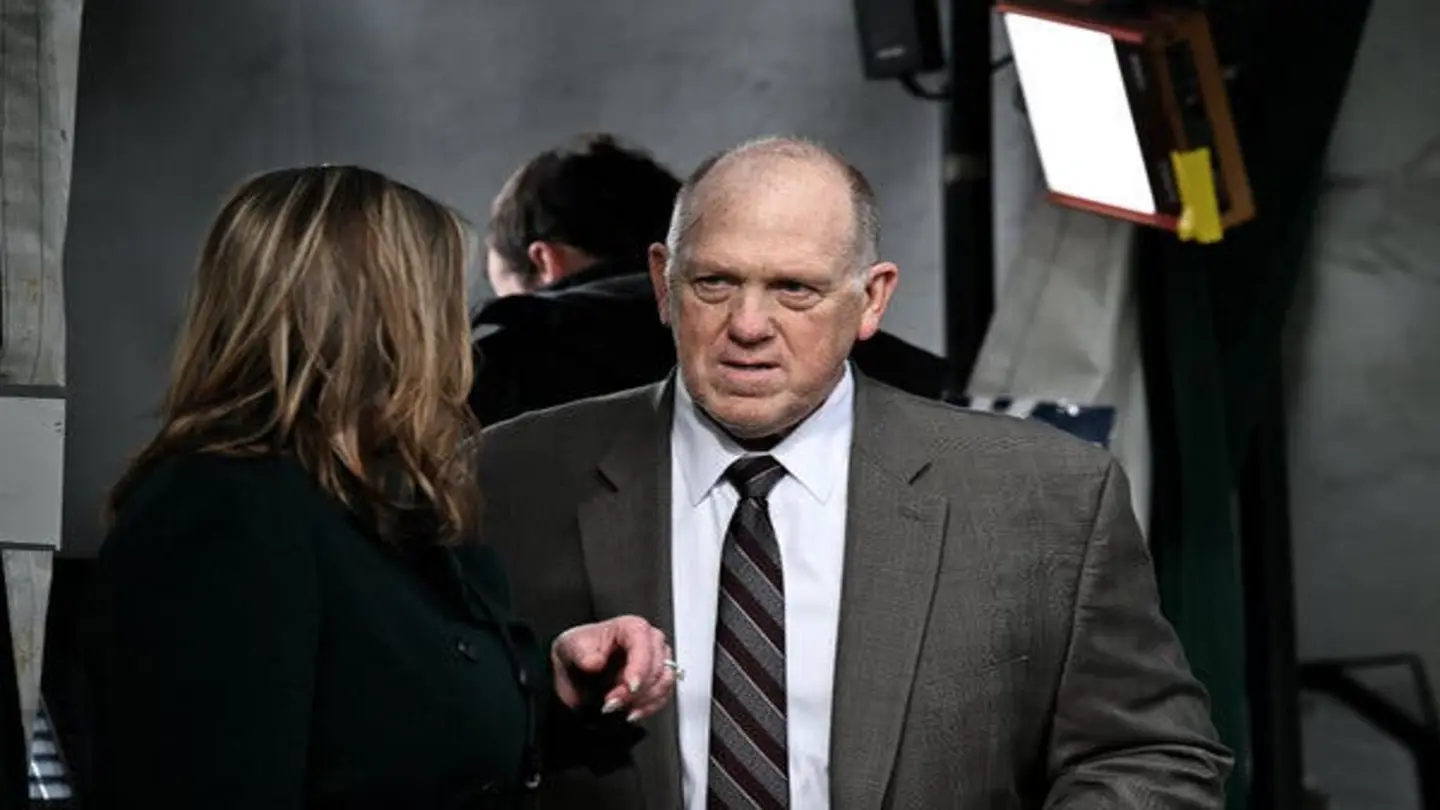
Former President Donald Trump’s decision to dispatch former Immigration and Customs Enforcement (ICE) Director Tom Homan to Minneapolis, Minnesota, rather than South Dakota Governor Kristi Noem, has sparked speculation about a potential cooling of relations and a strategic shift in approach to border security messaging. The move, perceived by many as a deliberate snub to Noem, a prominent Trump ally, comes as Minneapolis grapples with rising crime rates and concerns about immigration policies.
Homan, known for his hardline stance on immigration enforcement during the Trump administration, is expected to assess the situation in Minneapolis and advise on potential strategies. His appointment signals Trump’s continued focus on border security and his willingness to highlight perceived failures in cities with more liberal immigration policies. Noem, who has been a vocal supporter of Trump and has frequently echoed his tough-on-crime rhetoric, was reportedly expecting to play a key role in addressing the issues in Minneapolis.
Sources suggest the decision wasn’t solely based on policy expertise. Noem’s recent public appearances and statements, while aligned with Trump’s base, may have been viewed as overly ambitious or potentially distracting from Trump’s own narrative. She has been increasingly mentioned as a potential future presidential contender, a prospect that could be unsettling to Trump and his inner circle. Homan, conversely, is seen as a loyal and disciplined operative who will reliably amplify Trump’s message without seeking the spotlight.
Political Implications
The choice to send Homan instead of Noem carries significant political weight. It demonstrates Trump’s control over his network of allies and his ability to reward loyalty while simultaneously keeping potential rivals in check. The move could also be interpreted as a message to other ambitious Republicans: aligning with Trump is beneficial, but challenging his dominance is risky.
Furthermore, the selection of Minneapolis as a focal point is strategically important. The city has become a symbol, in conservative circles, of progressive policies gone awry, particularly regarding policing and immigration. By sending Homan to Minneapolis, Trump aims to reinforce his narrative that Democratic leadership is failing to address critical issues and that his own policies are the solution.
Analysts note that Homan’s expertise lies primarily in immigration enforcement, while the challenges in Minneapolis are multifaceted, encompassing crime, policing reform, and social unrest. However, Trump’s strategy often prioritizes symbolic gestures and messaging over nuanced policy solutions. The optics of sending a former ICE director to a city grappling with these issues are likely to resonate strongly with his base.
The situation is being closely watched by political observers, who are eager to see how Noem will respond. While she has publicly expressed support for Trump’s efforts, the perceived snub is likely to create tension behind the scenes. The long-term implications of this decision for the relationship between Trump and Noem, and for the broader Republican political landscape, remain to be seen. The appointment of Homan underscores Trump’s continued influence within the party and his willingness to use his political capital to shape the narrative and control the flow of power.
Image Source: Google | Image Credit: Respective Owner