Former US President Donald Trump is reportedly considering designating Antifa as a “terror organisation,” according to NDTV. This potential move comes days after an incident involving Charlie Kirk, founder of Turning Point USA, who was allegedly targeted by protesters. The report suggests that the designation is being contemplated in response to growing concerns about left-wing activism and perceived threats to public order.
Background on Antifa
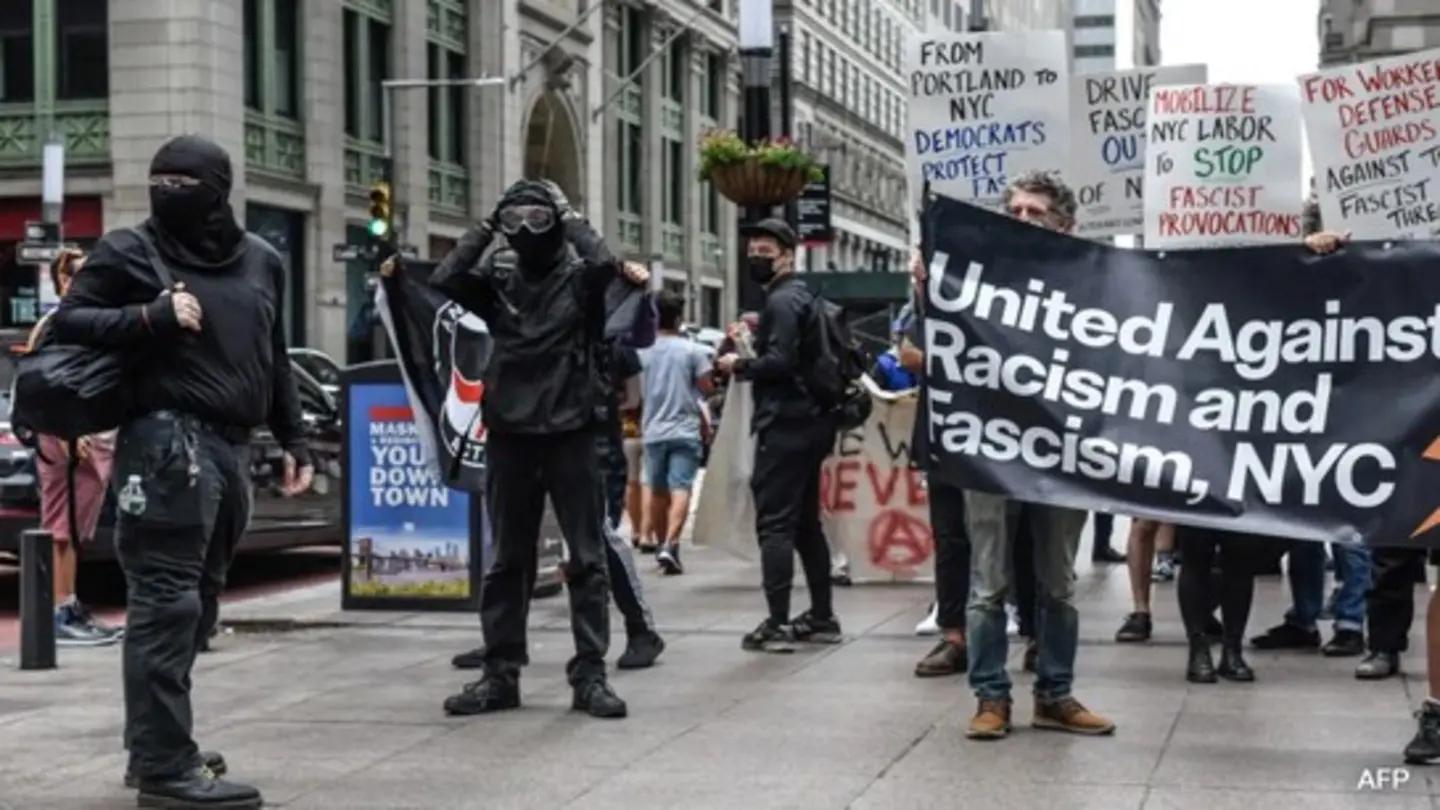
Antifa, a loosely affiliated network of anti-fascist activists, has gained prominence in recent years for its opposition to far-right and white supremacist groups. The movement is not centrally organized and encompasses a diverse range of individuals and groups who share a common goal of combating fascism and other forms of oppression. Antifa activists often engage in protests and demonstrations, and some have been involved in confrontations with opposing groups.
The Charlie Kirk Incident
The incident involving Charlie Kirk has added fuel to the debate surrounding Antifa and its activities. While details of the incident remain somewhat unclear, reports suggest that Kirk was confronted by protesters who opposed his political views. This has led to renewed calls for stricter measures to address what some see as a growing problem of political violence and intimidation.
Legal and Political Implications
Designating Antifa as a “terror organisation” would have significant legal and political implications. It could allow law enforcement agencies to pursue investigations and prosecutions of individuals and groups associated with Antifa under terrorism laws. This could also lead to restrictions on freedom of speech and assembly, raising concerns about civil liberties. Critics argue that such a designation would be overly broad and could unfairly target legitimate forms of political protest.
The Trump administration previously explored the possibility of designating Antifa as a terrorist organization in 2020, but ultimately did not take formal action. The current consideration suggests that the issue remains a priority for some within the Republican party. It reflects ongoing political divisions and debates about the role of protest and the limits of free speech in a democratic society. A potential designation would likely face legal challenges and spark widespread controversy, further polarizing the political landscape. The decision hinges on the balance between national security concerns and the protection of constitutional rights, a delicate balance that has been at the heart of many political debates in the United States.
The potential designation of Antifa as a terror organisation is a developing story with far-reaching implications for civil liberties, law enforcement, and the political landscape in the United States.
Image Source: Google | Image Credit: Respective Owner