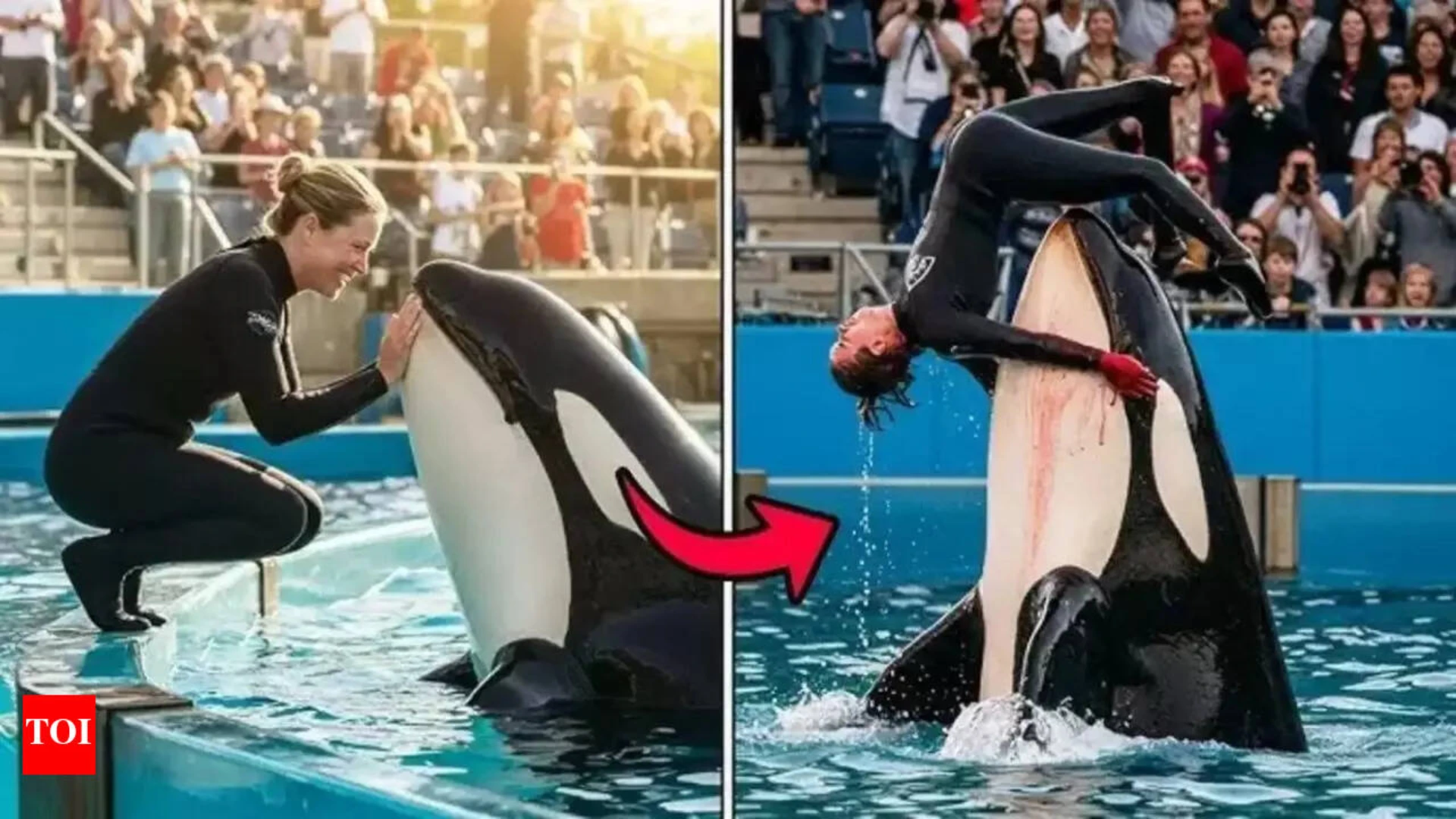
A disturbing video claiming to show a marine trainer named Jessica Radcliffe being killed by an orca during a live show has gone viral across TikTok, Facebook, and X. While the footage appears convincing, multiple fact-checks confirm that the incident — and the trainer — never existed. The clip is an AI-generated hoax with no basis in reality.
What the Video Claims to Show
In the viral clip, a young woman identified as “Jessica Radcliffe” is seen dancing on top of an orca at a place called Pacific Blue Marine Park. The crowd cheers as the whale surfaces — until it suddenly lunges, pulling her underwater. Social media posts sharing the video allege that she died just minutes later.
No Evidence of Incident or Person
Despite its popularity online, there is no credible evidence of any such attack or the existence of a trainer named Jessica Radcliffe. No marine park records, news reports, or official statements back up the claim. In fact, fact-checkers found that the park itself does not exist.
Forensic video analysis reveals unusual water movement, unnatural pauses, and synthetic audio — all signs of AI manipulation. Voices in the video also appear artificially generated.
Confirmed as AI-Generated Hoax
Forbes labeled the clip “a hoax,” stressing that a fatal orca attack on a trainer would make global headlines, as in past real-life tragedies. The Economic Times likewise confirmed that the names, setting, and events in the video have no connection to any verified records.
How the Hoax Gains Credibility
Experts note that such fakes often borrow elements from real events to seem believable. The Jessica Radcliffe story draws loose parallels to genuine incidents, such as the deaths of Dawn Brancheau in 2010 at SeaWorld and Alexis Martinez in 2009 in Spain — both well-documented and unrelated to this fabricated video.
The high emotional impact, coupled with realistic AI visuals, fuels the video’s virality before fact-checks can reach the same audience.
The Bigger Problem
This incident highlights the growing challenge of detecting AI-generated misinformation. Hoaxes like this exploit public fascination with dramatic events and ethical debates — in this case, the controversy around keeping orcas in captivity — to spread quickly online.
The viral Jessica Radcliffe orca attack video is entirely fictional. There is no real incident, no such trainer, and no credible evidence that anything remotely similar occurred. As AI tools make it easier to fabricate convincing “news,” verifying information through trusted sources has become more important than ever.
Image Source: Google
Image Credit: Respective Owner