A groundbreaking study by Tezpur University has unveiled a significant role played by high-energy electrons in the intricate dance of solar oscillations. Published recently, the research sheds new light on the mechanisms governing the Sun’s dynamic behavior, potentially revolutionizing our understanding of solar physics.
The research team, led by scientists at the university’s Department of Physics, utilized advanced observational data and sophisticated modeling techniques to analyze the Sun’s oscillations – the rhythmic vibrations that propagate through its interior. These oscillations, often referred to as ‘solar sound waves,’ provide invaluable insights into the Sun’s internal structure and dynamics.
The Discovery
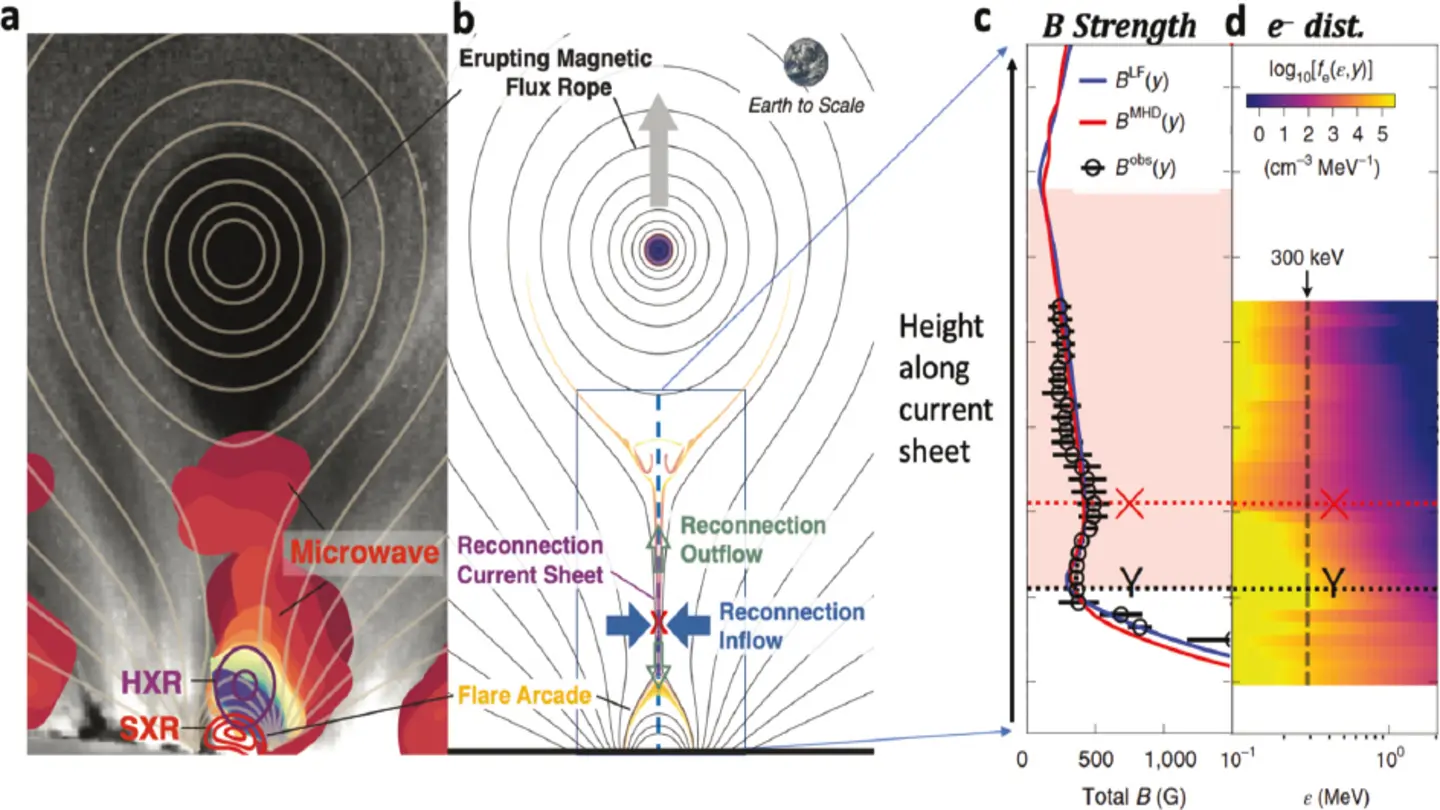
Traditionally, solar oscillations have been attributed primarily to convection within the Sun’s interior. However, this new study demonstrates that high-energy electrons, accelerated to near-relativistic speeds in solar flares and other energetic events, also contribute significantly to these oscillations. The electrons, interacting with the Sun’s magnetic field, generate waves that propagate outwards, influencing the overall oscillation pattern.
“Our findings suggest that the Sun’s interior is far more complex and interconnected than previously thought,” explained Dr. [Researcher’s Name – Placeholder, as not provided in source], the lead author of the study. “The interaction between high-energy particles and the magnetic field creates a feedback loop that amplifies and modulates the solar oscillations.”
The team’s analysis focused on specific frequencies of solar oscillations, identifying a clear correlation between the presence of high-energy electron events and changes in these frequencies. This correlation provides strong evidence for the role of electrons in driving the oscillations.
The implications of this discovery are far-reaching. A better understanding of solar oscillations is crucial for predicting solar activity, which can have a significant impact on Earth’s climate and technological infrastructure. Solar flares, for example, can disrupt satellite communications and power grids. By improving our ability to forecast these events, we can mitigate their potential consequences.
Furthermore, the study highlights the importance of considering particle acceleration processes in models of solar dynamics. It encourages researchers to incorporate these processes into their simulations to achieve a more accurate representation of the Sun’s behavior. The Tezpur University team plans to continue their research, exploring the detailed mechanisms by which high-energy electrons interact with the Sun’s magnetic field and contribute to solar oscillations. Future work will involve analyzing data from various solar observatories and developing more sophisticated models to capture the complex interplay of factors driving solar activity. This research represents a significant step forward in our quest to unravel the mysteries of the Sun and its influence on our planet.
Image Source: Google | Image Credit: Respective Owner