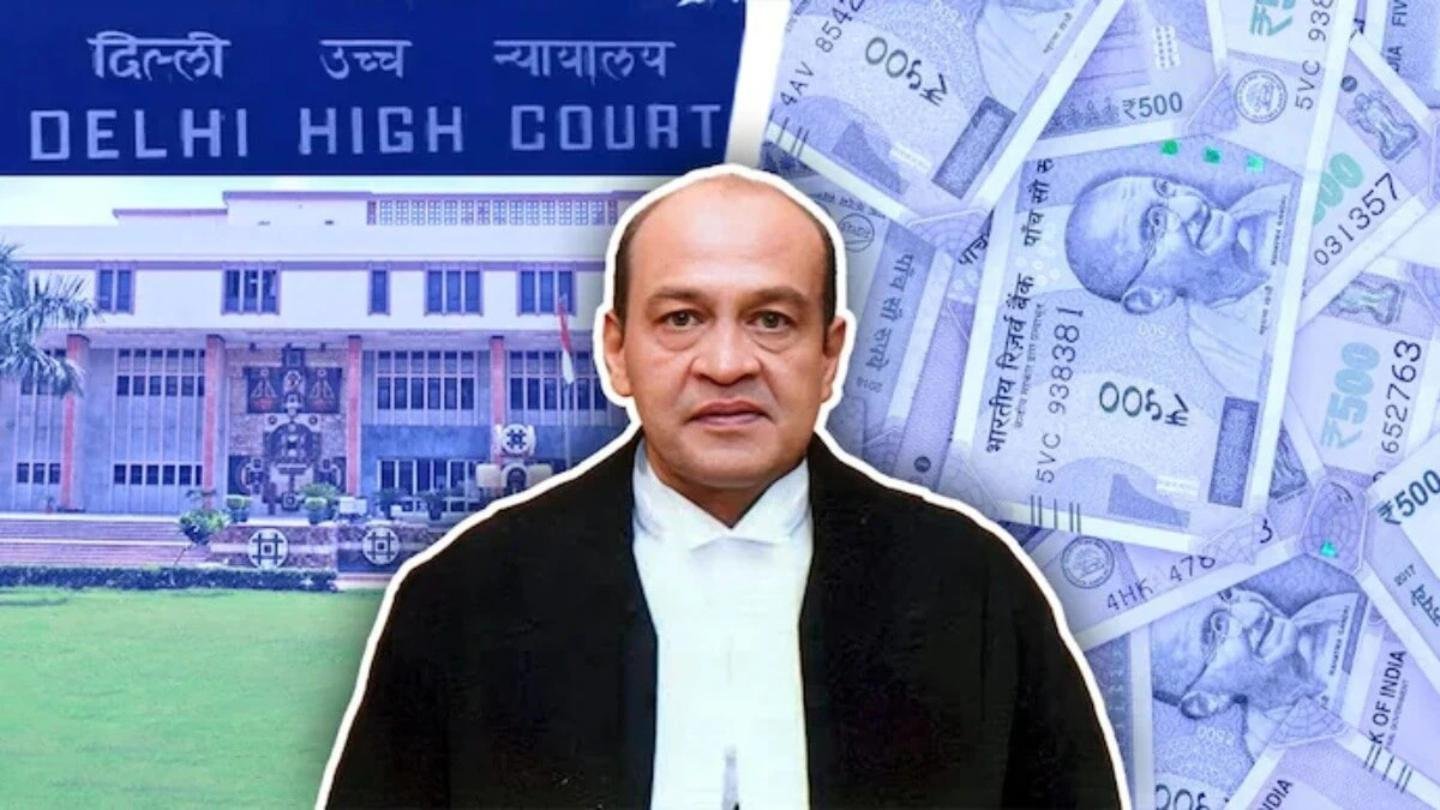
The Supreme Court on Thursday dismissed a petition by Justice Yashwant Varma challenging an internal inquiry that recommended his removal, paving the way for a rare impeachment process against a sitting High Court judge.
Justice Varma, who served at the Delhi High Court, could become the first judge in independent India to be removed from office through impeachment. The controversy stems from a March incident where large amounts of burnt cash were discovered at his official residence following a fire.
SC Says Plea “Not Worth Entertaining”
A two-judge bench of Justices Dipankar Datta and A.G. Masih refused to entertain Justice Varma’s writ petition, calling his conduct “not confidence-inspiring.” The court upheld the validity of the in-house committee formed by the then Chief Justice of India, Sanjiv Khanna, and backed its recommendation for removal.
The bench questioned why Justice Varma appeared before the committee if he believed its formation was unconstitutional. “You’re a constitutional authority. If you thought the panel was illegal, why didn’t you challenge it earlier?” the judges asked.
Parliamentary Impeachment Now Likely
With the court’s decision, Parliament will now proceed with an investigation under Articles 124, 217, and 218 of the Constitution. Last month, over 145 MPs from both ruling and opposition parties submitted a notice to Lok Sabha Speaker Om Birla requesting action against Justice Varma.
The impeachment process involves a motion supported by at least 50 Rajya Sabha members or 100 Lok Sabha members. Once admitted, a detailed inquiry is conducted before any recommendation is made to the President of India.
Justice Varma’s Defense Rejected
In his petition, Justice Varma argued that the in-house committee lacked jurisdiction and denied him a fair hearing. He also said the judiciary overstepped by recommending impeachment—a power he claims rests solely with Parliament.
These claims were rejected by the Supreme Court, which reaffirmed the judiciary’s right to initiate internal inquiries under the Judges Inquiry Act, 1968.
The “Cash-At-Home” Controversy
The case erupted on March 15, when firefighters responding to a blaze at Justice Varma’s central Delhi bungalow found bundles of burnt currency in an outhouse. According to the inquiry report, access to that section of the property was controlled by Justice Varma and his family.
Justice Varma has denied any wrongdoing, calling the allegations baseless and part of a conspiracy. Despite his denial, the incident raised serious questions about integrity within the judiciary, prompting swift action from the Supreme Court.
The internal committee’s 64-page report was sent to President Droupadi Murmu and Prime Minister Narendra Modi, recommending that Parliament take up the matter.
As the proceedings shift to the legislative stage, all eyes will be on how Parliament handles one of the most significant judicial controversies in recent years.
Image Source: Google Images
Image Credit: Respective Owner