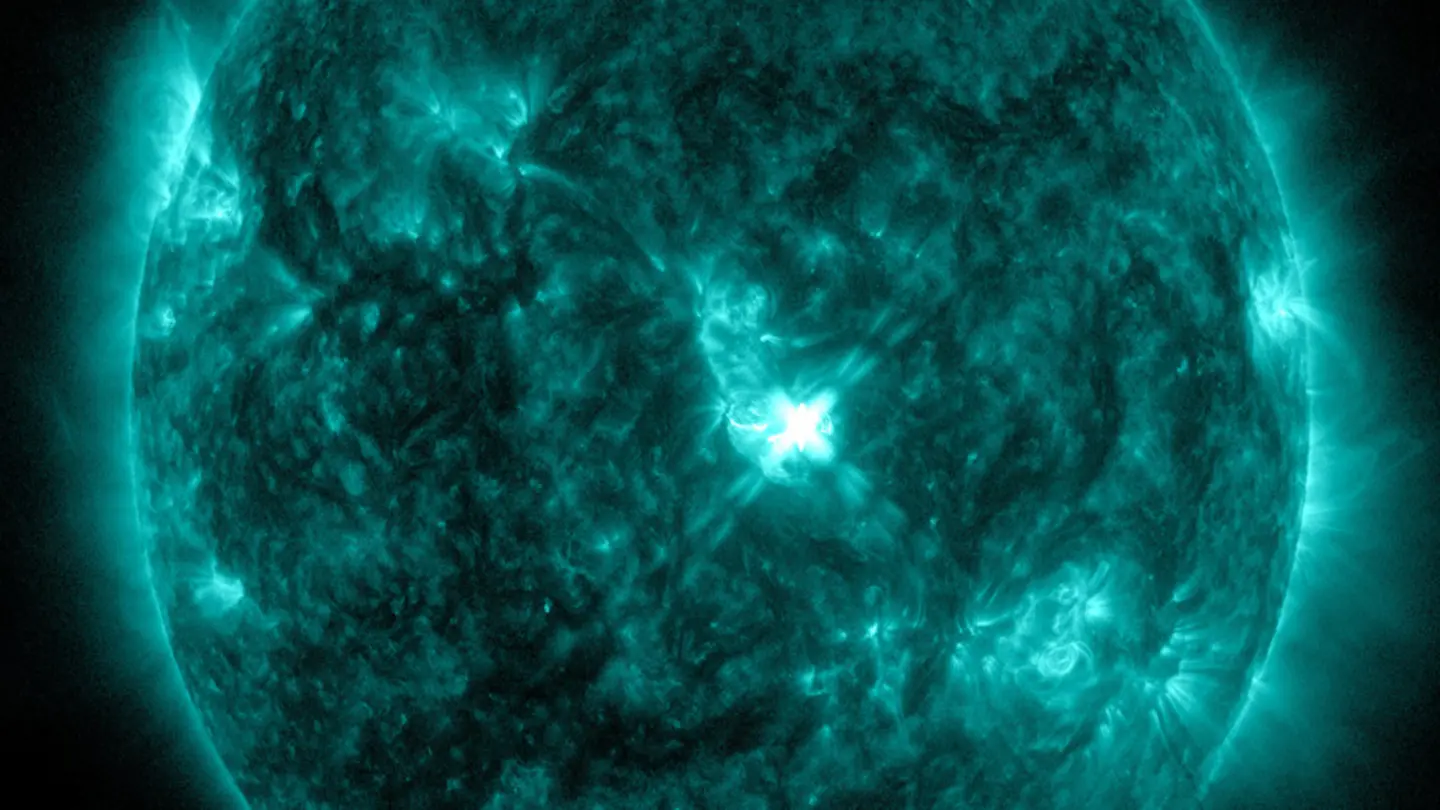
A remarkably persistent active region on the Sun, designated AR3664, has broken records by remaining active for an astonishing 94 consecutive days. This prolonged period of sunspot activity, observed from January 4th to April 11th, 2024, is the longest ever recorded, surpassing the previous record of 88 days set in June 2023. The duration is particularly notable given the Sun’s usual 11-year solar cycle, where activity waxes and wanes.
Researchers at the Space Weather Prediction Center (SWPC) in Boulder, Colorado, and other observatories worldwide meticulously tracked AR3664’s evolution. The region’s longevity isn’t solely about its duration; it’s also been exceptionally productive, unleashing numerous solar flares – sudden releases of energy – and coronal mass ejections (CMEs), huge expulsions of plasma and magnetic field from the Sun’s corona. These events, while visually spectacular, can disrupt Earth’s technological infrastructure.
Impacts on Earth
The flares and CMEs associated with AR3664 led to several moderate to strong geomagnetic storms, causing radio blackouts, particularly at higher latitudes. These disturbances can impact high-frequency radio communications used by airlines and emergency services. Furthermore, CMEs can induce currents in power grids, potentially leading to blackouts, and disrupt satellite operations, affecting GPS and telecommunications. Thankfully, the SWPC issued timely warnings allowing operators to take preventative measures.
What makes AR3664 so unusual? The region’s sustained activity is tied to its position near the solar equator, where magnetic shear – a twisting and winding of magnetic field lines – is maximized. This shear builds up energy, which is then released in the form of flares and CMEs. The region also exhibited a complex magnetic configuration, resisting the typical decay seen in other active areas. The unusual magnetic orientation appears to have stalled the normal diffusion of the magnetic fields, allowing the region to maintain its structural integrity and potent flare-producing capability for much longer than expected.
The current solar cycle, known as Solar Cycle 25, began in December 2019 and is predicted to peak in 2025. Early indications suggest this cycle will be significantly more active than the preceding one, Solar Cycle 24. AR3664’s behavior offers a glimpse into the kinds of extreme space weather events we might experience during the peak. Scientists are meticulously studying this prolonged activity to better understand the mechanisms driving it and refine their space weather forecasting models. Improved models are critical for mitigating the risks posed by solar storms to our increasingly technology-dependent society.
While the region has now rotated off the visible disk of the Sun, its legacy will continue to inform research. The data gathered during its record-breaking lifespan provides an invaluable opportunity to test and improve our ability to predict and prepare for the impacts of intense solar activity. The prolonged existence of AR3664 underscores the dynamic and often unpredictable nature of our star and its potential effects on Earth.
Image Source: Google | Image Credit: Respective Owner