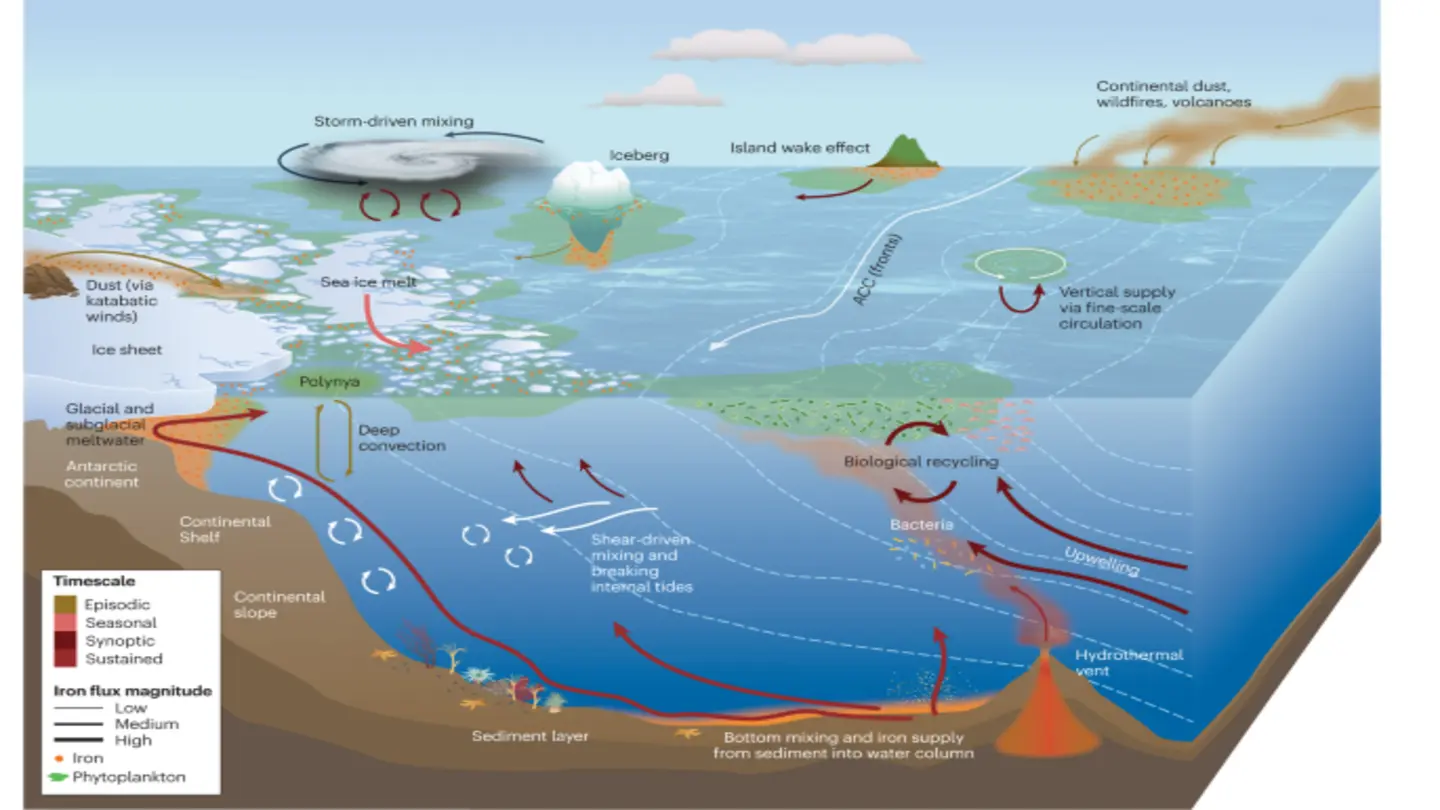
New research highlights the crucial role of springtime storms in determining the annual carbon uptake by the ocean in regions of deep convection. The study, published in ESS Open Archive, reveals a direct link between the intensity and frequency of these storms and the amount of carbon dioxide absorbed from the atmosphere into the ocean’s depths. This finding has significant implications for understanding and predicting future climate change scenarios, as the ocean acts as a major carbon sink.
Deep convection, a process where surface waters cool and sink, carrying dissolved carbon dioxide to the deep ocean, is particularly prominent in certain regions like the Labrador Sea and the Arctic Ocean. The study focuses on how springtime storms, characterized by strong winds and turbulent mixing, influence this convection process and ultimately affect the ocean’s capacity to absorb carbon. Researchers used a combination of observational data and sophisticated ocean models to analyze the complex interactions between atmospheric conditions and ocean dynamics.
Storm-Induced Mixing
The research demonstrates that intense springtime storms induce significant mixing in the upper ocean layers. This mixing not only enhances the transport of carbon dioxide from the atmosphere into the water but also facilitates the sinking of nutrient-rich waters from the surface, fueling phytoplankton blooms. Phytoplankton, microscopic marine plants, play a vital role in the carbon cycle through photosynthesis, consuming carbon dioxide and converting it into organic matter. The more vigorous the storms, the greater the mixing, leading to larger phytoplankton blooms and increased carbon sequestration.
Furthermore, the study reveals that the timing of these storms is also critical. Early springtime storms, occurring before the stratification of the water column due to solar heating, have a more pronounced effect on deep convection and carbon uptake. These early storms effectively pre-condition the water column, making it more susceptible to sinking as temperatures drop and density increases. Conversely, storms that occur later in the spring, after the water column has stratified, have a diminished impact on deep convection.
Implications for Climate Change
The findings underscore the importance of accurately representing storm activity in climate models to improve predictions of future ocean carbon uptake. As climate change alters storm patterns, it could have profound effects on the ocean’s ability to absorb carbon dioxide, potentially accelerating global warming. The researchers emphasize the need for continued monitoring of storm activity and ocean conditions in regions of deep convection to refine climate models and enhance our understanding of the complex interplay between the atmosphere and the ocean.
This research provides valuable insights into the intricate processes that govern the ocean’s carbon cycle and highlights the sensitivity of this cycle to atmospheric forcing. By understanding the role of springtime storms in modulating deep convection and carbon uptake, scientists can better assess the potential impacts of climate change on the ocean and its crucial role in regulating the Earth’s climate.
Image Source: Google | Image Credit: Respective Owner