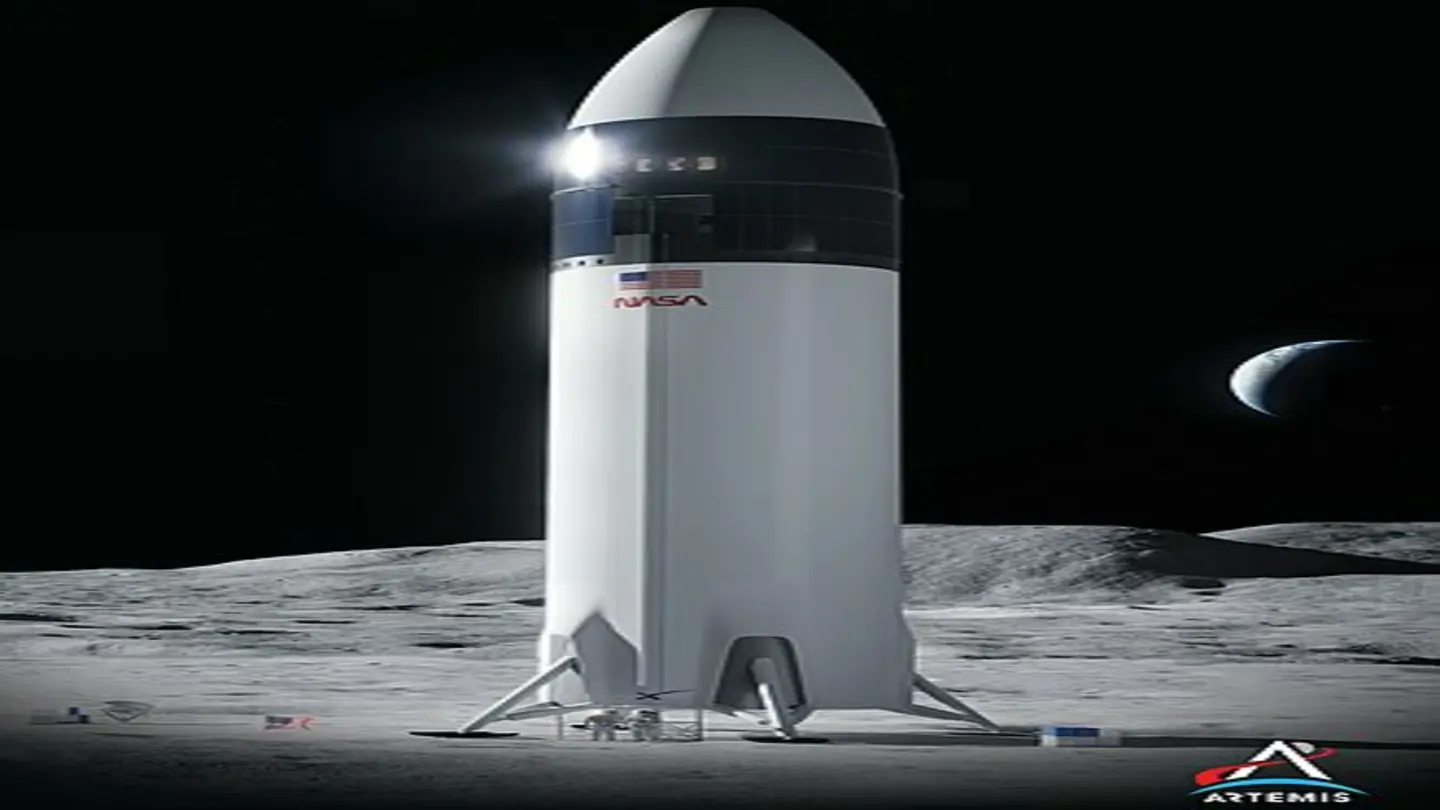
SpaceX has revealed new details about its Starship Human Landing System (HLS), the lunar lander designed to ferry astronauts to the Moon’s surface as part of NASA’s Artemis program. The company anticipates conducting initial test flights of the Starship HLS as early as 2026, marking a significant milestone in the program’s development.
The Starship HLS is a modified version of SpaceX’s Starship spacecraft, optimized for lunar landings. Unlike the standard Starship, the HLS variant will not feature heat shields or aerodynamic control surfaces, as it is exclusively intended for operation in the vacuum of space. It will rely on its powerful Raptor engines for precise maneuvering and landing on the lunar surface. The design incorporates a spacious crew cabin, advanced life support systems, and a large cargo bay for transporting scientific equipment and supplies.
Key Design Features and Development Progress
One of the critical aspects of the Starship HLS is its ability to refuel in lunar orbit. Multiple Starship tankers will be launched from Earth to deliver propellant to the HLS before it descends to the Moon. This on-orbit refueling capability is essential for extending the lander’s range and enabling it to complete multiple missions. SpaceX is actively developing the necessary infrastructure and technologies for propellant transfer in space.
The company has made significant progress in the development of the Raptor engines, which are crucial for the Starship HLS. These engines use liquid methane and liquid oxygen as propellants, offering high performance and reusability. SpaceX is conducting extensive testing of the Raptor engines at its facilities in Texas to ensure their reliability and performance under extreme conditions. The Starship HLS will utilize a cluster of Raptor engines to provide the necessary thrust for lunar landings and takeoffs.
Artemis Program and Future Lunar Missions
The Starship HLS is a vital component of NASA’s Artemis program, which aims to return humans to the Moon for the first time since the Apollo missions. NASA has awarded SpaceX a contract to develop and demonstrate the Starship HLS for the Artemis III mission, currently scheduled for 2026 or 2027. This mission will involve landing astronauts near the lunar south pole, where they will conduct scientific research and explore the region’s resources.
SpaceX is working closely with NASA to ensure that the Starship HLS meets all of the agency’s requirements for safety and performance. The company is committed to making the Artemis program a success and paving the way for future human exploration of the Moon and beyond. The development of the Starship HLS represents a major step forward in space technology and promises to usher in a new era of lunar exploration.
Looking ahead, SpaceX envisions the Starship HLS playing a key role in establishing a permanent human presence on the Moon. The lander could be used to transport habitats, rovers, and other equipment to the lunar surface, enabling long-duration missions and the construction of lunar bases. The Starship HLS could also serve as a stepping stone for future human missions to Mars and other destinations in the solar system.
Image Source: Google | Image Credit: Respective Owner