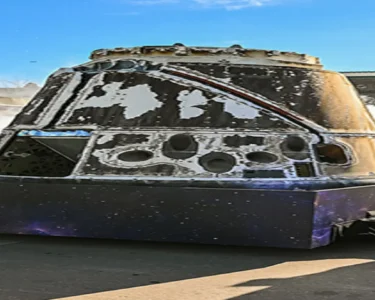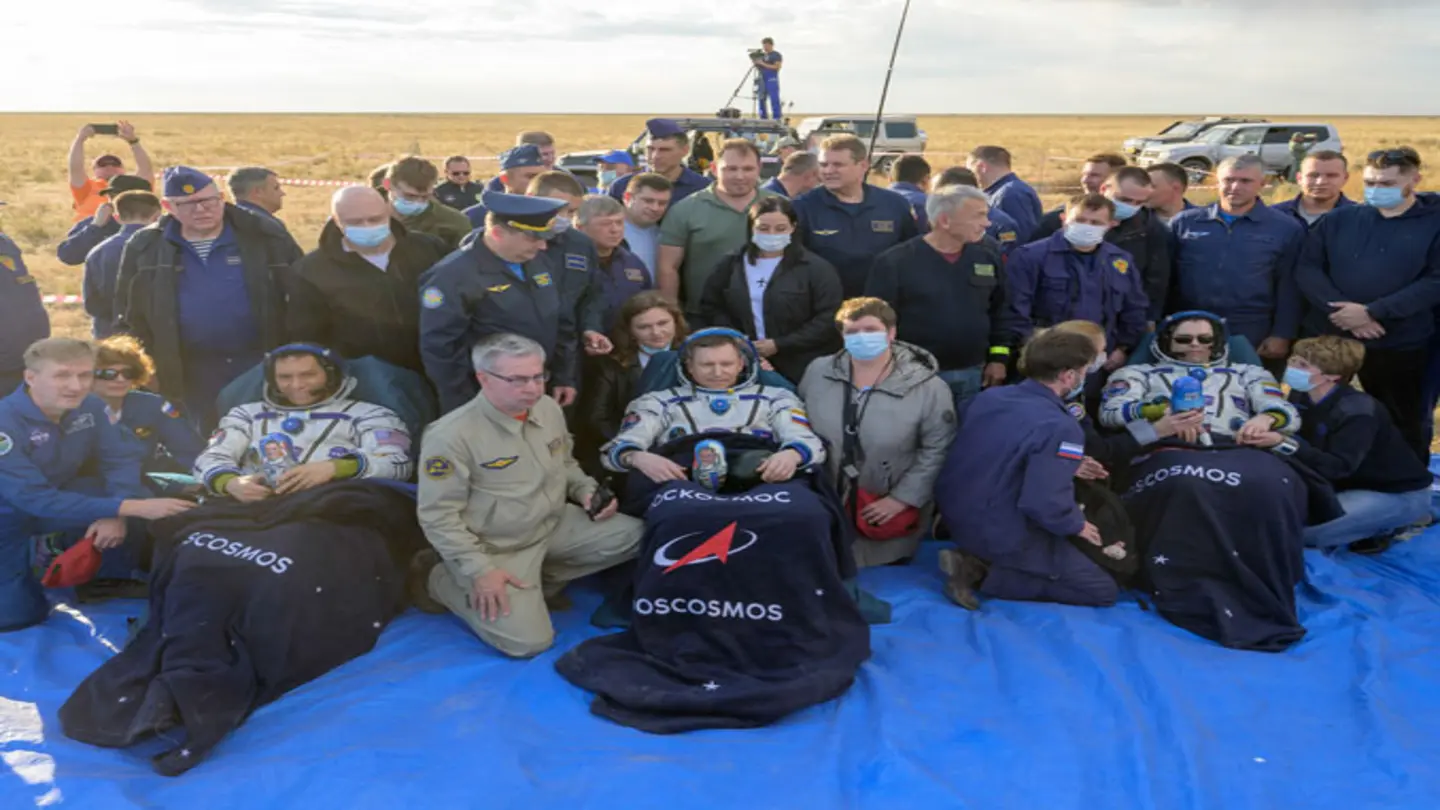
The Soyuz crew has successfully completed their space mission with a safe landing in Kazakhstan, marking the end of a significant chapter in international space exploration.
The mission, part of the ongoing collaboration between space agencies, saw the crew spend several months aboard the International Space Station (ISS) conducting scientific research, technology demonstrations, and maintenance operations. The crew, comprising astronauts from multiple countries, faced challenges including microgravity adaptations and space debris monitoring, yet maintained uninterrupted operations throughout their tenure.
During their time on the ISS, the team conducted over 300 experiments spanning biology, physics, and astronomy. These studies aimed to understand the effects of long-duration spaceflight on human physiology and develop advanced technologies for future deep-space missions. Key advancements included novel life-support systems and materials resistant to cosmic radiation.
The landing procedure began with the crew entering the Soyuz capsule ahead of schedule, executing a de-orbit burn, and entering Earth’s atmosphere. Despite frigid temperatures and strong winds at the landing site, the parachutes deployed correctly, and the descent module touched down precisely within the designated area. Recovery teams promptly reached the astronauts, who were reported in stable condition and undergoing routine medical checks.
Scientists and space agency officials praised the mission’s contributions to ongoing efforts toward Mars exploration and sustainable lunar habitats. “This mission underscores the importance of international cooperation in expanding human presence beyond low Earth orbit,” said a spokesperson for the mission’s coordinating agency. “The data collected will directly inform upcoming missions to lunar orbit and eventually Mars.”
Engineering teams highlighted the successful test of upgraded communication systems and emergency protocols, both critical for future missions. The crew also contributed to educational outreach, engaging students worldwide through live transmissions and experiment demonstrations, inspiring the next generation of scientists and astronauts.
As the world watches progress toward deeper space exploration, this Soyuz mission reinforces the dedication of researchers and agencies to pushing boundaries. With each successful return, humanity moves closer to longer-duration missions and theultimate goal of interplanetary travel.
Image Source: Google | Image Credit: Respective Owner