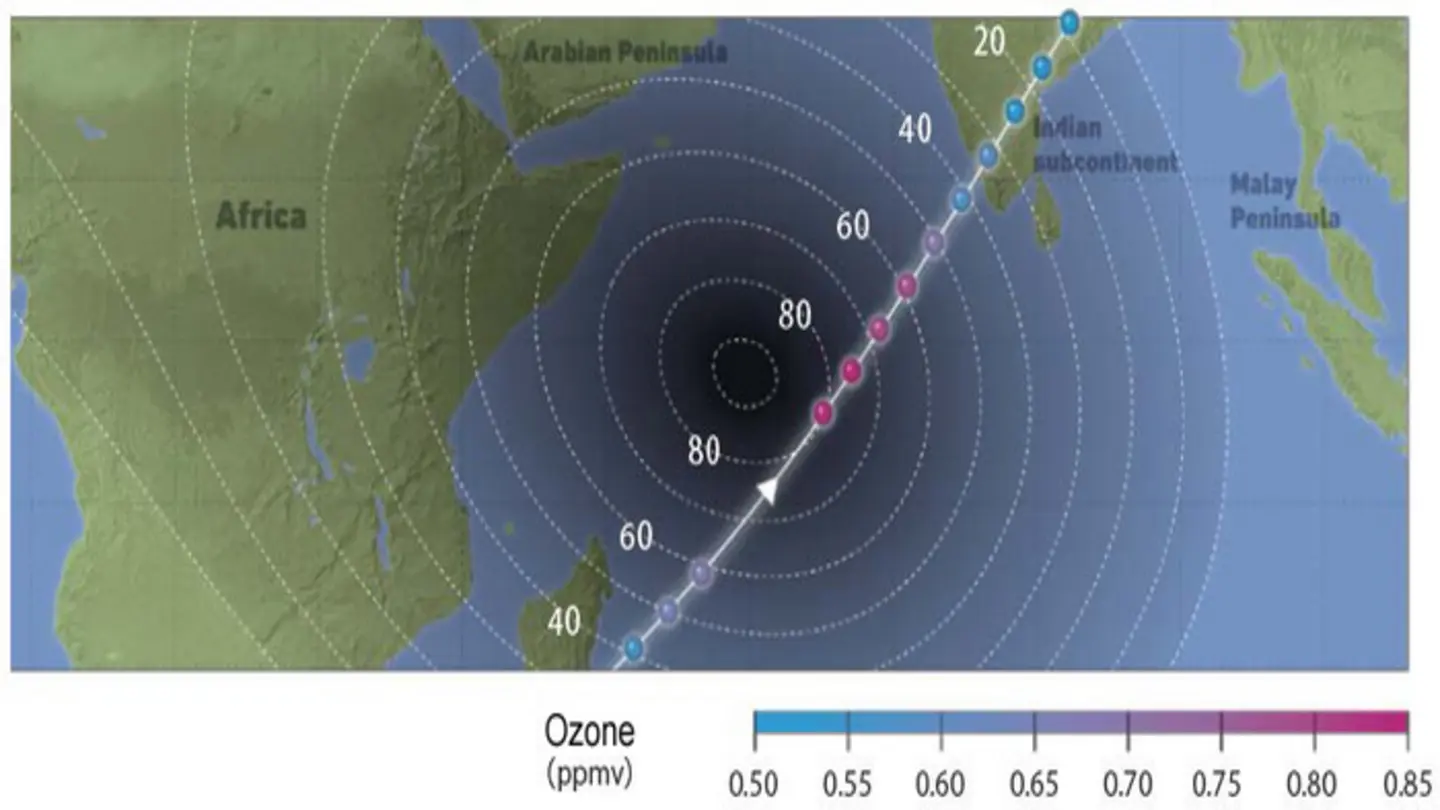
Washington, D.C. – A new study published in ESS Open Archive has revealed a surprising link between solar eclipses and significant increases in tertiary ozone levels within the mesosphere, the region of the atmosphere above the stratosphere. Researchers utilizing the WACCM-X climate model have conducted extensive sensitivity experiments, demonstrating that these events trigger a pronounced and previously undocumented surge in ozone concentrations.
The findings, published on Google News, challenge existing understandings of atmospheric ozone dynamics and highlight the complex interplay between solar activity and the upper atmosphere. Tertiary ozone, a relatively rare form of ozone, is typically found in trace amounts and is primarily formed through photochemical reactions involving nitrogen oxides and oxygen. However, the simulations indicate that the temporary dimming of sunlight during a solar eclipse dramatically alters atmospheric temperatures and circulation patterns, creating conditions conducive to enhanced ozone production.
The WACCM-X Model and the Findings
The WACCM-X (Whole Atmosphere Community Climate Model – eXperimental) model is a sophisticated climate model designed to simulate the Earth’s entire atmosphere. Researchers systematically varied the timing and duration of simulated solar eclipses within the model, observing the resulting changes in ozone distribution. The results consistently showed a marked increase in tertiary ozone, particularly at altitudes between 80 and 120 kilometers, following the eclipse events.
The study suggests that the reduced solar radiation during an eclipse leads to a cooling of the mesosphere, which in turn alters the rates of chemical reactions involved in ozone formation. Specifically, the cooling promotes the formation of nitrogen oxides, key precursors to tertiary ozone. Furthermore, the altered circulation patterns redistribute ozone molecules, concentrating them in the observed regions.
“This is a fascinating discovery,” stated a researcher involved in the study. “We’ve known that solar eclipses influence the lower atmosphere, but this demonstrates a significant impact on the mesosphere, a region we previously considered relatively stable. It underscores the need for continued research into the complex atmospheric processes driven by solar events.”
The research team plans to further investigate the specific mechanisms driving this ozone increase and to explore the potential implications for climate modeling and atmospheric chemistry. Understanding these processes is crucial for accurately predicting future atmospheric changes and their potential effects on Earth’s environment. The study’s findings could also have implications for satellite observations of the mesosphere, as the increased ozone concentrations may affect the accuracy of remote sensing measurements.
The research highlights the importance of considering even seemingly minor solar events when studying the Earth’s atmosphere. Future work will focus on validating these findings with observational data and refining the WACCM-X model to better represent the complex chemical and physical processes occurring in the mesosphere.
Image Source: Google | Image Credit: Respective Owner