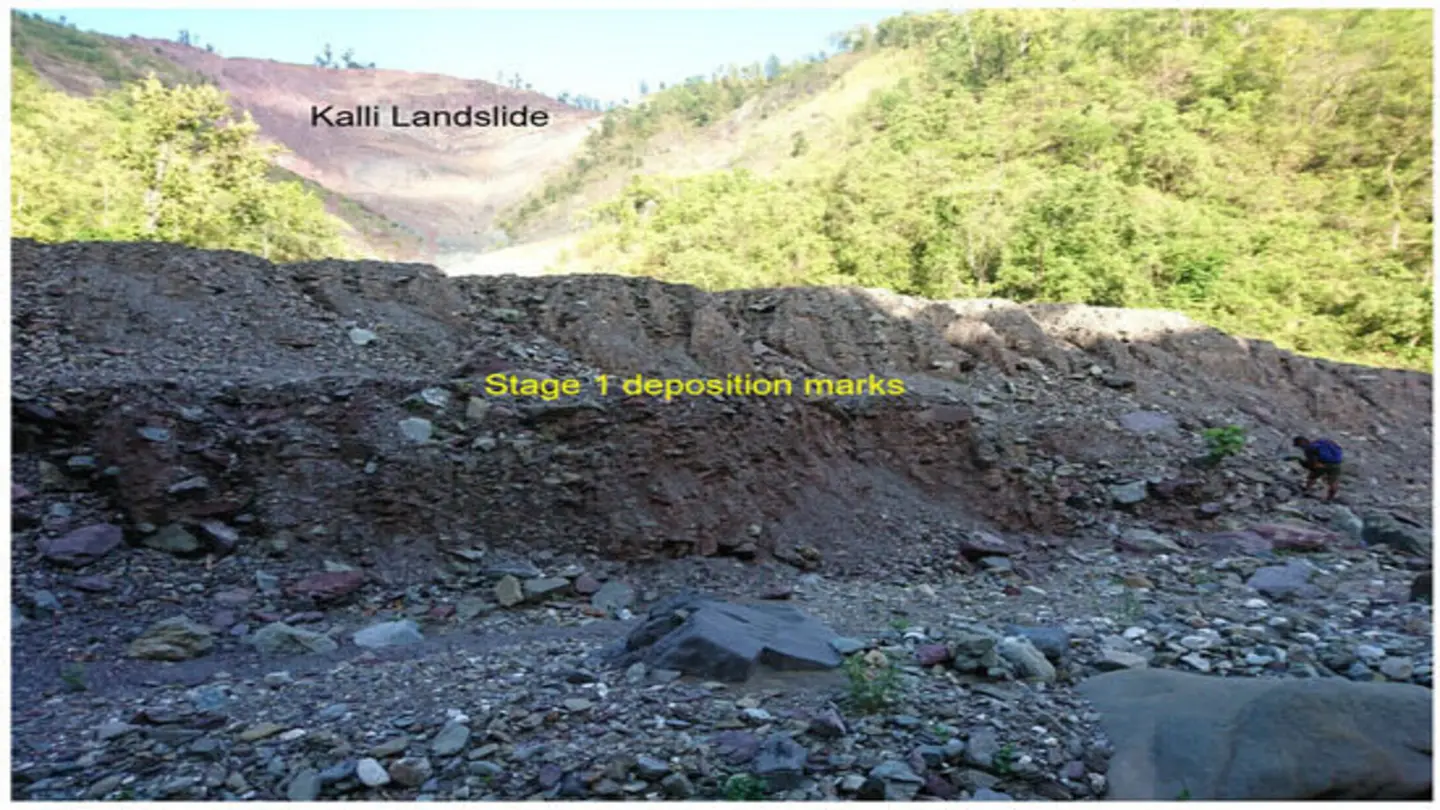
A novel approach to understanding sediment transport through the lens of thermodynamics has been introduced in a recent study published in ESS Open Archive. The research details a macroscopic perspective on the time-dependent behaviors of sediment, treating it as a thermodynamic system undergoing continuous change. This framework allows for a more comprehensive understanding of sediment dynamics in various geological and environmental settings.
The study challenges traditional methods that often rely on simplified assumptions and empirical relationships. Instead, it presents a theory grounded in the fundamental principles of thermodynamics, providing a more robust and physically consistent description of sediment movement. The core of the new approach involves defining the thermodynamic state of sediment based on variables such as its concentration, energy, and the forces acting upon it. By analyzing how these variables evolve over time, researchers can predict sediment transport rates and patterns.
Key Concepts and Methodology
The research team developed a set of equations that govern the evolution of the sediment’s thermodynamic state. These equations incorporate factors such as gravity, fluid drag, and inter-particle interactions. The model allows for the simulation of complex scenarios, including sediment deposition, erosion, and re-suspension. A key aspect of the methodology is the consideration of energy dissipation within the sediment system. As sediment particles interact and move, energy is lost due to friction and other processes. Accounting for this energy dissipation is crucial for accurately predicting long-term sediment behavior.
The study also emphasizes the importance of entropy production within the sediment system. Entropy, a measure of disorder, increases as sediment particles become more dispersed and mixed. By quantifying entropy production, researchers can gain insights into the efficiency of sediment transport and the stability of sediment deposits. The framework has been tested against existing experimental data and found to provide good agreement with observed sediment transport rates.
Applications and Implications
The implications of this research are significant for various fields, including river management, coastal engineering, and climate modeling. By providing a more accurate and physically based description of sediment transport, the model can help to improve predictions of riverbed erosion, coastal erosion, and sediment deposition in reservoirs. This will enhance the effectiveness of strategies designed to mitigate environmental hazards and manage water resources.
Furthermore, the thermodynamic framework can be integrated into larger-scale models of Earth’s surface processes. This could improve our understanding of how sediment transport affects global biogeochemical cycles and the long-term evolution of landscapes. The research provides a foundation for future studies aimed at refining the model and extending its applicability to a wider range of sediment types and environmental conditions. This innovative approach promises to enhance our understanding of sediment dynamics and its role in shaping our planet.
Image Source: Google | Image Credit: Respective Owner