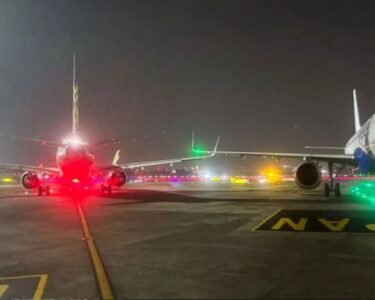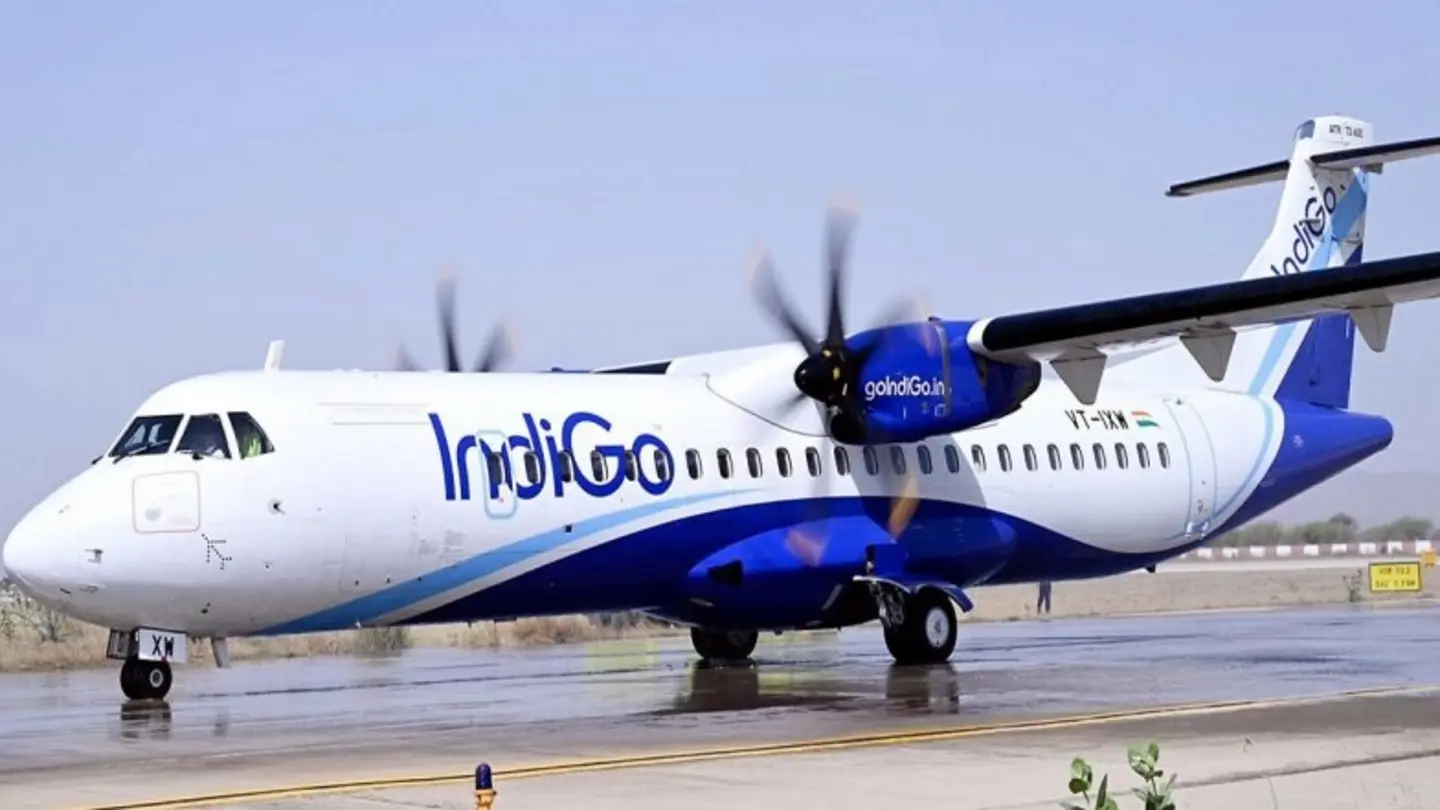
On April 5, 2024, an IndiGo flight from Kolkata to Shillong faced a second bomb scare within a 24-hour window, this time involving a threat note written with lipstick. The incident underscores rising security concerns in Indian aviation, prompting authorities to escalate measures to ensure passenger safety. Earlier that day, another flight from Mumbai to Bhopal was evacuated after a similar threat, though it later resumed after a thorough security check.
Lipstick Note: A Novel but Serious Menace
The threat note discovered on the IndiGo aircraft was written in red lipstick, a method that dodges conventional detection systems. Security personnel found the note during a routine cabin search, leading to an immediate evacuation and bomb-sniffing dog deployment. Although no explosives were found, the creativity of the threat raises questions about security protocols in detecting non-physical menaces.
IndiGo Airlines stated that the flight had been cleared by aviation authorities prior to boarding. The Shillong airport’s security team reported that the note was slipped into a passenger’s carry-on bag. This tactic mirrors historical cases where liquid or adhesive-based threats circumvent standard checks. Authorities are now reviewing gate-side security procedures to address such novel approaches.
Security experts emphasize that while lipstick notes are rare, they are not unprecedented. In 2019, a similar incident occurred in Mumbai, where a teen used lipstick to pen a threatening message on an airhostess’ clipboard. However, the current case involves direct placement on the aircraft, escalating the stakes. The National Highways Authority of India (NHAI) has been called upon to analyze how airports can adapt to such evolving threats.
Passenger Reactions and Coordination
Passengers on the Kolkata–Shillong flight described panic upon receiving evacuation orders. Several voiced concerns about repeated threats disrupting their travel plans. A woman traveling with children recounted how the uncertainty affected her mental state, highlighting the psychological impact of such incidents. The Civil Aviation Security Branch (CASB) has since issued a public advisory urging passengers to report suspicious activities immediately.
IndiGo’s spokesperson reiterated the airline’s commitment to safety, stating, ‘We prioritize passenger well-being and are working closely with security agencies to enhance onboard checks’. The Shillong airport has announced temporary increased patrolling around boarding gates, while the central government is considering stricter regulations for carrying liquids and personal items during transit.
This incident follows a broader trend of low-probability, high-impact security breaches globally. In 2023, a British Airways flight in London faced a threat note written in gel, while Emirates Airlines grounded a plane after detecting a suspicious powder-like substance. These cases suggest attackers are increasingly leveraging materials that bypass physical scanners, necessitating a shift toward behavioral analytics in security practices.
In response, the Ministry of Civil Aviation has directed all airports to adopt AI-powered X-ray systems capable of detecting synthetic materials. Dr. Anil Kumar, a senior aviation security consultant, notes, ‘The key to preventing such threats lies in integration—combining physical checks with AI-driven anomaly detection to catch unconventional methods’. However, implementation challenges, including cost and staff training, remain barriers.
Experts also highlight the role of passenger awareness. Campaigns promoting vigilance—such as reporting unattended bags or noting unusual behavior—are critical. Shillong’s airport has initiated a pilot program urging travelers to flag anomalies through a mobile app developed in collaboration with cybersecurity firms.
While the immediate threat on the IndiGo flight was neutralized, the incident serves as a cautionary tale. Aviation security is a dynamic field where complacency can lead to vulnerabilities. As technology evolves, so must the tactics of those seeking to exploit it. The aviation industry’s response to this case may set a precedent for future threat mitigation strategies in India and beyond.
Current investigations are ongoing to identify the individual responsible for the lipstick note. Surveillance footage from the aircraft and passenger accounts are being analyzed. Legal actions may follow if the perpetrator is found guilty of inciting public fear through false threats.
Image Source: Google | Image Credit: Respective Owner