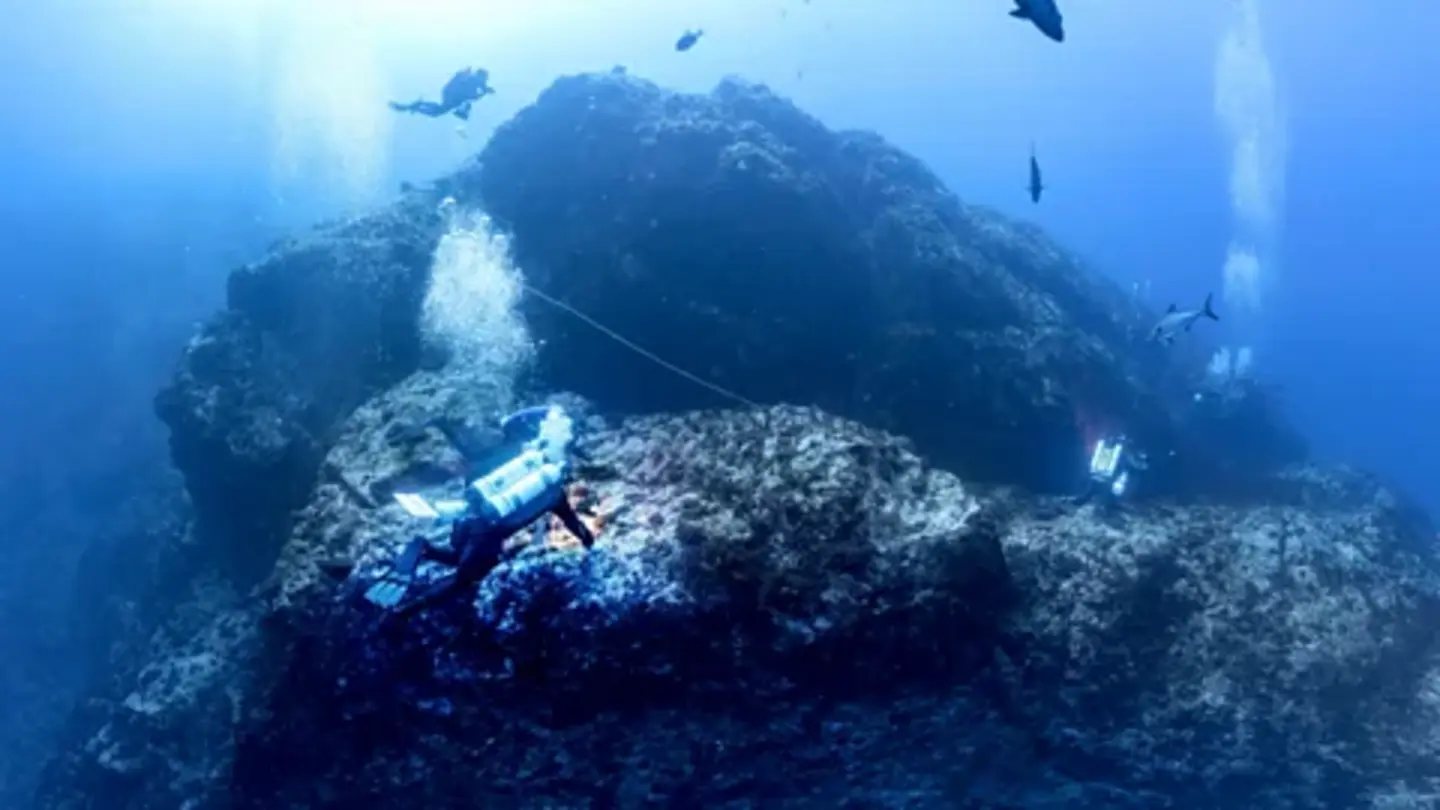
New research published in the ESS Open Archive details the complex processes of turbulent mixing and dissipation occurring around rough seamounts – underwater mountains rising from the seafloor. The study, focusing on the interaction between ocean currents and these geological features, provides valuable insights into oceanographic dynamics and their impact on marine ecosystems.
Seamounts are known hotspots for marine biodiversity, attracting a wide range of species due to the upwelling of nutrient-rich waters they create. This upwelling is directly linked to the turbulence generated as ocean currents flow over and around the seamount’s rough topography. Understanding the specifics of this turbulence is crucial for predicting nutrient distribution, larval dispersal, and overall ecosystem health.
The research utilizes high-resolution numerical modeling to simulate the flow of water around idealized, yet representative, seamounts. These models capture the intricate interplay between the background current, the seamount’s shape, and the resulting turbulent eddies. The study highlights that the roughness of the seamount significantly influences the intensity and spatial distribution of turbulence. Smoother seamounts generate less turbulence, while those with more complex, irregular surfaces create stronger and more widespread mixing.
Key Findings and Implications
A key finding is the identification of distinct zones of turbulence around the seamount. Immediately upstream, the flow is relatively stable. As the current encounters the seamount, it separates, forming a turbulent wake characterized by swirling eddies and intense mixing. Downstream, the turbulence gradually dissipates as the flow re-establishes itself. The study also demonstrates that the rate of turbulent dissipation – the conversion of kinetic energy into heat – is highly dependent on the seamount’s roughness and the current speed.
The implications of this research extend beyond fundamental oceanography. Accurate modeling of turbulence around seamounts is essential for improving predictions of ocean circulation patterns, which in turn affect global climate. Furthermore, understanding how turbulence influences nutrient distribution can aid in the sustainable management of fisheries and the conservation of marine biodiversity. The study’s findings are particularly relevant in the context of increasing human activities in the deep ocean, such as deep-sea mining, which could disrupt these delicate ecosystems.
Researchers emphasize the need for further investigation, including field observations to validate the model results and to explore the effects of more realistic seamount geometries and current conditions. Future studies could also investigate the role of internal waves – underwater waves that propagate through the ocean interior – in modulating turbulence around seamounts. This research represents a significant step forward in our understanding of the complex physical processes that shape the marine environment and underscores the importance of protecting these unique and valuable ecosystems.
The study’s open-access publication in the ESS Open Archive promotes wider dissemination of knowledge and encourages collaboration among researchers working in oceanography and related fields. The detailed analysis and modeling techniques employed in this research provide a valuable framework for future investigations into the dynamics of flow around complex underwater terrain.
Image Source: Google | Image Credit: Respective Owner