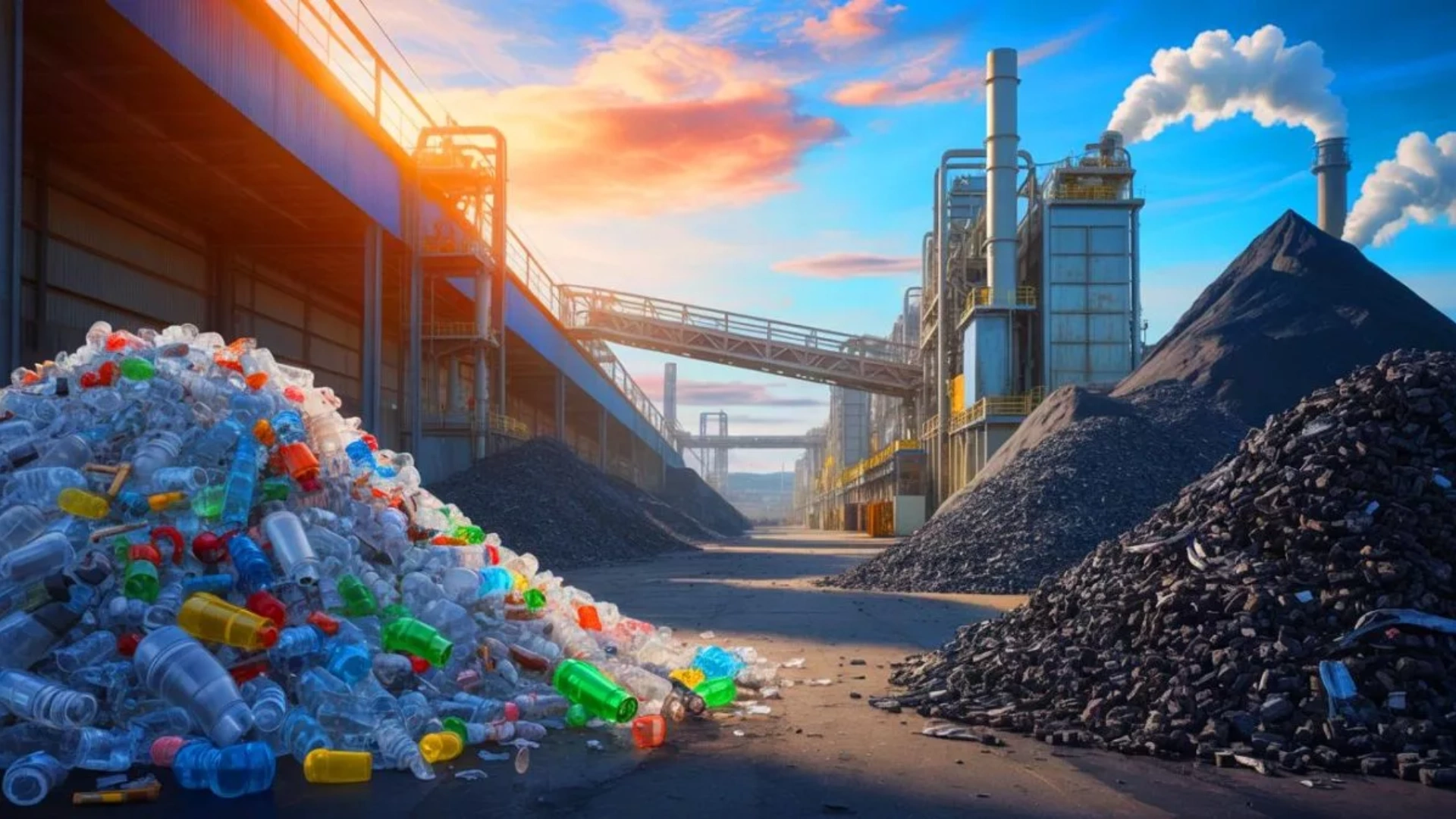
New Haven: Plastic pollution has become one of the planet’s most pressing problems — from plastic bags at the bottom of the Mariana Trench to microplastics inside the human body. Now, scientists believe they may have found a way to turn this global crisis into a virtually unlimited energy source.
Plastic Into “Bio-Oil”
Researchers worldwide have been experimenting with methods to convert plastic back into usable oil. The most common approach is pyrolysis, where plastic is heated to around 900°C (1,652°F) in the absence of oxygen. This breaks down polymers into hydrocarbon molecules — the building blocks of fuels like diesel, which can power boilers, turbines, trucks, trains, and ships.
Traditionally, pyrolysis converts about 60% of plastic into bio-oil, often with the help of costly catalysts like zeolite.
Yale’s Breakthrough
A team from Yale University recently discovered a way to increase yields without using any catalyst at all. Their new process boosts efficiency to around 66%, potentially saving significant costs and extending the life of reactors.
The key was a 3D-printed carbon column reactor with three sections of varying pore sizes (1 mm, 500 μm, and 200 nm). As plastic broke down inside the reactor, the pores helped control the chemical reactions more effectively.
To explore scalability, the researchers built another version using carbon felt, a high-temperature resistant material. Even without optimized pore sizes, the process still achieved yields of about 56%, showing the technology’s promise for large-scale recycling.
Challenges Ahead
Despite the breakthrough, scaling pyrolysis remains challenging. The process demands enormous amounts of energy, raising concerns about carbon dioxide emissions and other byproducts. Critics, including experts interviewed by ProPublica, have called pyrolysis a “fairy tale” pushed by oil companies to extend reliance on fossil fuels.
Still, scientists like Yale’s Liangbing Hu, Ph.D., believe innovation in this field could one day transform plastic trash into a sustainable energy resource. “Whenever you talk about catalysts, they’re very expensive and have a lifetime issue. This work shows we can move past that,” Hu explained.
The Bigger Picture
For now, the most effective way to combat plastic waste remains prevention: producing and consuming less single-use plastic. But if researchers can scale up this technology sustainably, plastic-to-fuel conversion could become a crucial part of solving both the energy crisis and the plastic pollution epidemic.
Image Source: Google | Image Credit: Respective Owner