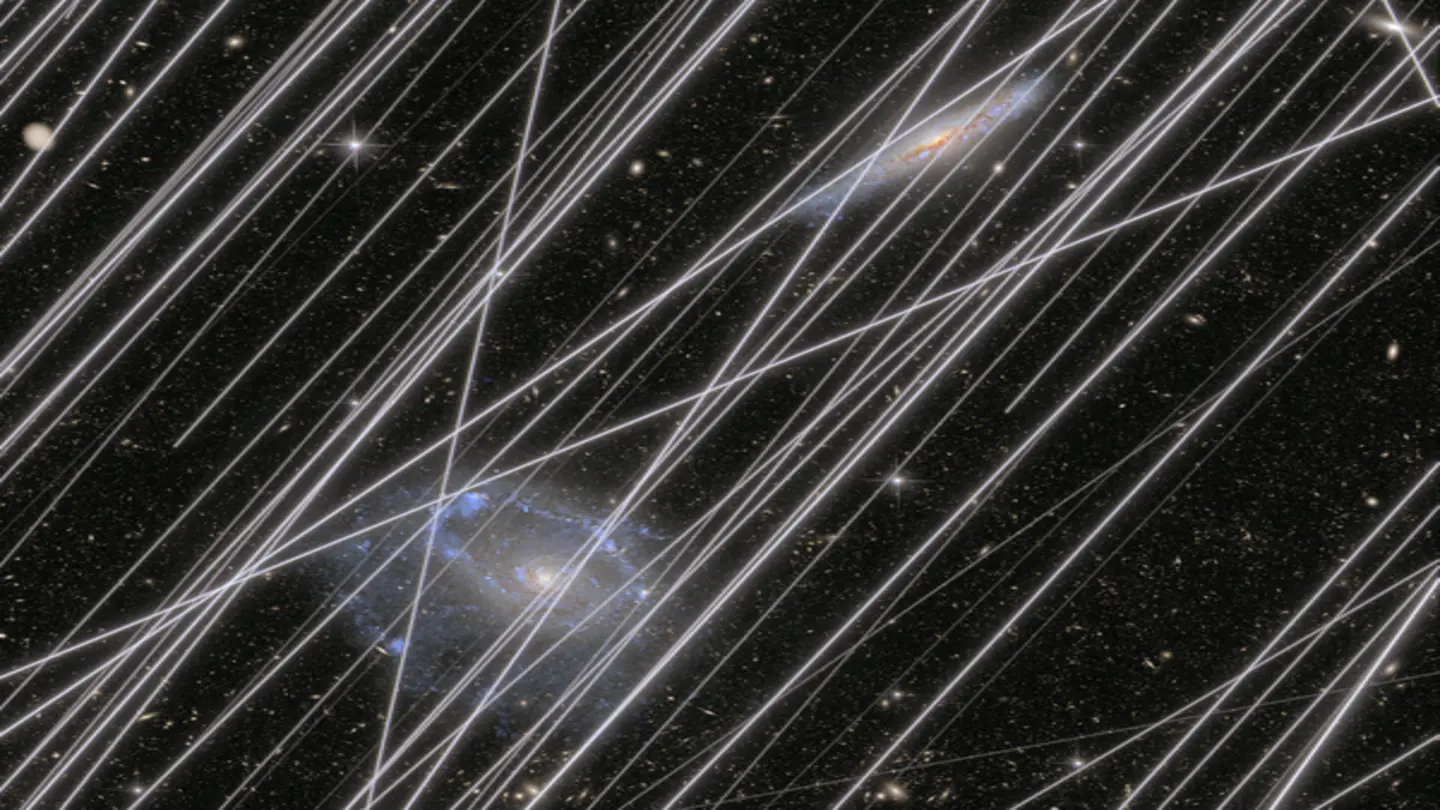
A new study has revealed that the increasing number of satellites orbiting Earth could significantly impact astronomical observations, potentially disrupting nearly 40% of Hubble Space Telescope images. Researchers at Purdue University have analyzed the potential interference from satellite constellations like SpaceX’s Starlink and Amazon’s Kuiper, finding that these objects can reflect sunlight and create streaks across astronomical images, hindering scientific research.
The Impact on Hubble
The Hubble Space Telescope, launched in 1990, has provided invaluable insights into the universe. However, its low Earth orbit (LEO) makes it particularly vulnerable to interference from satellites. The study highlights that as more satellites are launched, the probability of them crossing Hubble’s field of view increases substantially. These crossings can lead to bright streaks in images, obscuring celestial objects and complicating data analysis.
According to the research, the most affected images are those taken at twilight or dawn when the sun is below the horizon, but the satellites are still illuminated. These conditions are optimal for detecting faint objects, making the interference particularly problematic for certain types of astronomical studies. The team’s simulations showed that the impact could be felt across a wide range of Hubble’s observations, affecting everything from distant galaxies to nearby asteroids.
Mitigation Strategies
While the study paints a concerning picture, researchers are also exploring potential mitigation strategies. These include developing advanced image processing techniques to remove satellite streaks from images, as well as coordinating satellite operations with astronomical observations to minimize interference. Some satellite operators are experimenting with deploying darker satellites designed to reflect less sunlight, though the effectiveness of these measures remains to be seen.
Another approach involves scheduling observations to avoid periods of high satellite density or adjusting the timing of exposures to minimize the likelihood of a satellite crossing the field of view. However, such strategies may not always be feasible, particularly for time-sensitive observations or those requiring specific sky conditions.
Future Implications
The findings underscore the growing tension between the increasing demand for satellite-based services and the need to protect astronomical observations. As the number of satellites in LEO continues to increase, the challenges faced by astronomers are likely to intensify. The study emphasizes the importance of international collaboration and the development of comprehensive guidelines to manage satellite deployments and minimize their impact on scientific research. It also prompts a broader discussion on the responsible use of space and the need to balance technological advancements with the preservation of our ability to explore and understand the universe.
The research highlights the need for innovative solutions and proactive measures to ensure that advancements in satellite technology do not come at the cost of our ability to study and appreciate the cosmos.
Image Source: Google | Image Credit: Respective Owner