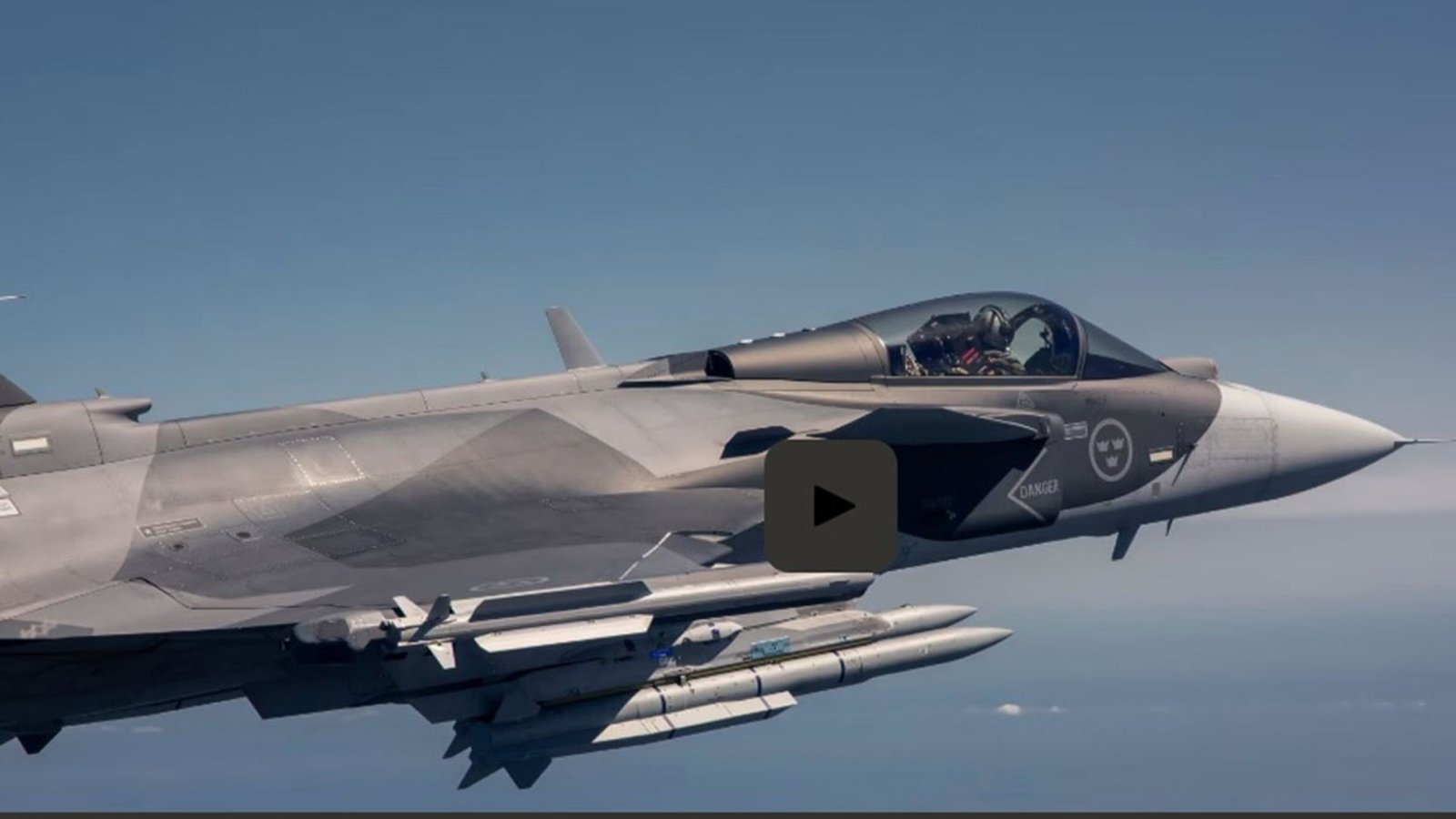
Swedish defense giant Saab has renewed its efforts to sell 114 Gripen fighter jets to the Indian Air Force (IAF), positioning it as a cost-effective alternative to France’s Rafale aircraft. The offer comes as India evaluates options to strengthen its aging fleet amid escalating regional security challenges.
A Strategic Defense Proposal
Saab’s latest pitch emphasizes technology transfer and local manufacturing under India’s “Make in India” initiative. The Gripen-E fighter, featuring advanced radar systems and weapons integration, is touted as a versatile option for high-altitude operations—a critical requirement for India’s mountainous borders.
Rafale vs. Gripen: The Cost Factor
Analysts highlight the Gripen’s lower operating costs compared to the Rafale, which India already operates with 36 units. However, the IAF has historically favored French jets for their proven performance in conflicts, including the 2019 Balakot airstrikes. Saab counters this by underscoring Gripen’s upgradability and India’s potential to control its supply chain.
Defense experts suggest the decision could hinge on geopolitical considerations. While France remains a reliable partner, Sweden’s neutral stance offers India flexibility amid shifting global alliances.
IAF’s Modernization Challenges
The IAF currently fields fewer than 30 squadrons against a sanctioned strength of 42, with many MiG-21s set to retire by 2025. Delays in India’s indigenous Tejas program and budget constraints have heightened urgency for imported solutions.
Saab’s proposal includes establishing a Gripen manufacturing ecosystem in India, potentially creating thousands of jobs. This aligns with New Delhi’s goal of reducing defense imports, which accounted for 11% of global arms purchases between 2018–2022.
Industry Reactions and Roadblocks
While some Indian officials welcome the offer, skeptics question whether Gripen can match Rafale’s combat record. Moreover, India’s recent $20 billion investment in 83 Tejas Mk-1A jets complicates budgetary allocations for additional foreign acquisitions.
Observers note that any deal would require approval from multiple government tiers, possibly extending timelines beyond 2024. For now, the IAF maintains that all options remain under review as it balances capability, cost, and strategic autonomy.
Image Source: Google | Image Credit: Respective Owner