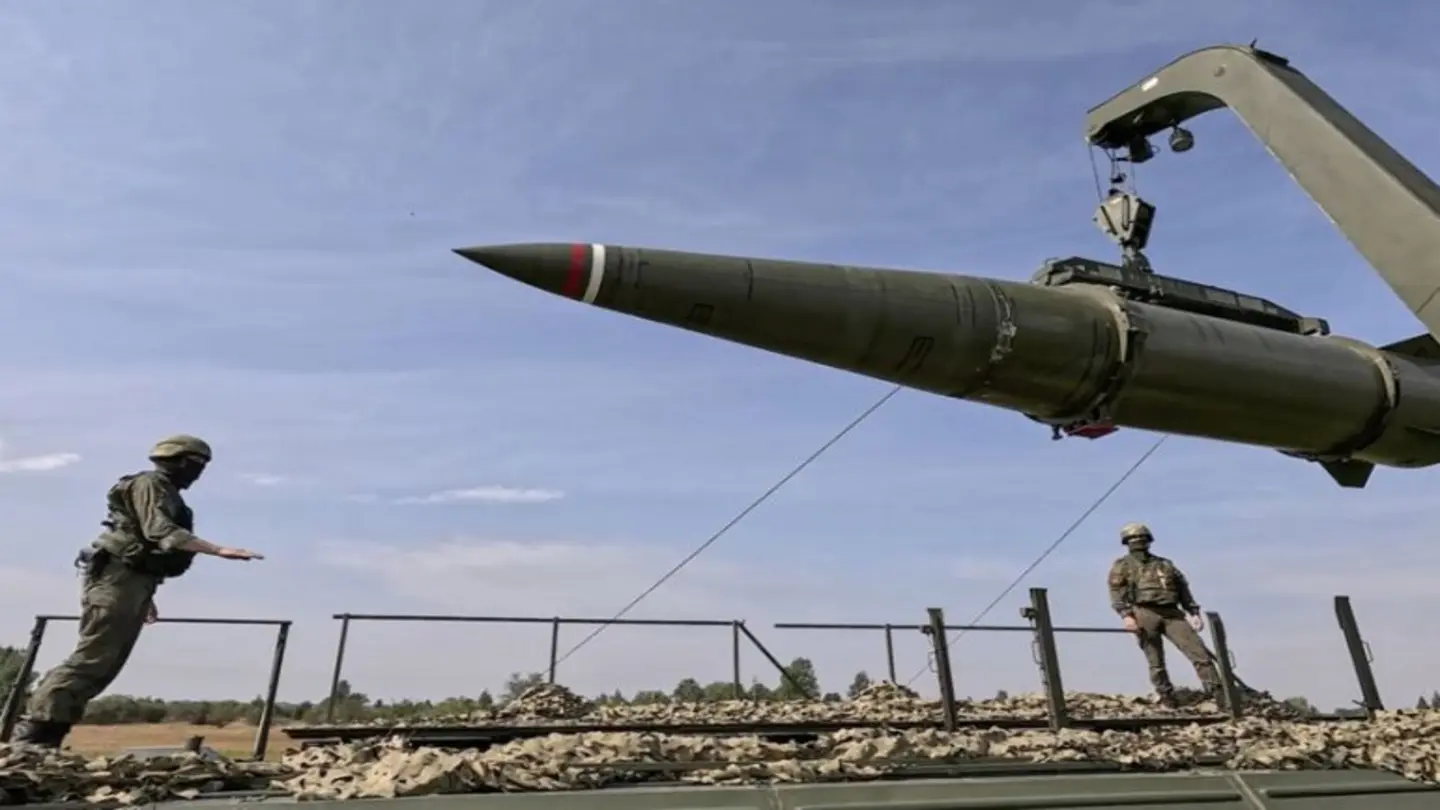
Russia has reportedly used its new hypersonic missile, the Oreshnik, against Ukraine, marking a significant escalation in the ongoing conflict. This deployment, confirmed by Ukrainian officials, raises concerns about the evolving nature of the war and the potential for increased destruction. The Oreshnik, also known as the Avangard, is a maneuverable hypersonic glide vehicle capable of delivering both conventional and nuclear payloads.
While details surrounding the strike remain limited, Ukrainian military analysts suggest the missile was used to target a military installation in the Chernihiv region. The use of such an advanced weapon system is widely interpreted as a demonstration of Russia’s military capabilities and a signal to both Ukraine and its Western allies. The attack underscores Russia’s willingness to employ its most sophisticated weaponry, even if the strategic gain is marginal.
The Oreshnik is designed to travel at speeds exceeding Mach 5, making it incredibly difficult to intercept with existing defense systems. Its maneuverability further complicates interception efforts. This characteristic necessitates a reassessment of air defense strategies in Ukraine and prompts concerns amongst NATO allies regarding potential vulnerabilities in their own systems. Though the precise damage caused by the Oreshnik strike is not fully known, analysts believe its primary impact lies in its psychological effect.
Significance of Hypersonic Weapons
Hypersonic weapons represent a new frontier in military technology. Unlike ballistic missiles which follow a predictable arc, these glide vehicles can alter course during flight, making them far more elusive. Russia has invested heavily in developing this technology, viewing it as a critical component of its strategic deterrent. The United States and China are also actively pursuing hypersonic weapon programs, initiating a new arms race.
The deployment of the Oreshnik complicates the calculation of risk for both sides. Ukraine’s allies are under increasing pressure to provide more advanced air defense systems capable of countering such threats. However, questions remain about the feasibility and cost-effectiveness of defending against hypersonic weapons. The sheer speed and maneuverability of these systems pose a significant engineering challenge.
Some military experts suggest that Russia’s use of the Oreshnik could also be aimed at testing the weapon’s effectiveness in a real-world combat scenario. This would provide valuable data for refining the system and developing countermeasures. The attack also likely serves as a message to the West about the consequences of continued support for Ukraine. It’s a clear indication that Russia is prepared to escalate its operations if it perceives its core interests to be threatened.
The international community has largely condemned the use of hypersonic missiles, citing the potential for miscalculation and unintended consequences. The incident raises broader concerns about the proliferation of this technology and the potential for it to destabilize the global security landscape. Further analysis of the attack is needed to fully understand its implications for the future of the conflict and the broader geopolitical order.
The Ukrainian military continues to assess the damage and gather intelligence on the Oreshnik’s capabilities. They are appealing to their allies for increased assistance in bolstering their air defenses and countering Russia’s evolving military tactics. The situation remains fluid and highly volatile, with the potential for further escalation.
Image Source: Google | Image Credit: Respective Owner