Deep beneath the ocean’s surface, researchers have uncovered a hidden world thriving around the remains of a giant creature. This phenomenon, known as a “whale fall,” happens when a massive marine creature, such as a whale, sinks to the ocean floor after death, creating a life-sustaining event for deep-sea organisms.
What Is a Whale Fall?
A whale fall occurs when a whale, or similar large marine creature, dies and its body sinks to the ocean floor. Though the whale’s death may seem like the end of its life cycle, it marks the beginning of a complex ecosystem that thrives off its remains. A whale can weigh up to 80 tons, providing a massive source of nutrition for marine life in the deep ocean, where food is scarce. This event becomes a vital source of energy for creatures living in one of the harshest environments on Earth.
The Ecological Stages of Whale Fall
- Scavenger Phase: In the first stage, scavengers such as hagfish, sharks, and crabs move in to feed on the whale’s decaying flesh. These creatures thrive on the rich energy provided by the whale’s body.
- Decomposer Phase: Once the flesh has been consumed, smaller organisms, including bacteria and specialized worms, take over. The bone-eating worms, known as Osedax, feed on the whale’s bones, breaking them down over several years. These worms have evolved unique enzymes that allow them to digest the whale’s bones for sustenance.
- Remineralization Phase: In the final stage, the remaining bones release minerals that support a rich community of deep-sea invertebrates, including crabs, shrimp, and other scavengers. This phase can last for decades, creating a thriving environment in the otherwise barren deep sea.
The Diversity of Life Supported by Whale Falls
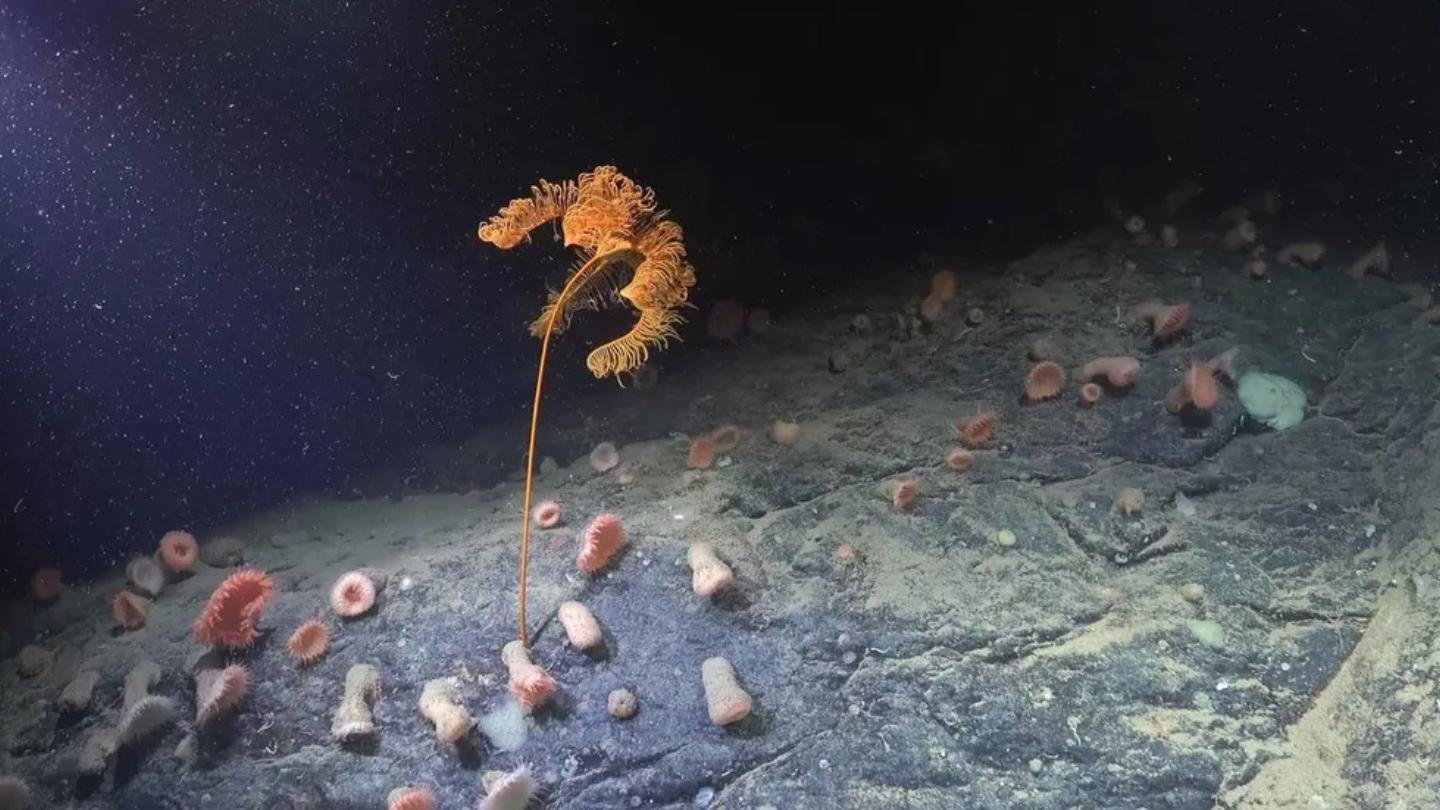
Whale falls provide a habitat for a diverse range of species, from bacteria to large marine animals, all of which are uniquely adapted to survive in the extreme conditions of the deep ocean. These ecosystems also support rare species of deep-sea corals that feed on the organic matter released from the whale’s carcass. Whale falls are critical to the survival of species such as snails, shrimp, and crabs, who rely solely on the whale’s remains for nourishment.
Whale falls also act as breeding grounds for certain species, offering a temporary sanctuary and food source that would otherwise require long migrations to reach. This highlights how interconnected marine life is in the deep ocean.
Whale Falls as Indicators of Ocean Health
Studying whale falls provides valuable insights into the health of ocean ecosystems. As human activity increasingly threatens marine life through overfishing, pollution, and climate change, understanding natural processes like whale falls becomes crucial. Whale falls are often found in areas that remain largely unexplored, offering researchers a rare opportunity to study ecosystems that have been largely untouched by human intervention.
Additionally, the process of decomposition that occurs during a whale fall can reveal how carbon cycles through the ocean, helping scientists understand the ocean’s role in absorbing and storing carbon. This knowledge is vital in the context of climate change and can aid in protecting fragile marine environments.
Image Source: Schmidt Ocean Institute
Image Credit: Respective Owner