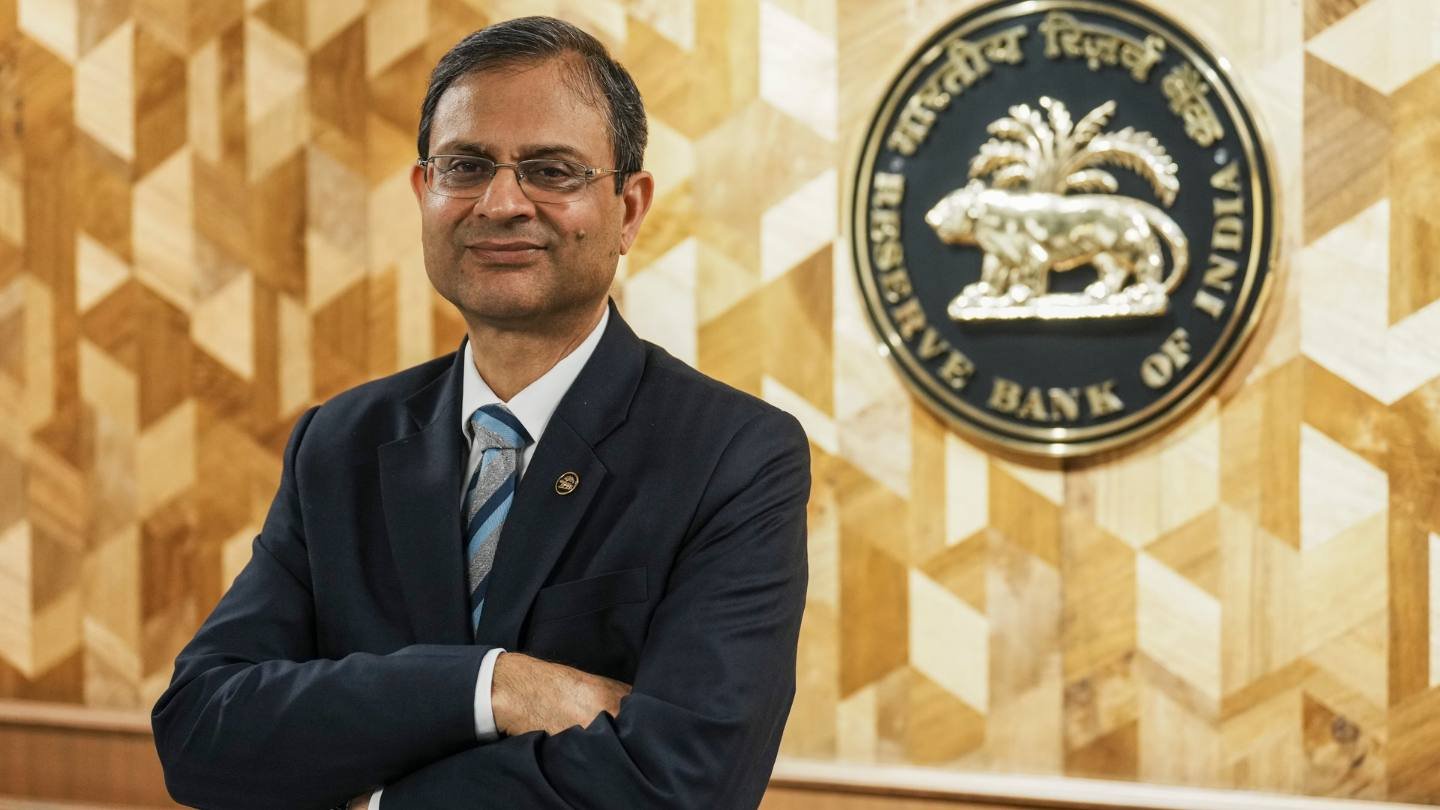
Mumbai: Reserve Bank of India (RBI) Governor Sanjay Malhotra on Monday said the central bank is prepared to take steps to mitigate the economic fallout from the US decision to impose a 50% tariff on Indian exports. He also underlined the RBI’s push to expand trade in local currencies as part of efforts to internationalise the rupee.
Speaking at the FIBAC 2025 conference organised by FICCI in Mumbai, Malhotra said: “RBI has always been very proactive in whatever needs to be done for the betterment, advancement, and growth of our country.”
Tariff Concerns and Growth Outlook
Referring to the upcoming US tariff, Malhotra noted that the central bank had already factored in some impact. “Post the tariff announcement in April, we had projected GDP growth lower by 20 basis points. With the additional 25% tariff, making it 50%, we remain hopeful that trade negotiations will play out and the impact will be minimal.”
The governor acknowledged that while 45% of India’s exports are outside the tariff regime, sectors such as gems and jewellery, textiles, shrimps, and MSMEs could feel the strain.
To support growth, the RBI has already cut the repo rate by 100 basis points in its ongoing easing cycle and ensured ample liquidity in the banking system.
Push for Rupee Internationalisation
Malhotra highlighted the RBI’s efforts to promote trade in local currencies, which he said helps insulate businesses from foreign exchange volatility.
“We already have agreements with Maldives, Mauritius, Indonesia, and the UAE, and trade has started. This is a slow process that may take years or decades to evolve fully,” he said.
India’s Economic Resilience
Despite global headwinds, Malhotra asserted that India’s macro fundamentals remain strong. “Inflation is moderating, growth has been steady, the external sector is stable, and the financial system is sound. These provide a strong platform for industry to plan its next phase of expansion,” he added.
Banking Sector Perspectives
On the sidelines of the event, SBI Chairman CS Setty urged regulators to allow banks to finance mergers and acquisitions (M&As), at least for listed companies. He pointed out that corporates are increasingly turning to capital markets and private credit, while banks must adapt to fund the next wave of capex.
Setty also highlighted lending opportunities in startups and MSMEs, saying that “formalisation and digital trails have made MSME lending safer and scalable.”
Source: TNN
Image Source: Google | Image Credit: Respective Owner