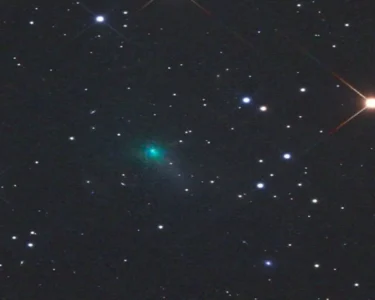
A rare and stunning celestial event unfolded as Earth’s umbra cast a unique blue hue upon the recent Blood Moon eclipse. NASA has released an image showcasing the phenomenon, captivating skywatchers and space enthusiasts worldwide. The event, a total lunar eclipse, occurs when the Earth passes directly between the sun and moon, casting a shadow on the lunar surface. This shadow typically gives the moon a reddish or orange tint, hence the name ‘Blood Moon’.
However, under specific atmospheric conditions, the Earth’s shadow can filter sunlight in a way that results in a blueish tinge. This effect is caused by the scattering of sunlight by ozone in the Earth’s atmosphere. The ozone layer absorbs longer wavelengths of light, like red and orange, while allowing shorter wavelengths, like blue and violet, to pass through. When these shorter wavelengths are refracted onto the moon’s surface, they can create the observed blue hue.
Factors Contributing to the Blue Hue
The intensity and color of a lunar eclipse depend on several factors, including the amount of dust and cloud cover in Earth’s atmosphere. Volcanic eruptions, for example, can inject large quantities of dust into the atmosphere, which can significantly darken the moon during an eclipse. Conversely, a cleaner atmosphere allows more light to reach the lunar surface, potentially enhancing the blue hue effect. This recent eclipse provided a particularly clear view, allowing for optimal observation of the rare blue coloration.
NASA’s image, captured by advanced telescopes, offers a detailed view of the phenomenon. Scientists are studying the image to gain insights into the composition and behavior of Earth’s atmosphere. By analyzing the way light is filtered and refracted during a lunar eclipse, researchers can learn more about atmospheric conditions and changes over time. Lunar eclipses offer a unique opportunity to study Earth’s atmosphere from a distance, providing valuable data that complements ground-based observations and satellite measurements.
The Significance of Lunar Eclipses
Lunar eclipses have captivated humanity for centuries, serving as both celestial events and objects of scientific inquiry. The recent Blood Moon eclipse with its unique blue hue is a reminder of the dynamic interplay between the Earth, moon, and sun. NASA’s continued exploration and study of these phenomena provide invaluable insights into our solar system and the intricate processes that shape our planet. The agency encourages citizen scientists and astronomy enthusiasts to observe and document such events, contributing to a greater understanding of the cosmos. This rare celestial display underscores the beauty and complexity of space, fostering a sense of wonder and inspiring further exploration.
The event was widely shared on social media platforms, with many capturing their own images of the stunning Blood Moon. The convergence of scientific observation and public engagement highlights the enduring appeal of astronomy and the power of shared experiences in appreciating the wonders of the universe. The event served as a reminder of the ever-changing dynamics between Earth, the moon, and the sun, captivating audiences worldwide and reaffirming the endless fascination with the cosmos.
Image Source: Google | Image Credit: Respective Owner