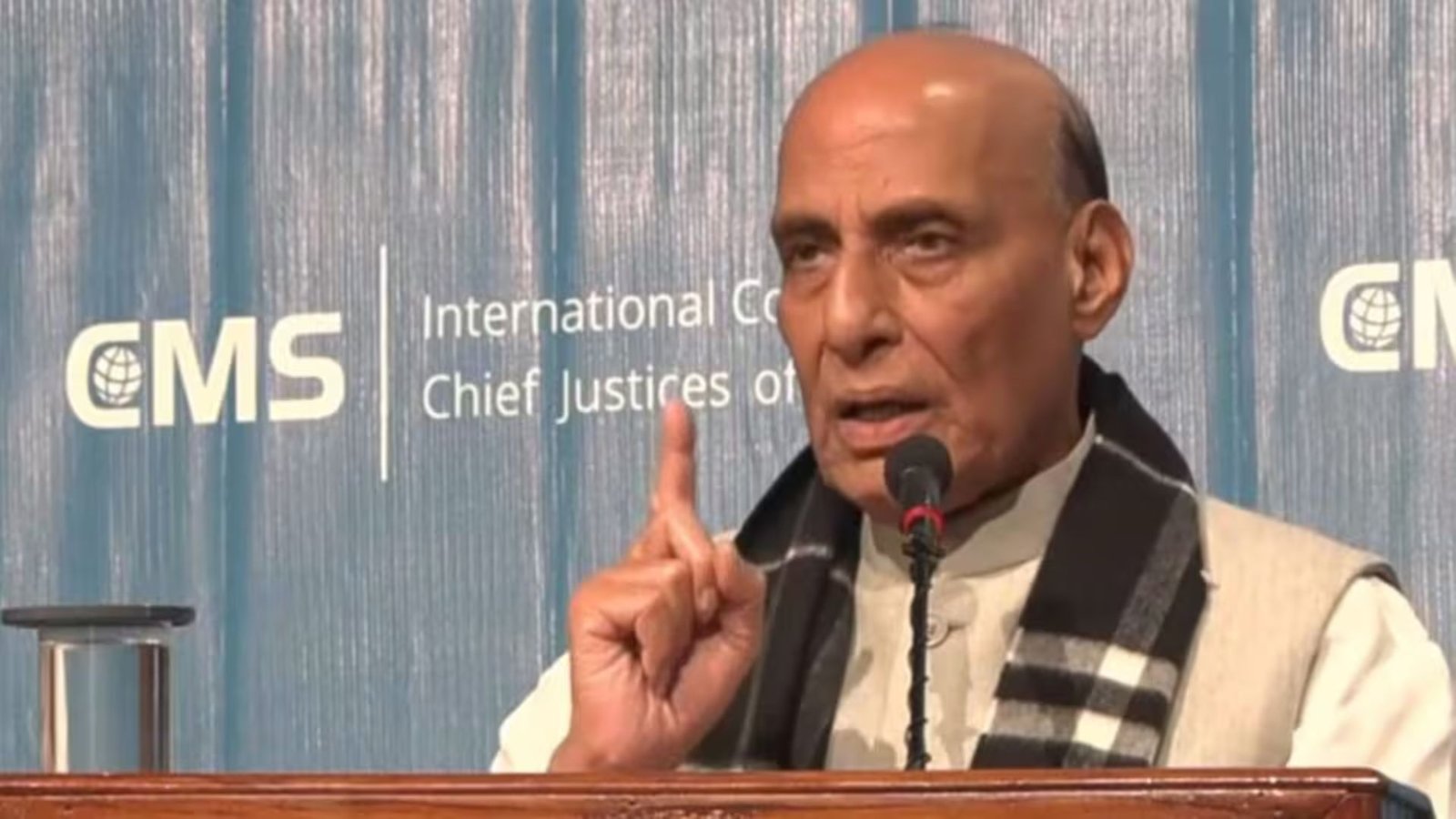
Defence Minister Rajnath Singh sparked debate with remarks suggesting Sindh, a province in Pakistan, could potentially become part of India again. Speaking at an event, Singh emphasized the shared civilizational links between India and Sindh, underscoring the historical and cultural connections that bind the two regions. He stated that while borders are currently defined, the possibility of change should not be ruled out entirely.
Historical Context and Cultural Ties
Singh’s comments touched upon the complex history of the Indian subcontinent, particularly the partition of India in 1947, which led to the creation of Pakistan and the subsequent division of regions like Sindh. He highlighted that Sindh has always been an integral part of India’s cultural and civilizational identity. The minister pointed out the significant number of Sindhis who migrated to India after partition and have continued to preserve their distinct culture and traditions.
“I believe that after the partition, injustice was done. Sindh was a part of India. I believe it will be part of India,” Singh said, further emphasizing the emotional and historical ties that many Indians feel toward the region. His statement resonated with sentiments among certain groups who still view Sindh as an inherent part of the broader Indian identity.
Political Implications and Reactions
The remarks have elicited strong reactions, both domestically and internationally. In India, some political analysts have interpreted Singh’s statement as a reflection of the ruling party’s broader ideological stance on reclaiming what they perceive as historically Indian territories. Opposition parties, however, have cautioned against such rhetoric, arguing that it could potentially destabilize relations with Pakistan and undermine ongoing diplomatic efforts.
Across the border, Pakistani officials have condemned Singh’s comments as irresponsible and provocative. They have reiterated that Sindh is an integral part of Pakistan and that any suggestion to the contrary is unacceptable. The Pakistani government has called on the international community to take note of what they perceive as aggressive and expansionist rhetoric from Indian leaders.
Future Prospects and Diplomatic Challenges
While the possibility of Sindh rejoining India appears remote under the current geopolitical landscape, Singh’s statement has opened up a broader discussion about historical grievances, cultural identities, and the potential for future reconciliation. It has also underscored the delicate balance between asserting historical claims and maintaining peaceful relations with neighboring countries. The future of the relationship between India and Pakistan, particularly concerning regions like Sindh, will continue to be shaped by ongoing diplomatic efforts, political developments, and the evolving geopolitical landscape.
The Defence Minister’s statement serves as a reminder of the unresolved issues and historical complexities that continue to influence the dynamics between India and Pakistan. The emphasis on civilizational links and the possibility of changing borders adds a new dimension to the ongoing dialogue between the two nations.
Image Source: Google | Image Credit: Respective Owner