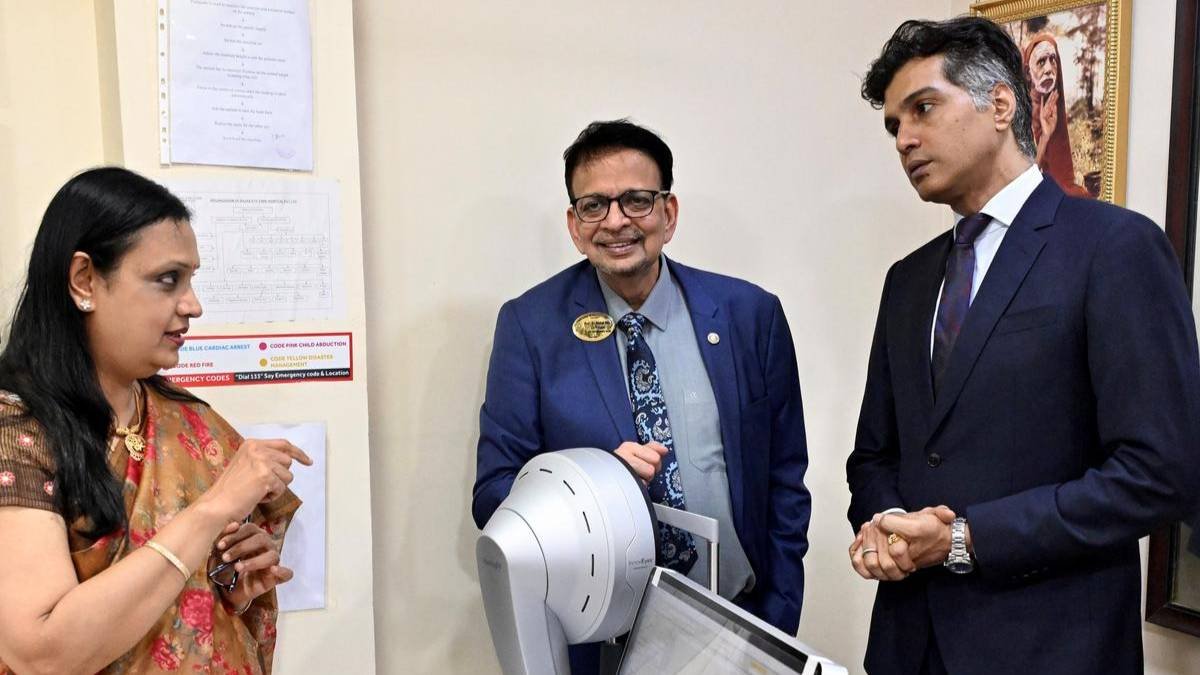
Rajan Eye Care has announced the integration of artificial intelligence (AI) technology into its eye correction procedures, marking a significant advancement in ophthalmic care. This move aims to enhance precision, efficiency, and patient outcomes in various eye treatments, including refractive surgeries and cataract procedures.
AI Integration in Eye Care
The integration of AI is expected to revolutionize several aspects of eye care. AI algorithms can analyze complex diagnostic images, such as optical coherence tomography (OCT) and fundus images, with greater accuracy and speed than traditional methods. This can lead to earlier and more accurate detection of eye diseases like glaucoma, diabetic retinopathy, and age-related macular degeneration. The technology can also assist in personalized treatment planning by predicting the optimal surgical parameters based on individual patient characteristics.
According to Dr. Rohit Rajan, CEO of Rajan Eye Care, “The incorporation of AI into our practice represents a major step forward in our commitment to providing the best possible care for our patients. AI allows us to leverage vast amounts of data to refine our techniques, personalize treatments, and ultimately achieve better visual outcomes.”
The AI system being used by Rajan Eye Care incorporates machine learning models trained on extensive datasets of patient data. These models can identify subtle patterns and correlations that might be missed by human clinicians, enabling more precise diagnoses and treatment decisions. For example, in refractive surgery, AI can help determine the ideal corneal flap thickness and ablation profile to minimize the risk of complications and maximize visual acuity.
Furthermore, AI is playing a role in improving the efficiency of clinic operations. Automated image analysis can reduce the time required for diagnostic assessments, allowing doctors to focus more on patient consultation and care. AI-powered systems can also assist in scheduling appointments, managing patient records, and streamlining administrative tasks.
Benefits for Patients
Patients stand to benefit significantly from the adoption of AI in eye care. The increased accuracy and precision of AI-assisted procedures can lead to improved visual outcomes and reduced risk of complications. Personalized treatment plans tailored to individual patient needs can optimize the effectiveness of interventions. Moreover, earlier detection of eye diseases can enable timely treatment and prevent irreversible vision loss. By automating some of the routine tasks, AI can free up doctors to spend more time with patients, enhancing the overall patient experience.
Rajan Eye Care’s initiative reflects a growing trend in the healthcare industry, where AI is being applied to a wide range of applications, from drug discovery to remote patient monitoring. As AI technology continues to evolve, its potential to transform healthcare is immense. The use of AI promises a future where eye care is more precise, efficient, and accessible to all.
Image Source: Google | Image Credit: Respective Owner