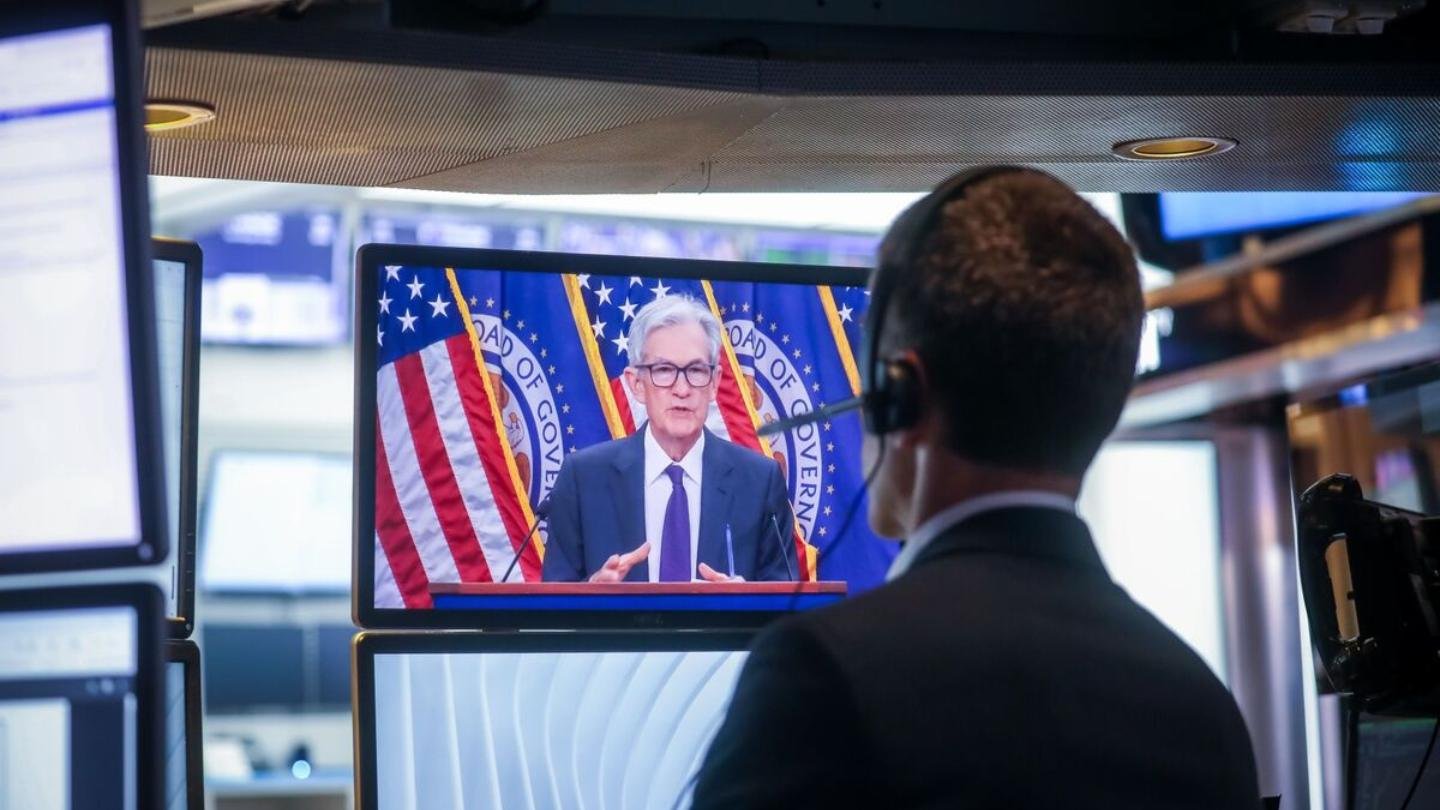
U.S. Federal Reserve Chairman Jerome Powell’s hints at potential rate cuts in September are expected to weaken the U.S. dollar and benefit the Indian rupee, analysts suggest. The dovish tone of Powell’s speech at the Jackson Hole symposium, which acknowledged a weakening jobs market, could lead to lower bond yields and provide capital gains opportunities for investors.
Powell’s Remarks and Market Reaction
Powell’s speech included subtle hints that the Fed might reduce interest rates as soon as the September meeting. He mentioned that there’s some room for policy adjustments, despite inflation concerns, especially as the jobs market shows signs of weakening. This outlook caused the U.S. benchmark 10-year Treasury yields to fall by 1.7%, while the dollar index dropped by about 1%. Meanwhile, major U.S. stock indices, including the Nasdaq, Dow Jones, and S&P 500, rose by up to 2%, reflecting market expectations of a rate cut.
Impact on the Indian Rupee and Bond Markets
Following Powell’s comments, analysts expect the Indian rupee to gain some strength against the U.S. dollar. As the Fed’s rate cuts would likely lead to lower bond yields in the U.S., this could drive investors toward riskier assets and provide a boost to emerging market currencies, including the INR. Vishal Goenka, Co-Founder of IndiaBonds.com, indicated that Powell’s signals could ease the pressure on the rupee, which has faced difficulties due to heavy dollar demand from importers and tariff concerns.
However, while the medium-term outlook for the rupee is more positive, the short-term remains uncertain. Ajay Kumar Yadav, Group CEO & CIO of Wise Finserv, warned that while Powell’s dovish stance typically weakens the U.S. dollar, India’s demand for dollars and ongoing tariff pressures could prevent a significant rise in the rupee. Yadav emphasized that the rupee could continue to hover around ₹87.50 in the short term, with potential for market swings.
Opportunities for Bond Investors
In the bond markets, Powell’s rate cut signals could create opportunities for investors. Jeffrey Roach, Chief Economist for LPL Financial, suggested that the rate cuts would drive down U.S. bond yields, bolstering markets in the near term. He noted, however, that structural shifts in the global economy might result in higher long-term rates.
Yadav added that foreign investors have been net buyers of Indian government bonds, positioning for easier global liquidity. This trend is expected to help lower Indian bond yields and create capital gain opportunities, particularly for long-duration bonds. He recommended a “barbell strategy” for investors, combining short-term and long-term bonds to capture both stability and potential upside.
Looking Ahead
With the USMCA review coming up in 2026, trade issues between countries, including tariffs, remain key factors influencing the economic landscape. While Powell’s remarks provide some relief for the INR in the short term, the broader economic uncertainties and pressures from tariffs on imports may continue to impact currency markets.
Image Source: iStock