Recent research published in the ESS Open Archive details a significant connection between the behavior of the polar vortex and energetic electron precipitation (EEP) events originating from the magnetosphere. The study, focusing on Sudden Stratospheric Warming (SSW) events, reveals how EEP influences the evolution of the polar vortex, potentially impacting mid-latitude weather patterns.
The polar vortex, a large area of low pressure and cold air surrounding both of Earth’s poles, typically remains stable during winter. However, disruptions to this vortex, often triggered by SSWs, can lead to extreme weather events in regions like North America and Europe. These events involve a rapid warming of the stratosphere, weakening the vortex and allowing frigid polar air to spill southward.
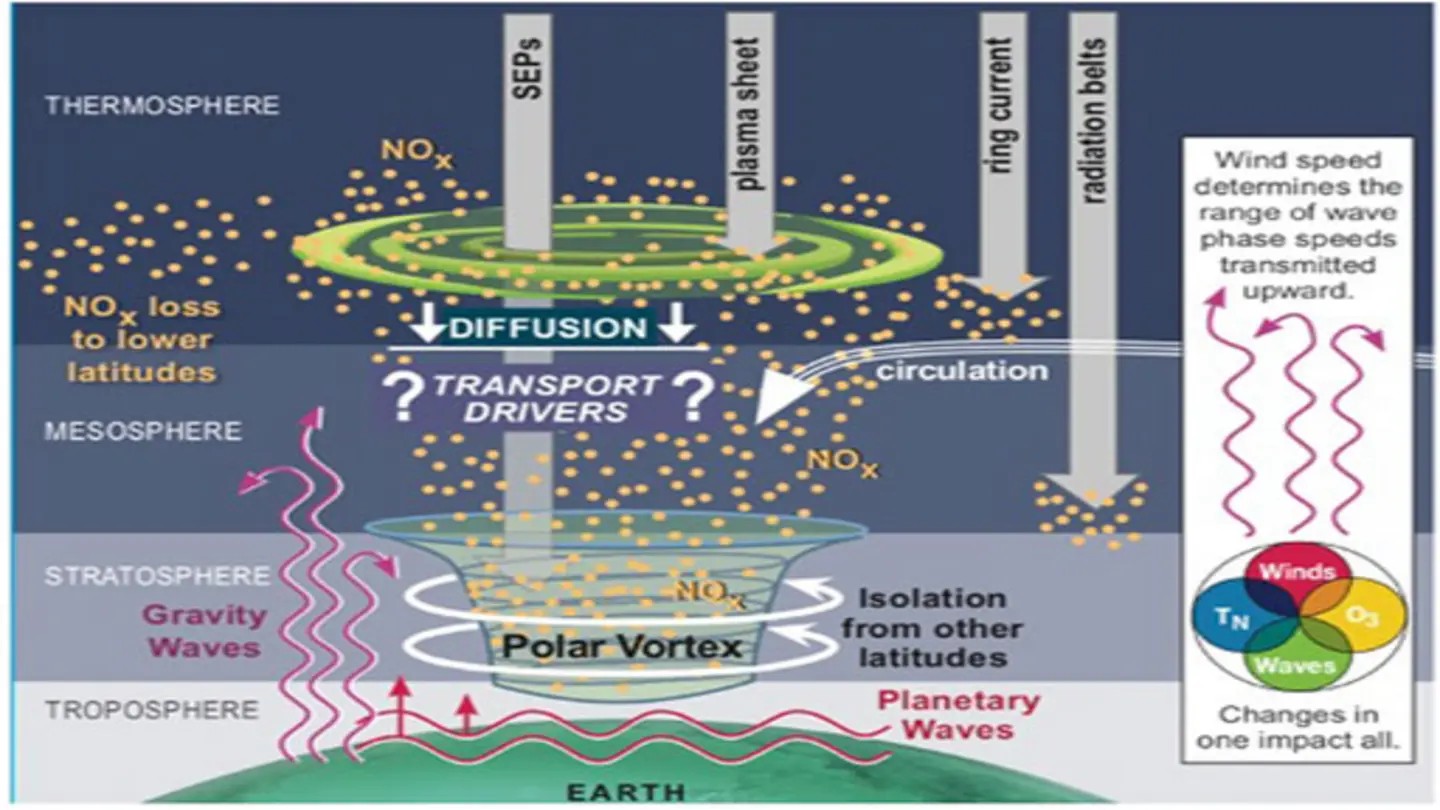
Researchers have long sought to understand the complex mechanisms driving SSWs and polar vortex variability. This new study highlights the role of EEP – the influx of high-energy electrons from the magnetosphere into the upper atmosphere – as a crucial factor. EEP deposits energy into the upper atmosphere, altering its composition and dynamics. Specifically, the research demonstrates that EEP can modulate the wave patterns within the stratosphere, influencing the strength and stability of the polar vortex.
How Energetic Electrons Impact the Vortex
The study utilizes observational data and modeling to demonstrate that increased EEP activity often precedes and coincides with changes in the polar vortex structure during SSW events. The energetic electrons interact with atmospheric gases, leading to the production of nitric oxide (NOx) and changes in ozone concentrations. These chemical changes, in turn, affect the radiative balance of the stratosphere, altering temperature gradients and influencing the propagation of atmospheric waves.
The research indicates that EEP doesn’t necessarily *cause* SSWs, but rather acts as a modulating influence, potentially amplifying or dampening the effects of other triggering factors. The timing and intensity of EEP events appear to be critical in determining the extent to which they contribute to polar vortex disruptions. Understanding this interplay is vital for improving seasonal weather forecasts.
The findings have implications for space weather forecasting as well. EEP events are directly linked to geomagnetic activity, which is driven by solar flares and coronal mass ejections. Therefore, monitoring space weather conditions can provide valuable insights into potential impacts on the polar vortex and subsequent weather patterns. Improved predictive capabilities could allow for better preparation for extreme winter weather events.
Further research is needed to fully elucidate the complex interactions between EEP, the polar vortex, and SSWs. However, this study represents a significant step forward in understanding the drivers of polar vortex variability and its connection to both space weather and terrestrial climate. The research team plans to continue investigating these relationships using more sophisticated models and expanded datasets, aiming to refine predictive models and enhance our ability to anticipate and mitigate the impacts of extreme weather.
Image Source: Google | Image Credit: Respective Owner