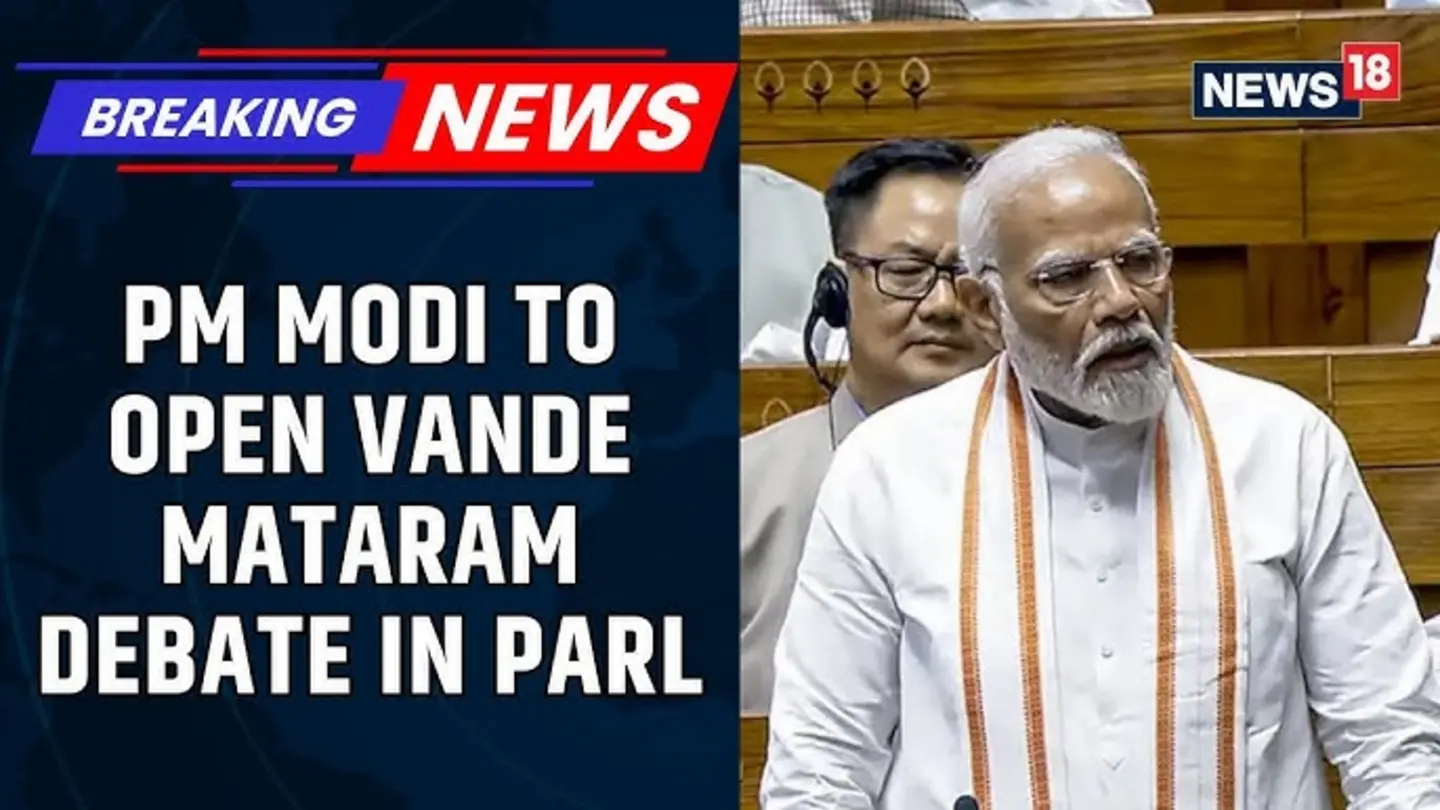
The Winter session of India’s Parliament entered its sixth day with significant developments as Prime Minister Narendra Modi prepared to initiate a crucial debate on the national song Vande Mataram in the Lok Sabha. The discussion, scheduled to dominate the legislative agenda, underscores the song’s enduring significance in India’s cultural and political discourse.
Vande Mataram, composed by Bankim Chandra Chatterjee in 1905, has long been a symbol of India’s struggle for independence and remains an integral part of national identity. The decision to debate its relevance and interpretation comes amid ongoing conversations about national unity and cultural heritage. PM Modi, a vocal advocate for the song, is expected to emphasize its unifying power and historical importance during his address.
The debate is anticipated to see active participation from members across political lines, with many leaders viewing it as an opportunity to reaffirm commitment to India’s shared values. Opposition parties have expressed interest in discussing the song’s role in contemporary society, highlighting its ability to transcend regional and linguistic divides. The discussion may also touch upon recent instances where the song has been at the center of public and political attention.
Scheduled proceedings include detailed examinations of proposed legislative measures related to cultural preservation and education curricula. Lawmakers will deliberate on how to reinforce the song’s prominence in academic and public ceremonies, ensuring younger generations understand its historical context and emotional resonance. Educational institutions and government bodies are likely to be urged to adopt measures that honor the song’s legacy.
Experts and historians have weighed in, noting that Vande Mataram’s adoption as a national song in 1950 reflected India’s commitment to pluralism. They argue that its continued relevance lies in its ability to evoke a sense of collective belonging, making it a vital tool for fostering national cohesion. The debate is expected to explore modern interpretations and challenges in maintaining its significance in a diverse, rapidly evolving society.
The session also coincides with broader discussions on national symbols and their contemporary meanings. Lawmakers are expected to balance reverence for tradition with the need to address evolving public sentiments. The outcome of the debate could influence future policies on cultural heritage and national education frameworks, potentially shaping how India’s national symbols are preserved and promoted.
As the Lok Sabha prepares for this pivotal discussion, all eyes are on PM Modi to set the tone for a respectful and constructive dialogue. The debate is seen not just as a legislative exercise, but as a reaffirmation of India’s shared heritage and the values that bind its diverse population together. Observers expect the proceedings to reflect a unanimous commitment to honoring Vande Mataram’s legacy while addressing contemporary challenges.
Image Source: Google | Image Credit: Respective Owner