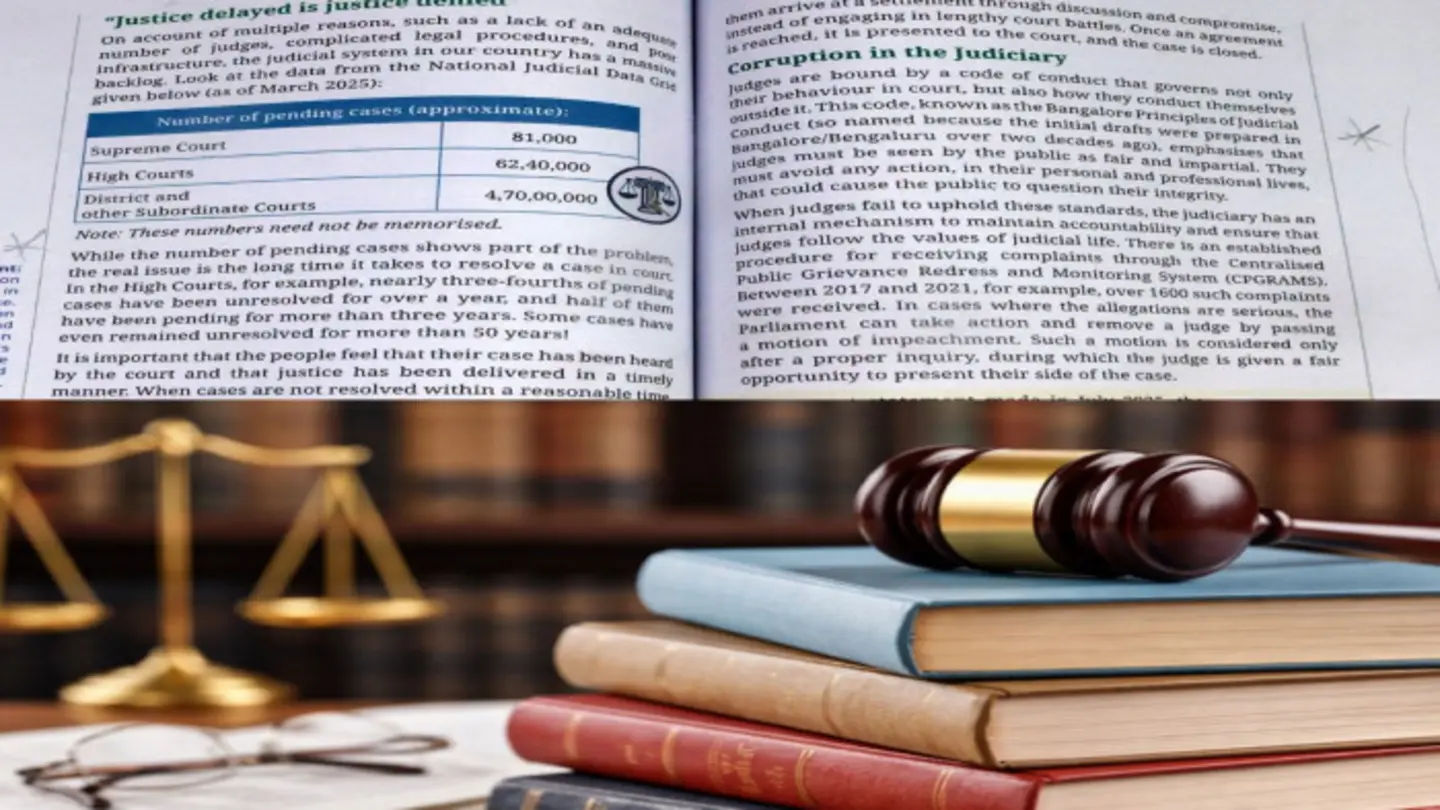
Prime Minister Narendra Modi has expressed dissatisfaction with a chapter on the judiciary included in the National Council of Educational Research and Training (NCERT) curriculum, according to sources cited by NDTV. The chapter, which is part of the social science syllabus for school students, has reportedly drawn the Prime Minister’s attention due to concerns over its content and the need for greater accountability in educational material.
Sources close to the development revealed that PM Modi has instructed officials to review the chapter and ensure that it aligns with the government’s vision for education reform. The Prime Minister emphasized the importance of presenting accurate and balanced information to students, particularly on sensitive topics such as the judiciary and its role in the democratic framework.
The NCERT, which is responsible for developing and publishing school textbooks, has been under scrutiny in recent years for its curriculum updates. The current controversy stems from allegations that the judiciary chapter contains outdated or biased information that could influence young minds. The government has been keen on ensuring that educational content reflects contemporary realities and promotes critical thinking among students.
Officials from the Ministry of Education are reportedly working closely with NCERT to address the concerns raised by PM Modi. The review process is expected to involve consultations with legal experts, educators, and other stakeholders to ensure that the chapter is revised in a manner that is both informative and impartial. The government has also reiterated its commitment to maintaining the integrity of the education system while fostering a culture of accountability.
This development comes at a time when the government is focusing on overhauling the education sector through initiatives such as the National Education Policy (NEP) 2020. The NEP aims to bring about significant changes in the curriculum, teaching methods, and assessment systems to make education more holistic and future-ready. The review of the judiciary chapter is seen as part of this broader effort to align educational content with the goals of the NEP.
Critics, however, have raised questions about the government’s involvement in curriculum decisions, arguing that it could lead to the politicization of education. They have called for a transparent and inclusive process that involves diverse perspectives to ensure that the revised content is free from bias and serves the best interests of students.
As the review process unfolds, the government has assured that the final decision will be based on expert recommendations and will prioritize the educational needs of students. The outcome of this review is likely to have a significant impact on how the judiciary is portrayed in school textbooks and could set a precedent for future curriculum revisions.
Image Source: Google | Image Credit: Respective Owner