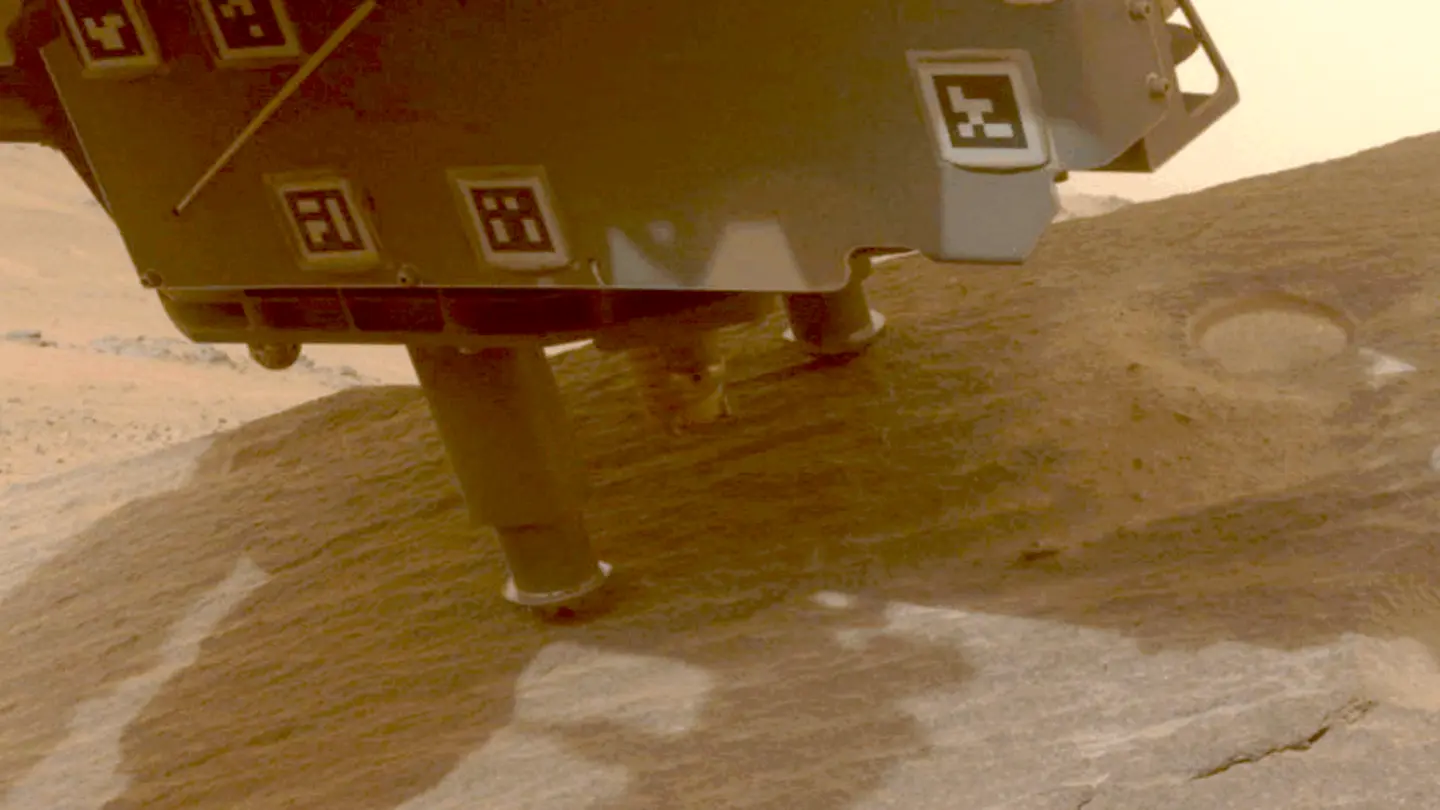
NASA’s Perseverance rover has completed five Earth years on Mars, a significant milestone that highlights the mission’s durability and scientific impact. Landed in Jezero Crater on February 18, 2021, Perseverance was designed to search for signs of ancient microbial life, characterise the planet’s geology and climate, and collect samples for future return to Earth. Over this period, the rover has traversed over 15 kilometres, survived harsh conditions, and achieved a key feat: the caching of the first Martian samples for retrieval. Its success has been monitored by a global audience, inspiring a new generation of scientists and engineers.
The special achievement mentioned in reports is the successful caching of more than 30 rock core samples. These samples, drilled from various geological layers in the ancient river delta, are stored in sealed tubes on the surface. This milestone is critical for the Mars Sample Return mission, a collaborative effort between NASA and the European Space Agency, which aims to bring the samples back to Earth in the 2030s. The samples could provide definitive evidence of past life, making this caching process one of the most complex and important tasks ever performed on another planet.
Perseverance’s scientific instruments have enabled groundbreaking discoveries. The PIXL and SHERLOC spectrometers have detected organic molecules and minerals associated with water, supporting the hypothesis that Jezero Crater once hosted a habitable lake. The rover’s weather station, MEDA, has monitored atmospheric conditions, while RIMFAX has mapped subsurface structures. These data have revolutionized our understanding of Martian geology and climate history, offering clues about the planet’s transition from wet to dry.
Operating for five years on Mars involved overcoming numerous challenges. The rover faced wheel damage from rocky terrain, dust storms that blocked sunlight, and communication delays of up to 20 minutes. The mission team implemented creative solutions, such as driving in reverse to reduce wheel stress and using autonomous navigation to avoid obstacles. Regular software updates and robust fault protection systems ensured the rover’s continued operation, demonstrating the success of long-term robotic exploration.
Looking forward, the cached samples will be retrieved by a future Sample Retrieval Lander and returned to Earth for intensive analysis. Perseverance will continue to explore new areas, such as the crater’s rim, to collect additional samples and study diverse rock types. The mission’s legacy also includes the Ingenuity helicopter, which completed numerous flights, proving that aerial exploration is possible on Mars. As Perseverance marks this five-year milestone, it paves the way for human missions and deepens our search for life beyond Earth.
Image Source: Google | Image Credit: Respective Owner