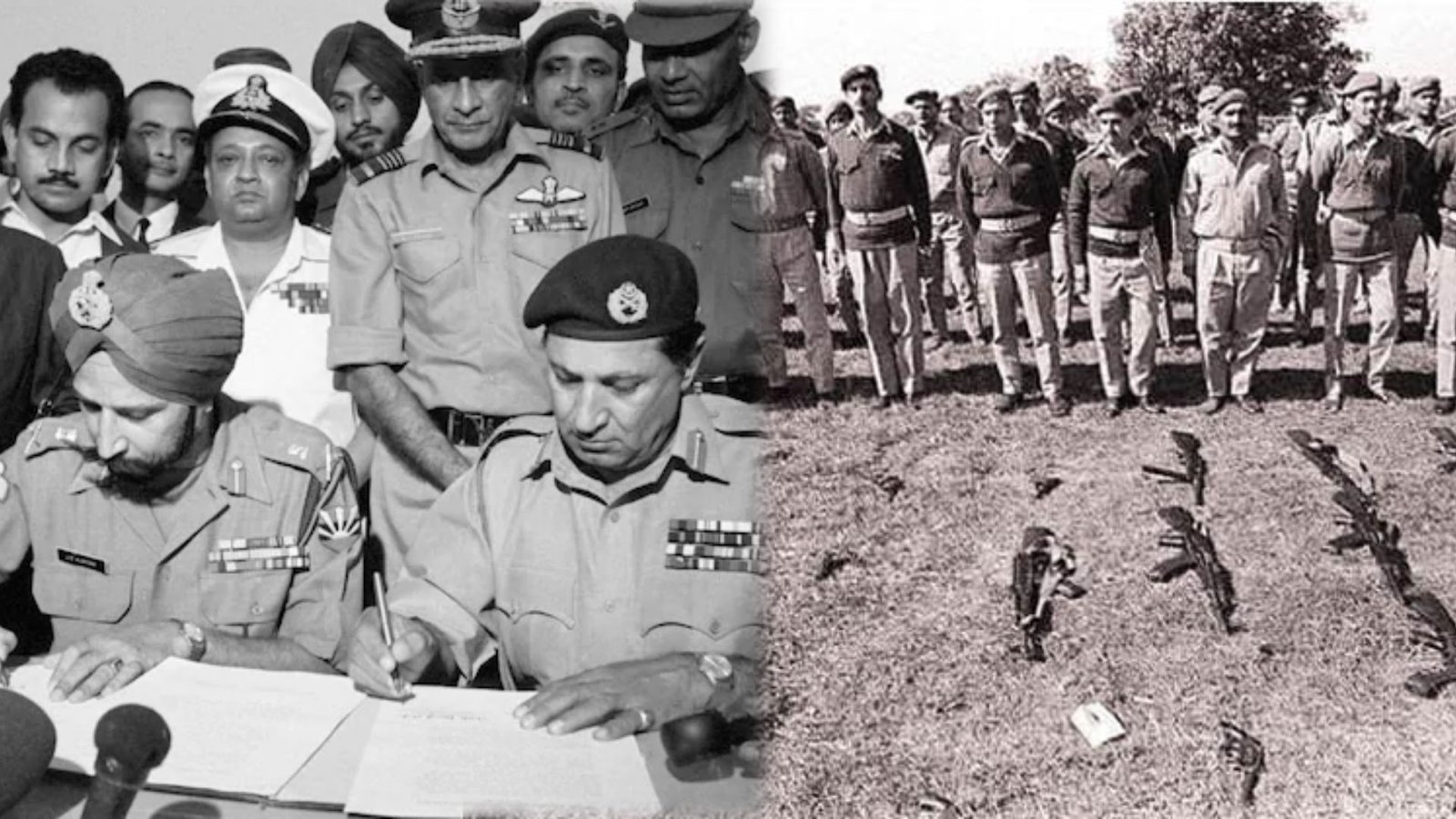
Indian Army Chief General Upendra Dwivedi recently addressed the pivotal moments that led to Pakistan’s surrender during Operation Sindoor in 1971, which culminated in the liberation of Bangladesh. Speaking at an event, General Dwivedi identified two crucial ‘turning points’ that significantly weakened the Pakistani forces and ultimately led to their defeat.
The first turning point, according to the Army Chief, was the swift and decisive Indian intervention following the escalating crisis in East Pakistan (now Bangladesh). Pakistan initiated Operation Searchlight in March 1971, a brutal military crackdown on the Bengali population, sparking a massive refugee influx into India and creating a volatile regional situation. India responded with Operation Sindoor, a multifaceted strategy encompassing diplomatic efforts, material support to the Mukti Bahini (Bengali liberation forces), and ultimately, direct military intervention on December 3, 1971.
General Dwivedi emphasized that the speed and scale of the Indian offensive caught the Pakistani military off guard. Indian forces, utilizing a combined arms approach, rapidly secured key territories in East Pakistan, disrupting Pakistani supply lines and communication networks. This initial momentum proved demoralizing for the enemy and created opportunities for the Mukti Bahini to further intensify their resistance.
Strategic Miscalculations and Logistical Failures
The second critical turning point, the Army Chief explained, stemmed from significant strategic miscalculations and logistical failures on the part of the Pakistani command. Despite having a larger overall military force, Pakistan struggled to effectively reinforce and resupply its troops in East Pakistan due to the geographical distance and India’s naval dominance. The Indian Navy successfully blockaded East Pakistan’s ports, preventing the arrival of crucial supplies and reinforcements.
Furthermore, the Pakistani leadership underestimated the resolve of the Bengali people and the effectiveness of the Mukti Bahini. The initial assumption that a swift crackdown would quell the rebellion proved disastrously wrong. The Mukti Bahini, bolstered by Indian support and fueled by a strong desire for independence, waged a relentless guerrilla war that tied down significant Pakistani forces.
Dwivedi highlighted the bravery and sacrifice of Indian soldiers and the Mukti Bahini fighters. He noted the coordinated efforts between the Indian Army and the Mukti Bahini were instrumental in achieving a swift victory. The surrender of the Pakistani Eastern Command, led by Lieutenant General A.A.K. Niazi, to the Indian forces and the Mukti Bahini on December 16, 1971, marked a watershed moment in the history of the Indian subcontinent.
The Army Chief’s remarks offer a valuable insight into the military factors that contributed to Pakistan’s defeat in 1971. He underscored the importance of decisive action, strategic foresight, and effective coordination in achieving military objectives. The events of 1971 continue to be studied by military strategists and historians as a case study in modern warfare and the complexities of geopolitical intervention.
The liberation of Bangladesh remains a significant event in India’s history, symbolizing its commitment to regional stability and the self-determination of peoples. General Dwivedi’s address served as a reminder of the sacrifices made to achieve this outcome and the enduring lessons learned from the 1971 war.
Image Source: Google | Image Credit: Respective Owner