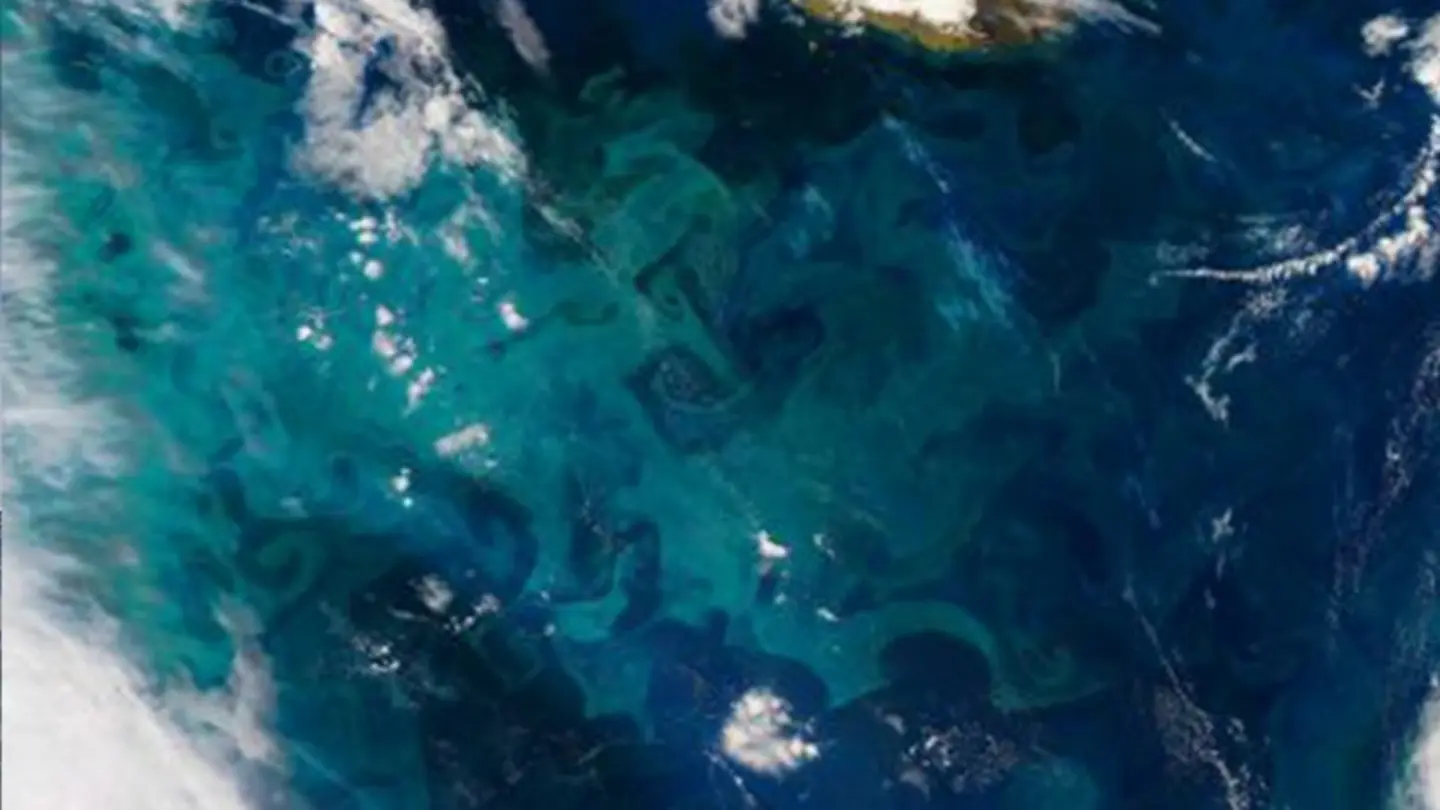
New research published in ESS Open Archive highlights seasonal discrepancies between estimates of net primary production (NPP) in the North Atlantic Ocean derived from profiling floats and satellite observations. The study focuses on the Carbon-based Productivity Model (CbPM), a widely used tool for assessing ocean productivity, and identifies potential sources of error that contribute to the observed divergence.
The research delves into the complexities of measuring NPP, the rate at which marine phytoplankton convert carbon dioxide into organic matter, a fundamental process in the marine food web and global carbon cycle. Profiling floats, autonomous underwater vehicles that collect data at various depths, provide in-situ measurements of chlorophyll concentration, a proxy for phytoplankton biomass. Satellites, on the other hand, offer synoptic, large-scale observations of ocean color, from which chlorophyll concentration and NPP can be estimated.
Seasonal Discrepancies
The study reveals that the discrepancies between float- and satellite-derived NPP estimates are most pronounced during specific seasons. During periods of high phytoplankton biomass, particularly during the spring bloom, satellite estimates tend to be higher than those obtained from profiling floats. Conversely, during periods of lower biomass, the opposite trend is observed.
The researchers attribute these discrepancies to two primary factors: fluorescence and vertical extrapolation effects. Fluorescence, the emission of light by chlorophyll molecules, can interfere with satellite measurements of ocean color, leading to overestimation of chlorophyll concentration and, consequently, NPP. The impact of fluorescence varies seasonally depending on phytoplankton community composition and environmental conditions.
Vertical extrapolation effects arise from the fact that satellites only measure the surface layer of the ocean, while profiling floats provide information on the vertical distribution of phytoplankton. To estimate total NPP, satellite data must be extrapolated to deeper depths, introducing potential errors, especially when the vertical distribution of phytoplankton is highly variable.
Implications for Ocean Modeling
The findings have significant implications for ocean modeling and climate change research. Accurate estimates of NPP are crucial for understanding the role of the ocean in the global carbon cycle and for predicting the impacts of climate change on marine ecosystems. By identifying and quantifying the sources of error in NPP estimates, the study contributes to the development of more robust and reliable ocean models.
The researchers suggest that future studies should focus on improving the accuracy of satellite algorithms for estimating chlorophyll concentration and on developing more sophisticated methods for vertical extrapolation of NPP. They also emphasize the importance of combining in-situ measurements from profiling floats with satellite observations to validate and refine ocean models.
In conclusion, the study highlights the challenges of accurately assessing ocean productivity and underscores the need for continued research to improve our understanding of the marine carbon cycle. By addressing the identified discrepancies between float- and satellite-derived NPP estimates, scientists can enhance the accuracy of ocean models and better predict the impacts of climate change on marine ecosystems.
Image Source: Google | Image Credit: Respective Owner