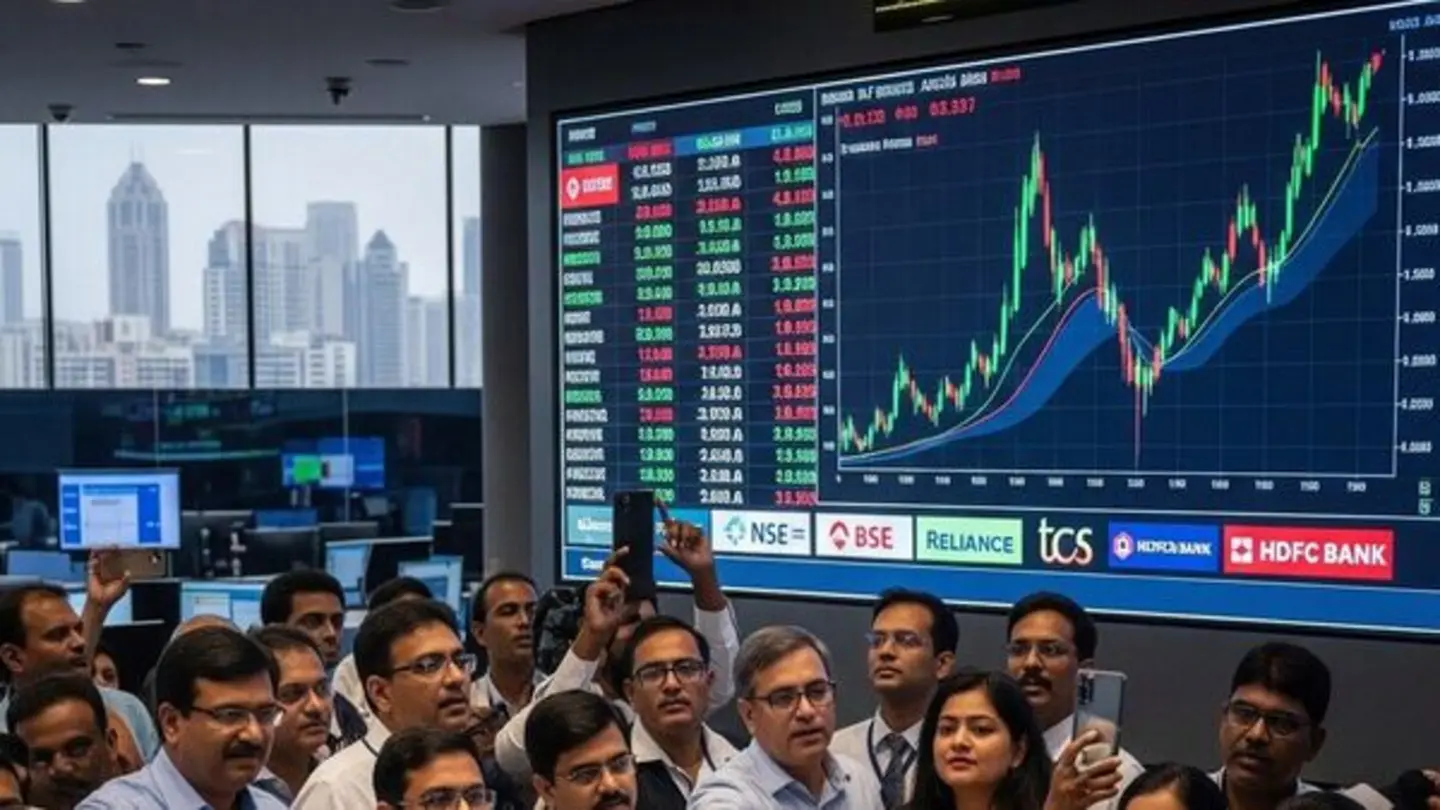
Indian stock indices experienced a volatile trading session, slipping from intraday highs but closing marginally positive. The NIFTY50 ended nearly flat at 25,891, while the SENSEX gained 130 points. The market witnessed sectoral variations, with IT stocks leading the gains and banking stocks facing selling pressure. Overall market sentiment remained cautious amid global economic uncertainties and rising geopolitical tensions.
Market Performance
The early trading hours saw both the NIFTY50 and SENSEX surge, fueled by positive global cues and renewed buying interest. However, profit-booking at higher levels led to a gradual decline, erasing most of the initial gains. The NIFTY50 struggled to maintain its position above the 25,900 mark, while the SENSEX hovered around the 77,000 level. Mid-cap and small-cap indices also mirrored the broader market trend, exhibiting volatility but ultimately closing with modest gains.
Top Gainers and Losers
Infosys emerged as the top gainer among the NIFTY50 constituents, driven by positive earnings expectations and renewed investor confidence in the IT sector. Other notable gainers included HCL Technologies, TCS, and Wipro. On the other hand, banking stocks such as ICICI Bank, HDFC Bank, and State Bank of India faced selling pressure, contributing to the overall market volatility. Metal and energy stocks also witnessed profit-booking after a recent rally.
Volatility Index
The India VIX, a measure of market volatility, rose by 4%, indicating increased investor apprehension. The rise in VIX suggests that traders anticipate further market fluctuations in the near term. Analysts attribute the increase in volatility to a combination of factors, including global economic concerns, upcoming macroeconomic data releases, and ongoing geopolitical tensions.
Rupee Movement
The Indian rupee depreciated against the US dollar, reflecting the overall risk-off sentiment in the market. The rupee’s decline was also influenced by increased dollar demand from importers and foreign institutional investors. The Reserve Bank of India (RBI) intervened in the currency market to curb excessive volatility and prevent a sharp depreciation of the rupee.
Expert Outlook
Market analysts advise investors to remain cautious and adopt a stock-specific approach. They recommend focusing on companies with strong fundamentals and growth potential, while avoiding highly leveraged or overvalued stocks. The near-term market outlook remains uncertain, with potential headwinds from global economic slowdown, rising inflation, and geopolitical risks. Investors are advised to closely monitor macroeconomic data releases and global developments to make informed investment decisions.
Going forward, market participants will be closely watching the release of key economic data, including inflation figures and industrial production numbers, for further cues on the market’s direction. Global events, such as central bank policy announcements and geopolitical developments, will also play a crucial role in shaping market sentiment.
Image Source: Google | Image Credit: Respective Owner