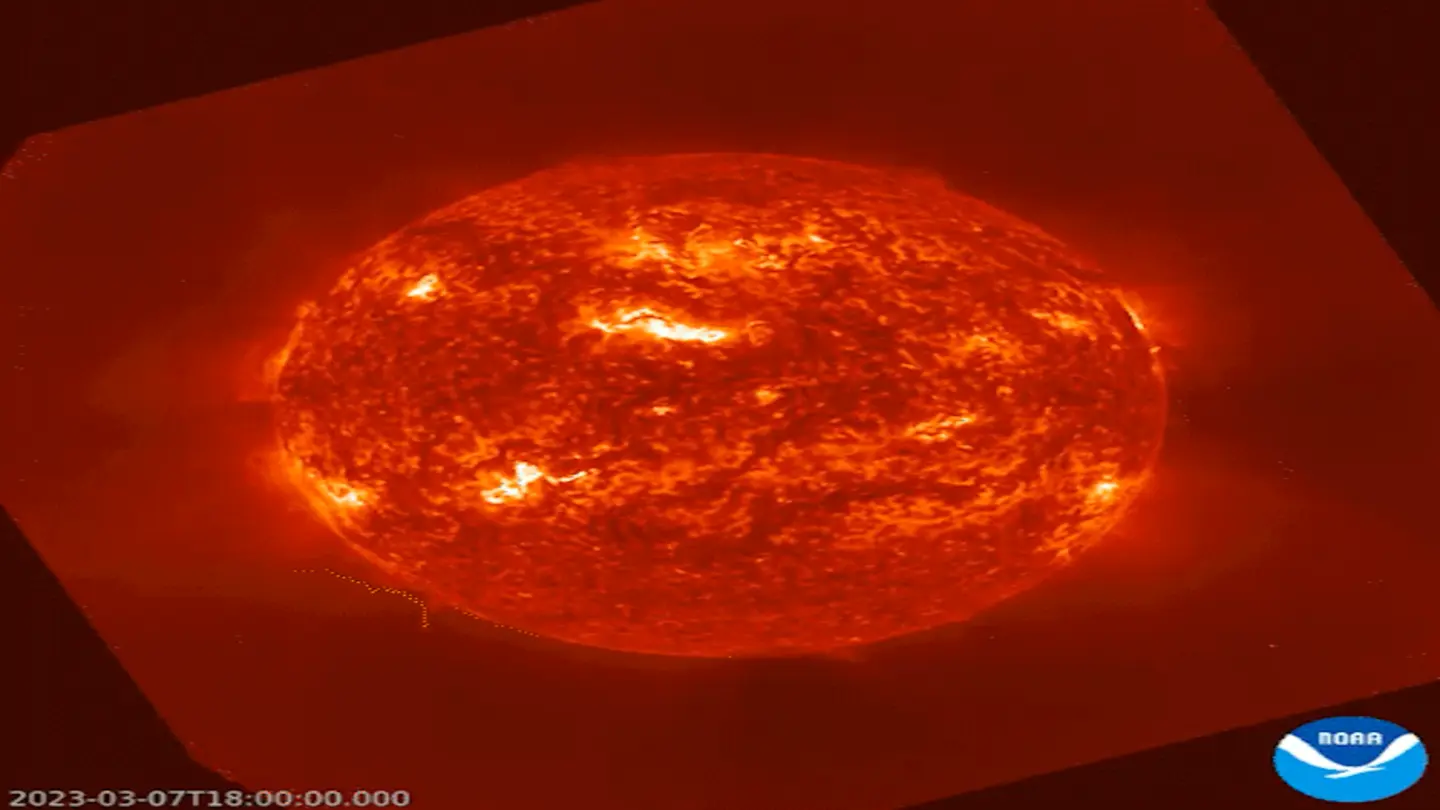
Scientists have developed a groundbreaking new tool that promises to provide significantly earlier and more accurate warnings about space weather events. This innovation, detailed in a recent announcement from the Innovation News Network, could revolutionize how industries and governments prepare for the potentially disruptive effects of solar flares, coronal mass ejections, and other phenomena originating from the sun. Currently, space weather forecasting relies heavily on observations of ongoing events, often providing warnings with limited lead time – sometimes only hours before an event impacts Earth.
The newly developed system, dubbed ‘SolarCast,’ utilizes a sophisticated combination of machine learning and advanced modeling techniques to predict space weather conditions with unprecedented precision. It analyzes vast datasets of solar activity, including data from satellites, ground-based observatories, and even historical records, to identify patterns and predict future events. Unlike traditional forecasting methods that primarily react to current conditions, SolarCast proactively anticipates disturbances based on underlying solar processes.
Key Features and Benefits of SolarCast
One of the most significant advancements of SolarCast is its ability to predict the intensity and duration of space weather events. This allows for more targeted mitigation strategies, minimizing the potential damage to critical infrastructure. Specifically, the tool is designed to provide warnings to sectors such as power grids, satellite operators, airlines, and telecommunications companies, all of which are vulnerable to disruptions caused by geomagnetic storms. These storms can induce currents in power grids, leading to blackouts; disrupt satellite communications; and even impact air travel safety.
The system’s predictive capabilities extend beyond immediate impacts. SolarCast can also forecast the long-term effects of solar activity, providing valuable insights for planning and resource allocation. Researchers believe that this enhanced forecasting will enable a more proactive approach to space weather management, reducing the risk of costly disruptions and safeguarding essential services. The team behind SolarCast emphasizes that this is not simply about predicting events; it’s about understanding the underlying physics to improve the accuracy and reliability of forecasts over time.
The development of SolarCast represents a major step forward in space weather forecasting. By combining cutting-edge technology with a deep understanding of solar physics, this new tool has the potential to transform our ability to anticipate and mitigate the impacts of space weather, protecting our technological infrastructure and ensuring the continued operation of vital services. Further research and development are planned to expand the system’s capabilities and improve its accuracy even further, paving the way for a more resilient and prepared future in the face of solar activity.
Image Source: Google | Image Credit: Respective Owner