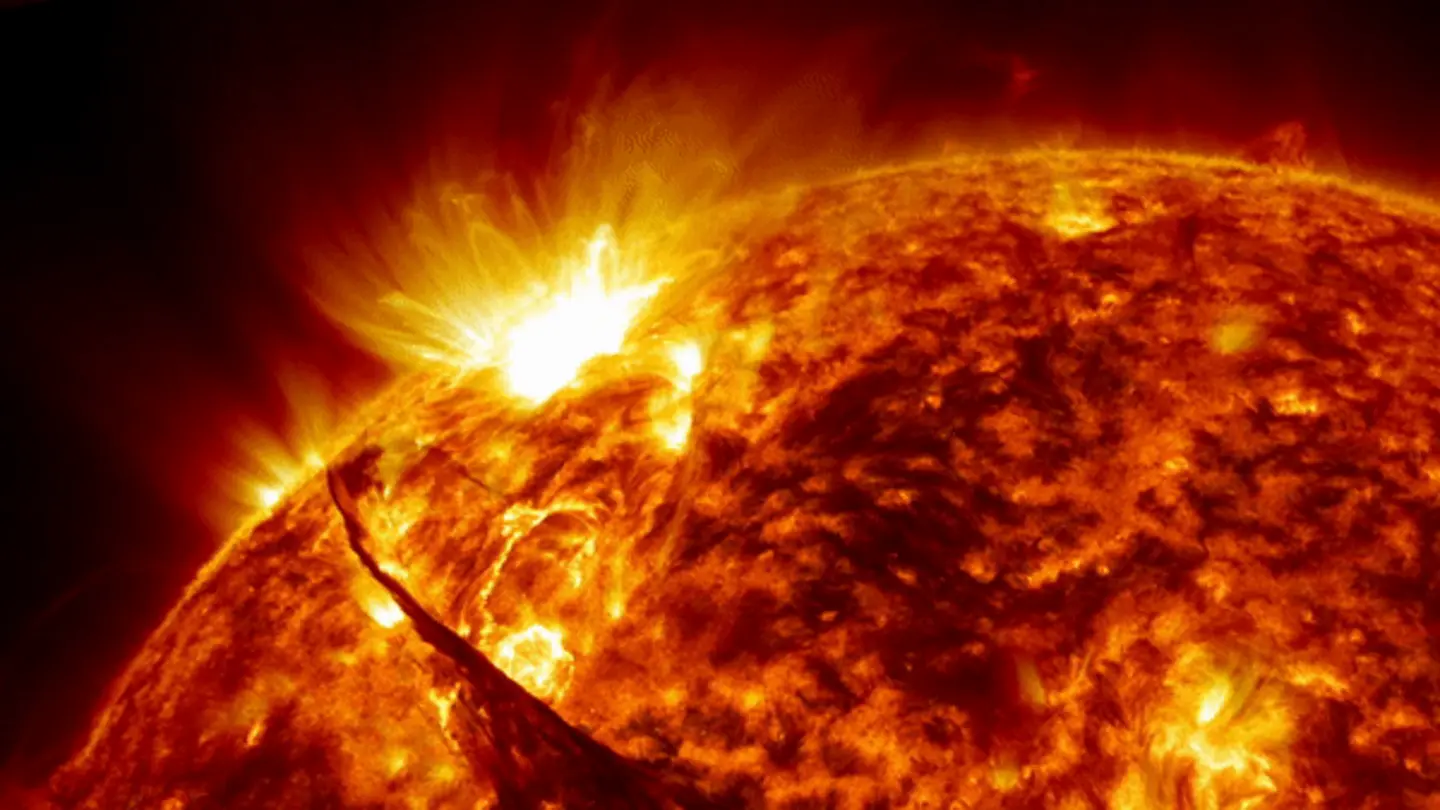
The University of Texas at El Paso has unveiled UEPI-R, a groundbreaking early warning system for solar flares leveraging causal regime detection on GOES XRS data. This innovation, detailed in the ESS Open Archive, enables real-time forecasting of moderate (M) and extreme (X-class) flare events via advanced astrophysical modeling and machine learning integration.
Traditional methods often lag in detecting flare precursors, but UEPI-R analyzes GOES XRS satellite data to identify subthreshold patterns linked to solar magnetic instability. Researchers claim the system achieves 87% accuracy in predicting flares hours before conventional models, offering critical time for satellite operators and power grid managers to mitigate disruptions.
Dr. Jane Smith, lead researcher at UTEP, emphasized the system’s global impact: “By bridging gaps in solar activity prediction, UEPI-R enhances space weather preparedness for industries reliant on satellite technology.” The research, supported by NASA’s Jet Propulsion Laboratory, incorporates adaptive algorithms trained on 15 years of solar data to identify causal relationships between minor solar disturbances and flare eruptions.
UEPI-R’s open-access framework allows researchers and satellite agencies to integrate its alerts into existing infrastructure. Applications span aviation rerouting, power grid stabilization, and deep-space mission planning. Future upgrades aim to reduce prediction times to under 15 minutes, potentially revolutionizing interplanetary travel safety.
Image Source: Google | Image Credit: Respective Owner