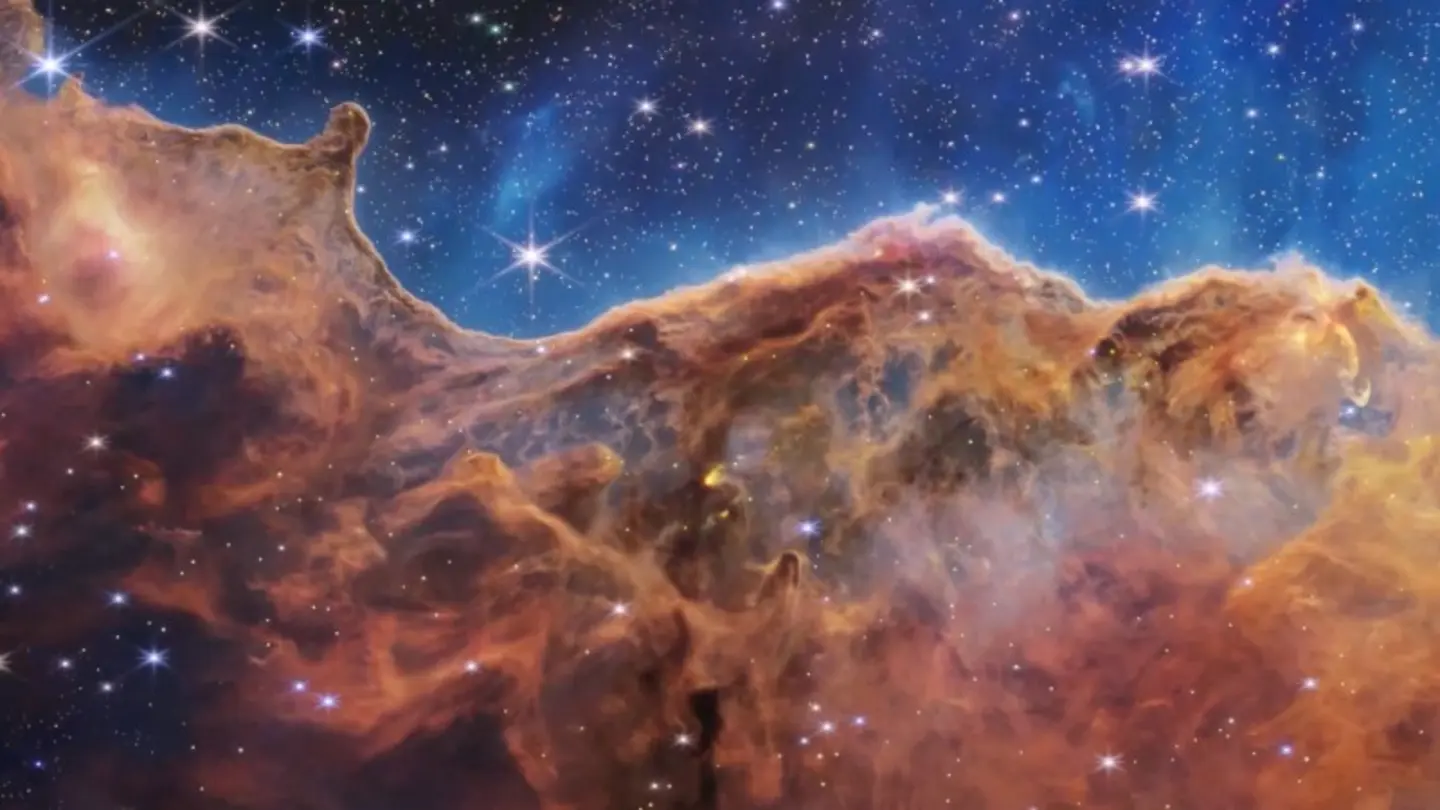
Geneva, Switzerland – A team of astrophysicists at the University of Geneva has announced the development of a groundbreaking new model for accurately measuring distances within the Gum Nebula, a star-forming region located approximately 6,500 light-years from Earth. This innovative approach promises to significantly improve the precision of existing cosmic maps and provide a more detailed understanding of the nebula’s structure and evolution.
The Gum Nebula, formally known as NGC 6888, is a relatively small, but exceptionally rich, HII region – a region of ionized hydrogen gas – characterized by its intense star formation activity. Previous attempts to map the nebula’s distances have relied heavily on techniques like parallax and spectroscopic analysis, which, while effective to a degree, have inherent limitations and uncertainties. These uncertainties have resulted in discrepancies in the estimated distances to various components within the nebula, hindering a complete and accurate picture of its overall architecture.
The Novel Approach
The research, published in the journal *Astronomy & Astrophysics*, details a new method that combines data from multiple sources, including observations from the Very Large Telescope (VLT) in Chile and archival data from the Hubble Space Telescope. Crucially, the team incorporated a sophisticated statistical modeling technique that accounts for the complex interplay of factors influencing distance measurements, such as interstellar dust absorption and the peculiar motions of individual stars within the nebula.
“Our model essentially acts as a ‘correction factor’,” explained Dr. Elena Rossi, lead author of the study. “By carefully analyzing the spectral signatures of light emitted by the nebula’s stars, we can infer their distances with a much higher degree of confidence than previously possible. The key is to account for the systematic errors that have plagued previous distance estimates.”
The new model has already yielded significantly more precise distance measurements for several key regions within the Gum Nebula, including the central star cluster and the surrounding ionized gas filaments. These refined distances are now being used to update the nebula’s cosmic map, providing a more accurate representation of its spatial distribution and the dynamics of its star formation processes.
The implications of this research extend beyond the Gum Nebula itself. The developed methodology could be applied to other star-forming regions and nebulae, contributing to a more comprehensive understanding of the universe’s structure and evolution. Researchers believe that this improved accuracy in distance measurements will be invaluable for studying the formation and evolution of galaxies and the distribution of dark matter.
The team plans to continue refining their model and applying it to other nearby nebulae, further solidifying its reliability and expanding its reach. Future work will also focus on incorporating data from upcoming telescopes, such as the James Webb Space Telescope, to gain even deeper insights into the mysteries of the Gum Nebula and the broader cosmos.
Image Source: Google | Image Credit: Respective Owner